
If you’ve been diagnosed with spondylolisthesis or are experiencing persistent lower back pain that radiates into your legs, understanding your treatment options is the first step toward relief. This spinal condition—where one vertebra slips forward over the vertebra below it—affects thousands of people throughout the Dallas-Fort Worth area each year. The good news? Most patients respond well to conservative care. When surgery becomes necessary, modern minimally invasive techniques have transformed recovery times and outcomes. Whether you’re exploring spondylolisthesis non surgical treatment or considering surgical intervention, this guide will help you make informed decisions about your spine health.
Understanding Spondylolisthesis: What You Need to Know
This displacement can range from minimal to severe, affecting how your spine functions and potentially compressing nearby nerves. For many patients acquired spondylolisthesis causes symptoms treatment becomes necessary when conservative approaches no longer provide relief.
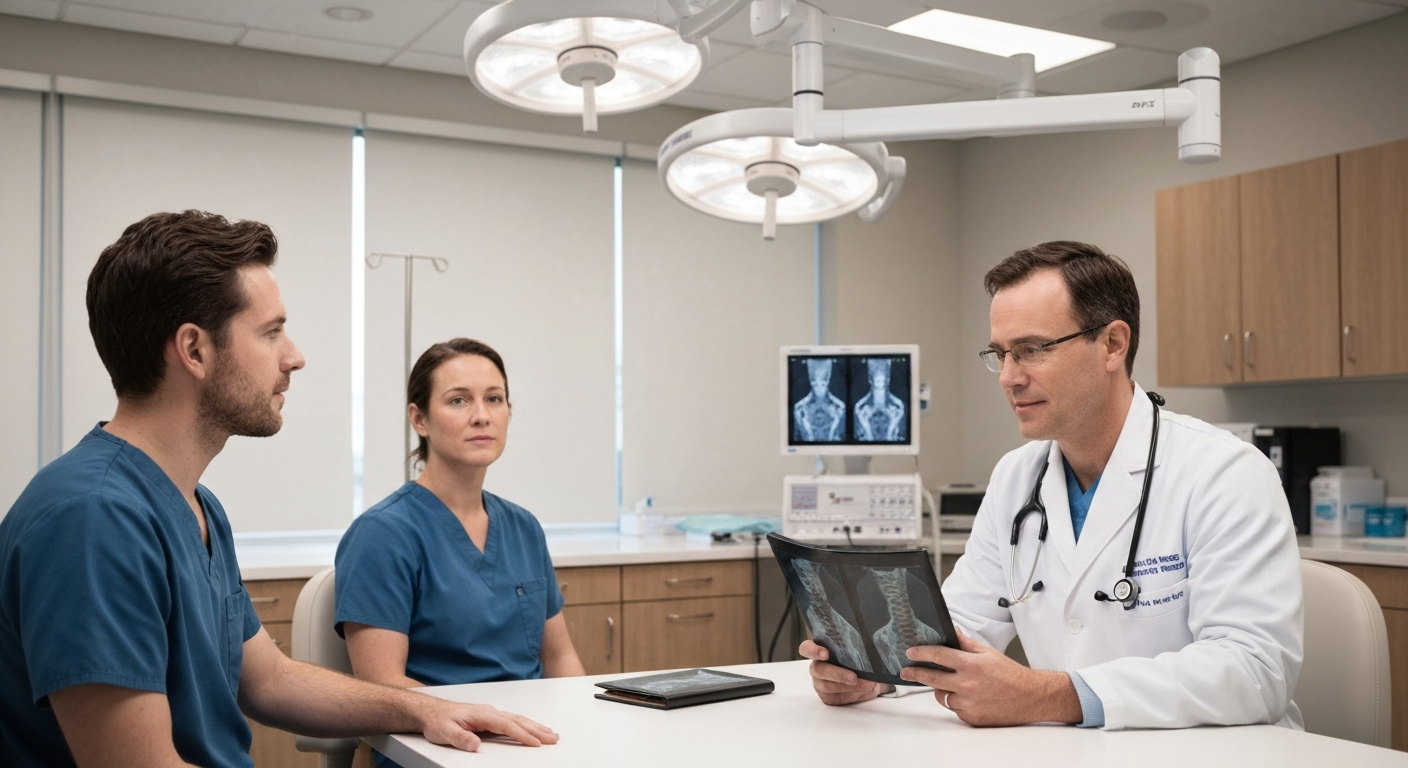
Our board-certified spine surgeons at Legent Spine encounter two primary types of spondylolisthesis most frequently. Isthmic spondylolisthesis involves a defect or stress fracture in the pars interarticularis—a small bridge of bone connecting the vertebral joints. Degenerative spondylolisthesis develops through age-related disc deterioration and facet joint arthritis that allows vertebrae to shift over time.
The condition is particularly common among athletes who perform repetitive spinal movements, older adults experiencing natural spinal degeneration, and individuals whose work involves repetitive stress on the lower back. Grade 1 represents minimal slippage, while Grade 4 indicates severe displacement that typically requires surgical intervention.
Anatomy and Causes: Why Spondylolisthesis Develops
Understanding the anatomical basis of spondylolisthesis helps you grasp why certain treatments target specific structures. When this delicate structure experiences repetitive stress or trauma, it can develop stress fractures—much like how a paperclip breaks after being bent repeatedly. This creates instability that allows the vertebra to slip forward.
The combination of hyperextension and rotation places tremendous stress on the pars interarticularis, particularly during adolescence when bones are still developing. Here in the Dallas area, we frequently treat young athletes from local high schools and sports programs who develop these stress fractures.
As intervertebral discs lose height and facet joints develop arthritis, the spine’s natural stability decreases. This type most commonly affects the L4-L5 level and occurs more frequently in women than men. Family history appears to play a role in predisposition, suggesting genetic factors influence spinal anatomy and degenerative patterns.
Risk factors extend beyond age and athletics. Jobs requiring repetitive bending, lifting, or prolonged standing can accelerate spinal wear. Previous spinal injuries, even seemingly minor ones, may contribute to instability years later. Understanding these causes helps Dr. Yaw Sarpong and our spine specialists develop personalized prevention strategies alongside treatment plans.
Recognizing Symptoms: When to Seek Spine Specialist Care
This characteristic pattern helps distinguish spondylolisthesis from other sources of back pain. Patients often notice their symptoms intensify when standing, walking, or arching backward—activities that increase stress on the affected spinal segment.
When the slipped vertebra compresses nerve roots, symptoms can extend beyond the lower back. Leg pain, numbness, or tingling—medically termed radiculopathy—may travel down one or both legs, following the distribution of compressed nerves. Some patients experience heaviness or weakness in their legs, particularly after walking short distances. This pattern, called neurogenic claudication, can significantly impact daily activities and quality of life.
Interestingly, many patients with spondylolisthesis remain completely asymptomatic, with the condition discovered incidentally on X-rays or MRI scans obtained for other reasons. However, if you’re experiencing persistent lower back pain, leg symptoms, stiffness that limits your ability to bend forward, or muscle weakness in your legs or feet, a comprehensive evaluation by a fellowship-trained spine specialist is warranted. Early diagnosis and appropriate treatment can prevent progression and preserve your active lifestyle. For more information, see our page on spondylolisthesis treatment guide.
Nonsurgical Treatment Options: Conservative Approaches First
generally The vast majority of patients with spondylolisthesis respond favorably to conservative management, which remains the first-line approach for Grade 1 and Grade 2 cases without significant neurological symptoms. At Legent Spine, we take a comprehensive, multidisciplinary approach to nonsurgical care that addresses both symptom relief and functional restoration. For more information, see our page on sugar land patients acquired spondylolisthesis.
Physical therapy forms the cornerstone of conservative treatment. A structured program focuses on core strengthening to stabilize the lumbar spine, flexibility exercises to reduce muscle tension, and posture correction to minimize stress on affected segments. Our physical therapists work closely with patients throughout the Greater Dallas area to develop customized exercise programs that can be continued at home for long-term benefit.
Activity modification plays an equally important role. We help patients identify and temporarily limit activities that aggravate symptoms—particularly those involving spinal extension and rotation. This doesn’t mean complete bed rest, which can actually worsen outcomes. Instead, we encourage patients to remain active within their comfort zone while avoiding movements that increase vertebral slippage or nerve compression.
Medications provide symptomatic relief during the healing process. Over-the-counter nonsteroidal anti-inflammatory drugs (NSAIDs) reduce both pain and inflammation around affected structures. For more severe discomfort, prescription medications may be appropriate on a short-term basis. Some patients benefit from muscle relaxants when muscle spasms contribute to their pain.
When pain persists despite these measures, epidural steroid injections can provide targeted relief. These injections deliver anti-inflammatory medication directly to the affected nerve roots, reducing inflammation and providing a window of symptom relief during which physical therapy can be more effective. Many of our Dallas-area patients find that injections, combined with continued physical therapy, allow them to avoid surgery altogether.
Bracing may be recommended for select patients, particularly younger individuals with isthmic spondylolisthesis. usually A lumbar brace limits spinal extension and can promote healing of stress fractures in the pars interarticularis. However, prolonged bracing isn’t typically recommended as it can lead to muscle weakening. For more information, see our page on every patient acquired spondylolisthesis.
When Surgery Becomes Necessary: Indications for Operative Treatment
The American Academy of Orthopaedic Surgeons recommends surgical treatment when nonsurgical management fails to relieve symptoms after 6 to 12 weeks or when patients develop progressive neurological deficits. This timeframe allows adequate opportunity for conservative measures to work while preventing unnecessary delays in addressing serious complications.
Progressive neurological deficits represent one of the clearest indications for surgical intervention. If you’re experiencing worsening leg weakness, increasing numbness, or developing difficulty with foot drop, prompt evaluation is essential. These symptoms suggest ongoing nerve compression that may lead to permanent damage without surgical decompression.
Severe pain that significantly affects your quality of life—preventing you from working, caring for your family, or enjoying activities that matter to you—may warrant surgical consideration even without neurological deficits. When pain persists despite comprehensive conservative treatment, surgery often provides the definitive relief that allows patients to reclaim their lives.
High-grade slips carry greater risk of progression and are less likely to respond to conservative treatment alone. Additionally, documented instability that worsens over time on serial imaging studies may indicate the need for surgical stabilization, even if symptoms remain moderate.
Surgical Treatment Options: Minimally Invasive and Traditional Approaches
When surgery becomes necessary, modern techniques offer multiple options tailored to each patient’s specific anatomy and condition severity. At Legent Spine, our board-certified surgeons specialize in both minimally invasive and traditional open approaches, selecting the technique that best serves each individual’s needs.
Minimally invasive decompression (laminectomy) addresses nerve compression without the need for spinal fusion in carefully selected cases. Through small incisions and specialized instruments, the surgeon removes bone and tissue compressing nerve roots. This approach preserves spinal motion and typically involves faster recovery compared to fusion procedures. However, it’s only appropriate when significant instability isn’t present.
Spinal fusion with instrumentation remains the gold standard for spondylolisthesis with instability. The procedure involves placing bone graft material between affected vertebrae, then stabilizing them with pedicle screws and rods while fusion occurs. Modern minimally invasive fusion techniques use smaller incisions, specialized retractors, and tubular access systems that minimize muscle disruption. Many procedures can be performed through incisions measuring just a few centimeters.
Dr. Mohammed Shaikh and our surgical team utilize advanced navigation systems and intraoperative imaging to ensure precise implant placement while minimizing radiation exposure. These technologies enable optimal outcomes with reduced surgical trauma.
Transforaminal lumbar interbody fusion (TLIF) represents one common approach, accessing the disc space from the side to remove damaged disc material and place a supportive cage filled with bone graft. Posterior lumbar interbody fusion (PLIF) approaches from the back. The choice depends on each patient’s specific anatomy and the surgical team’s assessment of which technique offers the best combination of neural decompression and structural restoration.
Benefits of minimally invasive approaches include less blood loss, reduced postoperative pain, shorter hospital stays, and faster return to activities. However, not every patient is a candidate for minimally invasive surgery. Factors such as body habitus, previous surgeries, severity of deformity, and extent of decompression needed all influence surgical planning. Your surgeon will discuss which approach offers the best balance of effectiveness and safety for your specific situation.
Recovery and Expectations After Spine Surgery
Following minimally invasive surgery, most patients spend one to two nights in the hospital and experience initial recovery within two to four weeks. Full recovery, including return to unrestricted activities, typically occurs within six to twelve weeks.
Traditional open surgery generally involves a longer recovery arc. Initial recovery extends to four to six weeks, with full recovery taking three to six months. This extended timeline reflects the greater tissue disruption inherent in open approaches, though these techniques remain necessary and appropriate for complex cases.
Physical therapy begins within weeks after surgery and plays a crucial role in optimizing outcomes. Your therapist will guide you through progressive exercises that strengthen supporting muscles without stressing healing tissues. Early mobility is encouraged, with most patients walking the day of or day after surgery. Our network of physical therapy partners throughout the Dallas-Fort Worth area ensures convenient access to expert rehabilitation close to home.
Pain relief often improves significantly and progressively over time. Leg pain from nerve compression typically resolves most quickly, sometimes within days of surgery. Back pain improves more gradually as muscles heal and the spine adapts to its new stable configuration. It’s normal to experience some degree of surgical discomfort during early recovery, which is managed through a combination of medications, ice therapy, and gradual increases in activity.
Return to work depends on both your recovery progress and job demands. Patients with sedentary jobs may return within a few weeks, while those with physically demanding occupations may need several months before resuming full duties. We work closely with patients to develop realistic return-to-work timelines that protect healing tissues while minimizing time away from employment.
Spine Care in the Greater Dallas Area: Expert Support for Your Recovery
Patients throughout the Dallas-Fort Worth metroplex benefit from access to world-class spine care without traveling to distant medical centers. Legent Spine brings board-certified, fellowship-trained spine surgeons to the communities where patients live and work, making expert evaluation and treatment convenient and accessible.
Our minimally invasive spine surgery centers utilize state-of-the-art technology comparable to what you’d find at major academic medical centers. From advanced imaging systems to sophisticated navigation platforms, we invest in tools that enhance precision and safety while improving patient outcomes. This commitment to technological excellence, combined with the expertise of our surgical team, delivers exceptional results right here in North Texas.
Comprehensive rehabilitation facilities throughout the Greater Dallas area partner with Legent Spine to provide seamless postoperative care. Whether you live in Dallas proper, the northern suburbs, or surrounding communities, you’ll find experienced physical therapists familiar with spine surgery rehabilitation protocols close to home.
Our multidisciplinary team approach ensures that every aspect of your care is coordinated and comprehensive. From your initial evaluation through surgery and recovery, dedicated care coordinators guide you through each step, answering questions and ensuring you never feel lost in the healthcare system. This personalized attention reflects our commitment to treating not just spines, but people.
If you’re experiencing symptoms of spondylolisthesis or have questions about your treatment options, our team is here to help. We offer thorough evaluations that combine advanced imaging, comprehensive physical examination, and detailed discussion of your symptoms and goals. This foundation enables us to develop truly personalized treatment plans that align with your values and lifestyle.
Making Your Treatment Decision: Questions to Ask Your Spine Specialist
Empowering yourself with knowledge helps ensure you make treatment decisions you feel confident about. When meeting with a spine specialist, consider asking these important questions to gain clarity about your specific situation.
Start with understanding your diagnosis: What grade is my spondylolisthesis, and what does that mean for my treatment options and prognosis? Understanding severity helps contextualize why certain treatments are recommended while others aren’t appropriate.
Before considering surgery, confirm you’ve exhausted appropriate conservative options: Have I tried all nonsurgical treatments that might help my condition? Sometimes patients aren’t aware of all available conservative approaches, and thorough discussion ensures you’re making an informed decision about surgical timing.
If surgery is recommended, ask for specificity: What are my surgical options, and why do you recommend one approach over another for my particular case? Understanding the rationale behind surgical recommendations helps you appreciate why one technique might be preferable despite advantages of alternative approaches.
Don’t hesitate to discuss risks and benefits candidly: What are the potential complications of surgery, and what is your complication rate for this procedure? Transparent discussion of risks, alongside realistic expectations of benefits, is essential for informed consent.
Recovery planning is equally important: What is the expected recovery timeline for my situation, and when can I return to work and activities I enjoy? Understanding the recovery journey helps you plan time away from work and arrange necessary support during your healing period.
Finally, focus on outcomes: How will my quality of life improve with treatment? The ultimate goal isn’t just fixing anatomical problems—it’s helping you return to the activities and lifestyle that matter most to you. A good surgeon keeps this perspective central to treatment planning.
At Legent Spine, we welcome these questions and encourage open dialogue throughout your care journey. Our commitment to transparent, honest communication ensures you always understand your options and feel confident in your decisions. If you’re ready to explore your treatment options for spondylolisthesis, we invite you to schedule a comprehensive evaluation with one of our fellowship-trained spine specialists.