
What Is a Fractured Spine?
A fractured spine is a break in one or more vertebrae, the bones that stack together to form the spinal column. You may also hear it called a “broken back.” The terms usually describe the same injury.
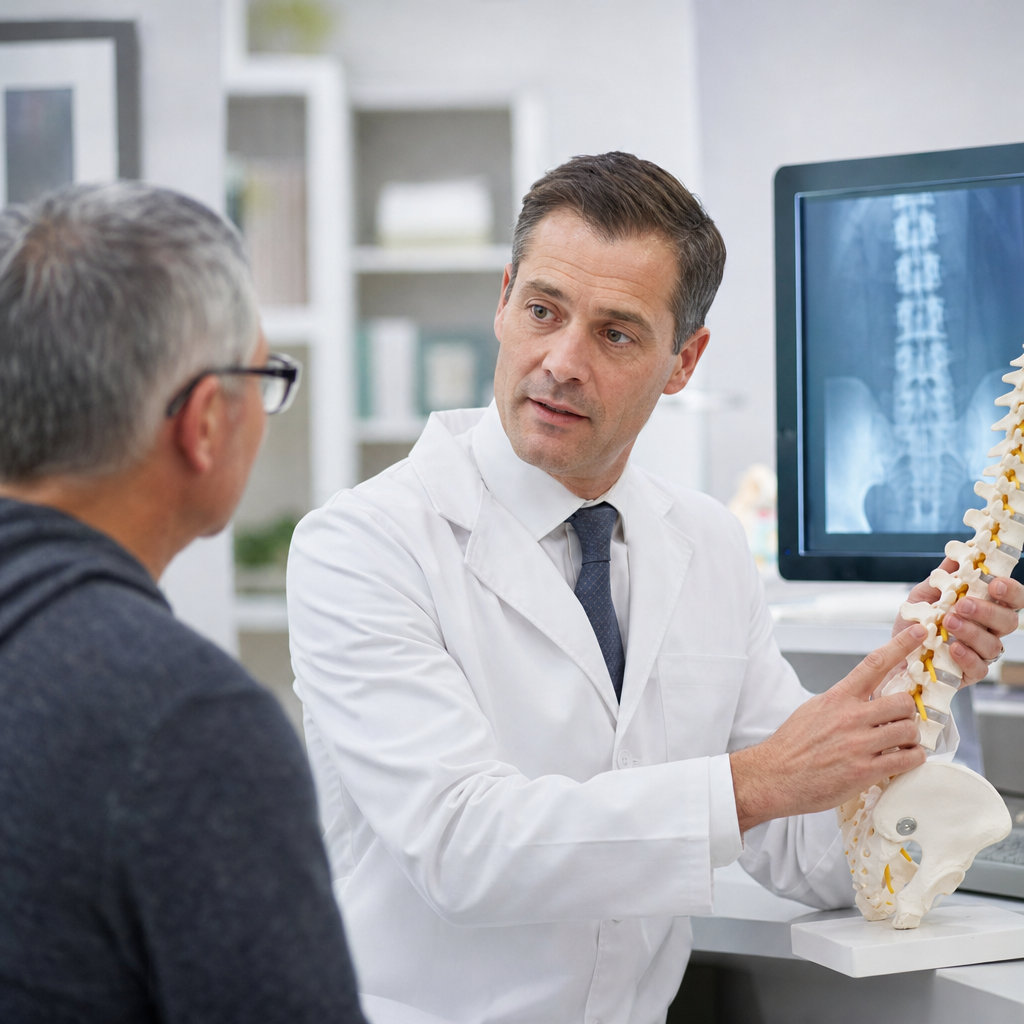
A fracture does not always mean the spinal cord is damaged. Many patients recover without lasting nerve problems.
The spine has cervical (neck), thoracic (mid-back), lumbar (low back), and sacral regions. In total, it includes 33 vertebrae divided into cervical, thoracic, lumbar, sacral, and coccygeal regions. Most spinal fractures occur in the thoracic and lumbar spine, particularly near the thoracolumbar junction.
This guide covers fracture types, symptoms, causes, diagnosis, treatment, and prevention. If you want a specialist’s opinion, Legent Spine’s board-certified, fellowship-trained spine surgeons offer comprehensive evaluations for patients across the Greater Dallas area.
Types of Spinal Fractures
The type of fracture depends on how the injury happened and how much of the vertebra is involved. Classification matters because it guides treatment. The main categories include:
- Compression fractures: the front of the vertebra collapses
- Burst fractures: the vertebra breaks in several directions
- Chance (flexion-distraction) fractures: a horizontal break through the vertebra
Compression and Burst Fractures
Compression fractures involve collapse of the front portion of a vertebral body and are commonly associated with osteoporosis.
In a burst fracture, the vertebral body is crushed and bone fragments can be pushed toward the spinal canal. Because this puts nearby nerves at risk, surgeons evaluate burst fractures carefully.
Chance (Flexion-Distraction) Fractures
Chance fractures are flexion-distraction injuries that split the vertebra horizontally and are often associated with motor vehicle collisions. They typically result from a forceful forward-bending motion. A lap belt can place this kind of sudden force on the body in a high-speed crash.
Stable vs. Unstable Fractures
Stability is a key factor in choosing between bracing and surgery. A stable fracture keeps the spine aligned and is unlikely to shift. An unstable fracture can move and may endanger the spinal cord or nerves.
Stable spinal fractures generally maintain alignment and are often managed without surgery, while unstable fractures carry a higher risk of neurological injury. A spine specialist determines stability through imaging and a clinical exam.
What Does a Spinal Fracture Feel Like?
Symptoms vary with the type and location of the fracture. Common signs include:
- Sudden or worsening back or neck pain, often worse with standing, walking, or movement. Back pain that begins suddenly and worsens with standing or walking is a common symptom of a vertebral compression fracture.
- Pain that eases when lying down, in some compression fractures
- Tenderness at the injury site, muscle spasm, and reduced mobility
- Numbness, tingling, or leg weakness
Some osteoporotic compression fractures cause only mild pain. People may not discover them until later, when they notice progressive height loss and a forward-curved posture.
Emergency warning signs: After trauma, loss of bladder or bowel control, progressive weakness, or numbness requires emergency care. Call 911. Loss of bladder or bowel control after a spinal injury can indicate spinal cord or cauda equina involvement and requires emergency evaluation.
Can You Walk With a Broken Back?
Yes, some people can. Some people with stable vertebral fractures remain able to walk even though the fracture still requires medical evaluation and treatment. This is especially true when no nerves are involved. Still, being able to walk does not mean your spine is safe or stable.
Continued movement after trauma can make an unstable injury worse. Moving with an unstable spinal fracture can increase the risk of spinal cord or nerve injury. After a fall or collision, anyone with significant back pain should get medical imaging rather than test the injury at home.
This article is educational and is not a substitute for medical evaluation.
What Causes Spinal Fractures and Who Is at Risk?
Spinal fractures generally fall into two groups:
- High-energy trauma: motor vehicle collisions and falls are leading causes of traumatic spinal fractures in the United States. Sports and recreational injuries also contribute.
- Weakened bone: Osteoporosis, long-term steroid use, and certain cancers affecting bone can make vertebrae fragile. Osteoporosis weakens vertebrae and can lead to compression fractures from minor stress such as bending, coughing, or a low-height fall.
Vertebral compression fractures are the most common type of osteoporosis-related fracture. Higher-risk groups include older adults, people with osteoporosis, and young adults in high-impact activities. Postmenopausal women have a higher risk of osteoporotic vertebral fractures than younger adults.
Local context matters here. The Dallas-Fort Worth area has an extensive highway network and an active sports culture, and both are relevant to trauma-related injuries. Falls also remain a major concern for older adults.
If you have risk factors for weak bones, talk with your physician about bone health.
How Are Spinal Fractures Diagnosed?
A comprehensive evaluation starts with your story and a hands-on exam. Your spine specialist will ask how the pain began and review your medical history and any bone-health risk factors. A neurological check of strength, sensation, and reflexes follows.
Imaging then fills in the details:
- X-rays show alignment and obvious fractures.
- CT scans provide detailed bone anatomy, especially after trauma.
- MRI evaluates the spinal cord, nerves, discs, and ligaments. It can also help show whether a fracture is recent.
Together, these tools help your surgeon classify the fracture and decide whether it is stable.
Treatment Options for a Fractured Spine
Treatment is personalized to the fracture type, its stability, your nerve function, and your overall health. Many stable fractures heal with non-surgical care. That may include bracing, activity modification, pain management, and physical therapy. Patients with osteoporosis may also need treatment to strengthen their bones.
Surgery may be recommended for unstable fractures, fractures pressing on the spinal cord or nerves, or pain that does not improve. Options range from procedures that stabilize a collapsed vertebra to spinal fusion with instrumentation. When appropriate, minimally invasive techniques can reduce tissue disruption and support a smoother recovery.
Our surgeons, including Dr. Paul Salinas, will explain the realistic benefits and risks of each option. That way, you can make an informed decision.
Preventing Spinal Fractures
You cannot prevent every injury, but you can lower your risk:
- Wear a seat belt on every drive, whether on Dallas-area highways or local streets.
- Use proper safety gear and technique in sports and recreation.
- Reduce fall hazards at home, such as loose rugs and poor lighting.
- Ask your physician about bone density screening, calcium and vitamin D intake, and weight-bearing exercise.
When to Seek a Spine Specialist
If you have back pain after a fall or a collision, get it checked. The same goes for pain after a minor stress that seems out of proportion to the cause. Early evaluation helps protect your spine and gives you a clear path forward.
Legent Spine offers transparent, honest guidance and dedicated care coordinators to help you at every step. Learn more about spine conditions we treat, or contact our team to schedule a consultation. You can also meet Dr. Grant Booher and our other specialists, who are here to help patients across Dallas and the surrounding communities.