
What Is Cauda Equina Compression?
often The cauda equina is Latin for “horse’s tail.” It is a bundle of nerve roots at the lower end of the spinal canal. These nerves run below the end of the spinal cord and.
Cauda equina compression happens when something presses on these nerve roots. Significant pressure can lead to cauda equina syndrome symptoms, such as changes in bladder control, numbness in the groin area, and leg weakness. Cauda equina syndrome is, but it is serious and time-sensitive.
If you live in the Dallas area and have concerns about back pain, numbness, or weakness, the Legent Spine team is here to help. We can arrange a comprehensive evaluation and explain what your symptoms may mean.
Is Cauda Equina Compression a Medical Emergency?
may Severe cauda equina compression is generally treated as a surgical emergency. may Nerves that stay compressed for too long may not fully recover.
If you have symptoms of severe compression, go to an emergency department. Do not wait for a routine appointment.
Doctors often describe the condition in two stages:
- Incomplete cauda equina syndrome: Bladder function is altered, but some control and sensation remain.
- Complete cauda equina syndrome: Bladder control and sensation are largely lost.
Getting care at the incomplete stage gives you the best chance to protect nerve function. Most back pain is not an emergency, but these specific warning signs deserve prompt attention.
Warning Signs and Symptoms to Watch For
Knowing the early symptoms of cauda equina syndrome can help you get care sooner. Symptoms can appear gradually or suddenly.
Early and Red-Flag Symptoms
- Severe low back pain that is new, intense, or getting worse
- Saddle numbness: numbness or altered sensation in the groin, buttocks, and inner thighs, which is
- Leg weakness or numbness in one or both legs
- Bladder changes, such as difficulty urinating, a weak stream, or loss of bladder control, which are
- Bowel changes, including difficulty controlling bowel movements
Sexual dysfunction can also occur. Be sure to mention it to your care team.
Can You Walk With Cauda Equina Syndrome?
Yes, some people can. Being able to walk does not rule out the condition.
If several of these signs appear together, go to an emergency room rather than waiting for a routine visit. This is especially important if you have saddle numbness along with bladder or bowel changes.
What Causes Cauda Equina Compression?
Anything that narrows the space around the nerve roots can cause compression. Common causes include:
- Large herniated lumbar discs:
- Severe spinal stenosis: Advanced narrowing of the lower spinal canal can crowd the nerve roots.
- Tumors, infections, or abscesses: Growths or collections of infection can press on the nerves.
- Trauma and fractures: Injuries can push bone fragments or tissue into the canal.
- Complications from prior spine procedures: Swelling or bleeding after a procedure can occasionally compress the nerves.
It helps to keep perspective. Most people with back pain or a herniated disc will never develop this condition.
How Cauda Equina Compression Is Diagnosed
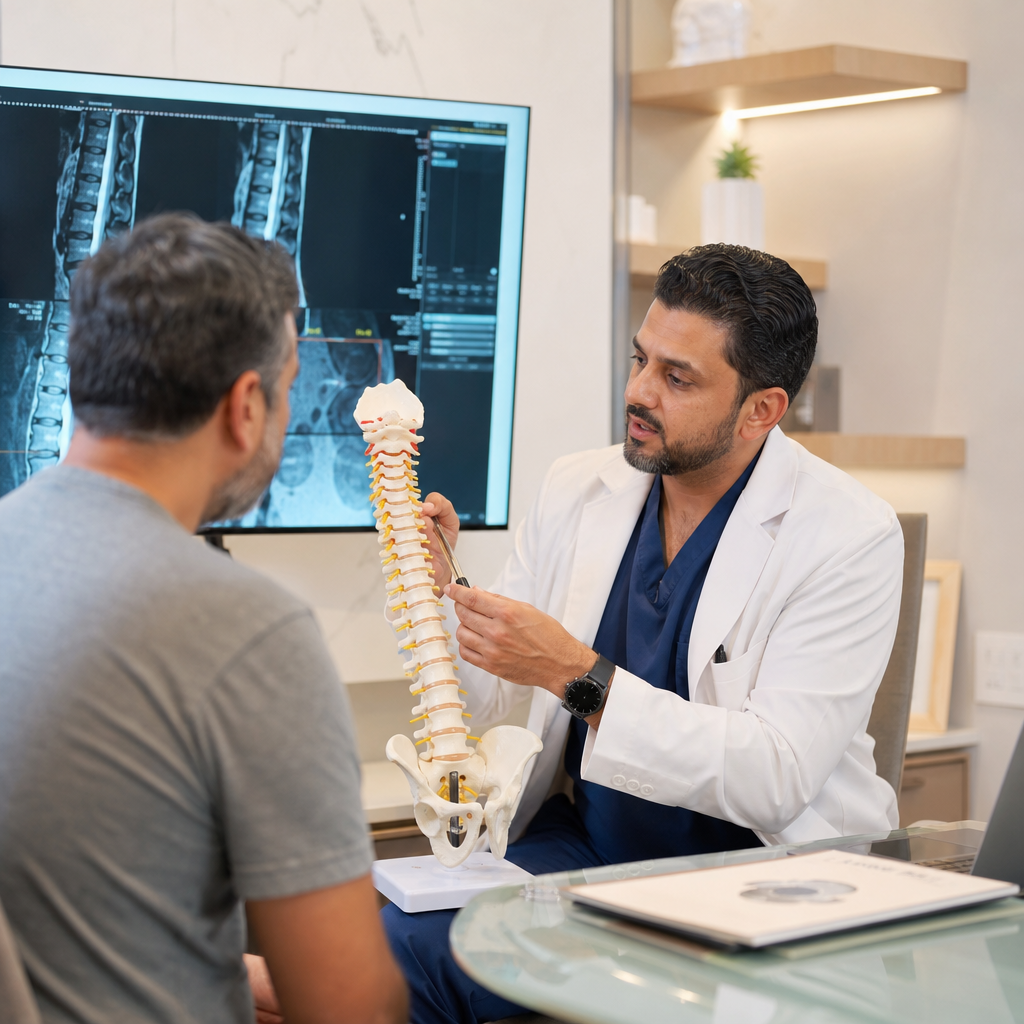
Evaluation usually starts with your medical history and a neurological exam. The exam typically checks leg strength, reflexes, and sensation, including in the saddle area.
Your care team may also perform a bladder scan, which.
Imaging confirms the diagnosis:
- MRI:, and doctors perform it on an emergency basis when they suspect cauda equina syndrome.
- CT myelogram: Doctors may use this test when an MRI is not possible, such as when a patient has certain implanted devices.
so you should not need to travel far for evaluation.
Treatment Options and Recovery Outlook
The standard treatment is surgical decompression. The surgeon removes the bone or disc material that presses on the nerves.
Emergency surgery usually takes place at a hospital. Surgeons may consider minimally invasive techniques when they suit the situation. The right approach depends on your anatomy and how severe the compression is.
Recovery varies. Some patients regain bladder, bowel, and sexual function over time. Others have lasting symptoms, and we believe in being honest about that. No one can promise a particular outcome.
Rehabilitation is often an important part of recovery. Physical therapy can help you rebuild strength and mobility. At Legent Spine, a dedicated care coordinator helps patients with follow-up care and next steps.
Getting Care in the Dallas Area
If symptoms of cauda equina syndrome appear, go to the nearest emergency room or call 911. That might be in Dallas, Fort Worth, Plano, or a surrounding community. Dallas-Fort Worth is served by. For more information, see our page on cauda equina syndrome red flags every 14. For more information, see our page on cauda equina syndrome critical red flags 9.
Long commutes on Dallas highways and desk-based jobs are everyday sources of back strain for many North Texans. They do not cause cauda equina syndrome on their own. They are, however, a good reminder not to ignore ongoing discomfort. For more information, see our page on cauda equina syndrome every patient spine.
Our board-certified, fellowship-trained spine specialists, including Dr. Paul Salinas, evaluate conditions such as herniated discs and spinal stenosis. If you have ongoing back pain, leg weakness, or numbness, consider scheduling a comprehensive evaluation before symptoms progress.
When to Talk With a Spine Specialist
Sudden saddle numbness, bladder or bowel changes, and growing leg weakness need emergency evaluation. Do not wait for a scheduled appointment if these signs appear.
The good news is that. Still, pain that lasts or worsens, new numbness, or growing weakness deserves attention. generally Treating the underlying cause early may reduce the chance of more serious nerve problems.
If you are in the Dallas area and have questions about your symptoms, we invite you to contact Legent Spine to schedule a consultation. A care coordinator will guide you through your next steps. Our approach is transparent, honest, and personalized, so you understand your options and feel confident in your care plan.