
Living with radiating leg pain can disrupt every aspect of your daily life—from your morning commute through Dallas traffic to enjoying an evening walk in Klyde Warren Park. If you’re experiencing sharp, burning pain that travels from your lower back down through your leg, you may be dealing with sciatica nerve compressionAt Legent Spine, we help Dallas-Fort Worth residents understand this common but often misunderstood condition so they can make informed decisions about their spinal health.
What Is Sciatica?
Sciatica is pain that radiates along the pathway of the sciatic nerve, which extends from your lower back through your hips and buttocks and down each leg. It’s important to understand that sciatica isn’t a diagnosis in itself—rather, it’s a symptom indicating that something is compressing or irritating your sciatic nerve.
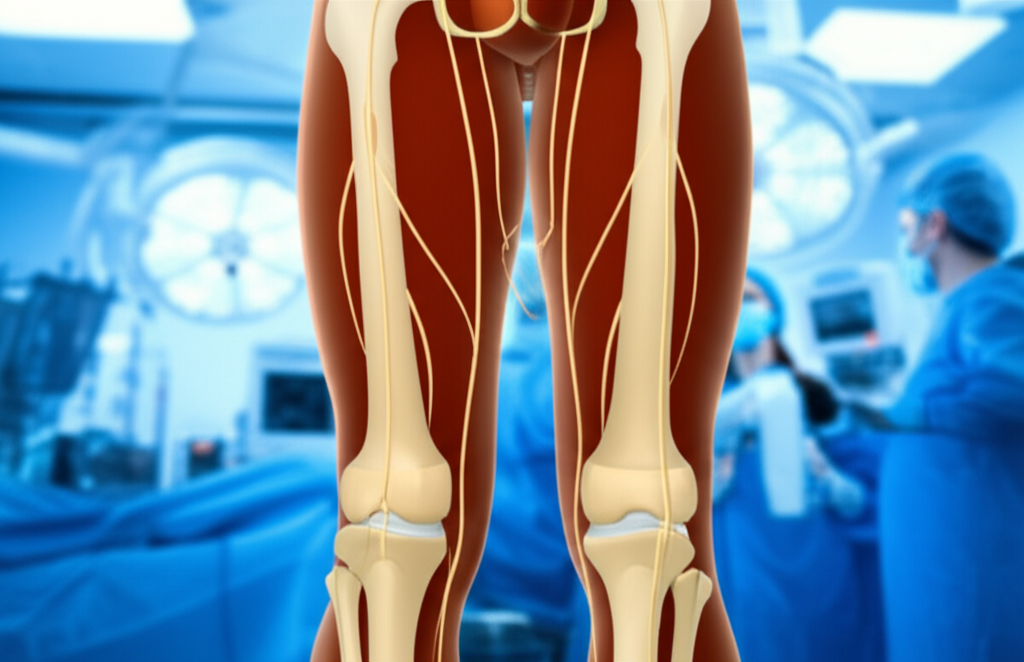
The sciatic nerve is the longest nerve in the human body. When it becomes compressed or irritated, the resulting pain can be debilitating. Generally, true sciatica affects approximately 10-40% of the population at some point in their lives, making it one of the most common nerve-related complaints we see at our Dallas practice.
Most people with sciatica experience symptoms on only one side of their lower body. The pain can range from a mild ache to a sharp, burning sensation that makes standing or walking extremely difficult. Understanding the difference between lumbar radiculopathy vs sciatica can help you better communicate your symptoms to healthcare professionals.
Understanding the Sciatic Nerve
To understand why sciatica causes such widespread pain, it helps to know the anatomy of this remarkable nerve structure. The sciatic nerve originates from nerve roots in your lower lumbar spine (L4-L5) and sacral spine (S1-S3). From there, it travels through your buttocks, down the back of your thighs, and branches into your calves and feet.
This nerve is approximately as thick as your finger and serves crucial functions throughout your lower body. It controls the muscles in your lower leg and provides sensation from your waist to your toes. Every step you take, every time you stand or sit, involves the sciatic nerve sending signals between your brain and lower extremities.
Because the sciatic nerve is so long and travels through multiple anatomical structures, compression at any point along its pathway can produce symptoms throughout the entire nerve distribution. This explains why lower back problems can cause pain all the way down to your foot.
Types of Sciatica
Not all sciatica presents the same way, and understanding the different types can help you better describe your symptoms to your doctor:
- Acute sciatica: This sudden-onset form typically lasts from a few weeks to a few months.
- Chronic sciatica: often When symptoms persist longer than 8 weeks, the condition is considered chronic and may require more advanced intervention and specialist evaluation.
- Radicular pain: This presents as a sharp, burning sensation along the nerve pathway—what most people think of as classic sciatica pain.
- Referred pain: This manifests as a dull ache that may feel more like a muscle problem than nerve pain.
Some Dallas residents experience intermittent sciatica with pain-free intervals between episodes. Tracking these patterns can provide valuable information for your healthcare provider. For more information about different presentations, visit our page on radiculopathy sciatica dallas fort worth patients.
Sciatica Symptoms You Should Know
Recognizing sciatica symptoms early can help you seek appropriate treatment before the condition worsens. Common symptoms include:
- Lower back pain that radiates to one side
- Sharp, burning, or tingling sensation running down the leg
- Weakness or numbness in the affected leg or foot
- Pain that intensifies with certain movements, positions, or activities
- Difficulty sitting, standing, or walking for extended periods
Sciatica pain typically radiates from the lower back through the buttock and down one leg to the foot. Symptoms may feel like a sharp, shooting pain or a deep, aching pain depending on the severity of nerve compression. Some individuals experience foot numbness or tingling that makes walking or maintaining balance difficult—a particularly concerning symptom when navigating Dallas’s busy streets and parking lots.
What Causes Sciatica?
Understanding the underlying conditions that lead to sciatic nerve compression can help you identify risk factors and take preventive measures. Common causes include:
Herniated discs are the most common culprit, Generally, accounting for approximately 90% of cases. When the soft inner material of a spinal disc pushes through its outer layer, it can press directly on nerve roots.
Spinal stenosis—a narrowing of the spinal canal—becomes more common with age and can compress nerve roots. This age-related change affects many Dallas-Fort Worth residents as they reach their 40s, 50s, and beyond.
Piriformis syndrome occurs when the piriformis muscle in the buttocks becomes tight or inflamed, compressing the sciatic nerve as it passes through or beneath the muscle.
Spondylolisthesis develops when a vertebra slips out of proper alignment, potentially compressing the sciatic nerve. This condition can result from degenerative changes or previous injuries.
Other causes include pregnancy-related compression, prolonged sitting (especially common for Dallas office workers), and poor posture that gradually stresses spinal structures.
Risk Factors for Developing Sciatica
Certain factors increase your likelihood of developing sciatica. Being aware of these can help you take preventive action:
Age: People between 40 and 60 years of age experience sciatica more frequently due to age-related spine changes such as herniated discs and bone spurs.
Obesity: Extra weight increases pressure on the spine and discs, elevating sciatica risk by compressing nerve structures.
Occupational factors: Jobs requiring heavy lifting, prolonged driving, or extended sitting place additional stress on the spine. Many Dallas professionals in transportation, healthcare, and office settings face these occupational risks daily.
Sedentary lifestyle: Individuals with sedentary jobs or lifestyles develop weaker core and back muscles that cannot properly support the spine, making nerve compression more likely.
Previous injuries: Prior back injuries or degenerative disc disease significantly increase the likelihood of future sciatic nerve compression.
Diabetes: This condition may increase nerve damage risk and can complicate sciatica recovery.
Diagnosis: How Doctors Identify Sciatica
At Legent Spine, our board-certified spine surgeons use comprehensive diagnostic approaches to accurately identify sciatica and its underlying causes:
Medical history and symptom review: We’ll ask detailed questions about your pain patterns, what makes symptoms better or worse, and how the condition affects your daily activities.
Physical examination: The straight leg raise test is a common examination used to confirm sciatica—pain during leg elevation suggests nerve compression. We’ll also assess your reflexes, muscle strength, and range of motion.
Imaging tests: MRI imaging provides detailed images of disc herniation and nerve compression, helping us pinpoint the exact location of the problem. CT scans or X-rays may be used to evaluate bone structures.
Nerve conduction studies: When needed, electromyography (EMG) or nerve conduction studies measure electrical activity to confirm nerve involvement and assess severity.
Proper diagnosis also involves ruling out other conditions that can mimic sciatica, such as hip problems, peripheral arterial disease, or other spinal conditions. Our team at radiculopathy sciatica dallas patients provides thorough evaluation for accurate diagnosis.
Treatment and Management Options
Most cases of acute sciatica respond well to conservative treatment, and our Dallas team typically begins with non-invasive approaches:
Conservative care: Initial treatment often includes modified rest (avoiding bed rest, which can worsen symptoms), ice and heat application, and gentle stretching. Anti-inflammatory medications can reduce nerve irritation.
Physical therapy: Targeted exercises that focus on core strengthening and flexibility can reduce sciatic nerve compression and help prevent recurrence. Our Dallas-Fort Worth physical therapy partners design individualized programs based on your specific condition.
Medications: Over-the-counter pain relievers, muscle relaxants, or prescription medications may be recommended to manage symptoms during the healing process.
Injections: Epidural steroid injections deliver anti-inflammatory medication directly to the affected nerve, providing relief that typically lasts several weeks and can facilitate participation in physical therapy.
Surgery: Surgical intervention may be recommended when conservative treatment fails after 6-12 weeks or when symptoms include progressive weakness. Our spine surgeons use minimally invasive techniques whenever possible to reduce recovery time.
Prevention Strategies for Sciatica
Taking proactive steps can significantly reduce your risk of developing sciatica or experiencing recurrence:
- Maintain proper posture: Whether you’re sitting at your Dallas office desk or standing during the workday, proper alignment reduces spinal stress.
- Strengthen your core: Regular core strengthening exercises reduce sciatica recurrence by stabilizing the spine and preventing disc herniation.
- Stretch regularly: Focus on hip and lower back flexibility to reduce tension on the sciatic nerve.
- Use proper lifting technique: Bend at the knees rather than the back to protect the spine from injury that could compress the sciatic nerve.
- Maintain a healthy weight: Losing excess weight reduces stress on the lumbar spine and decreases pressure on nerve roots.
- Take movement breaks: If your job involves prolonged sitting, stand and walk for a few minutes every hour.
- Stay active: Walking, swimming, or other low-impact exercises keep supporting muscles strong and flexible.
For Dallas residents, incorporating activity into your daily routine—whether it’s walking the Katy Trail or taking stairs at work—can make a meaningful difference in spine health. Learn more about prevention through understanding sciatica causes and treatment options in denton.
When to Seek Professional Care in Dallas
While some sciatica cases resolve with home care, certain situations warrant professional medical evaluation:
- Pain persisting beyond 4-6 weeks despite conservative treatment
- Severe pain that significantly interferes with daily activities or work
- Progressive weakness or numbness that worsens over time
- Loss of bowel or bladder control (seek emergency care immediately)
- Symptoms that don’t respond to home treatment measures
If sciatica pain persists beyond several weeks, professional medical evaluation is recommended to identify the underlying cause and develop an appropriate treatment plan. Progressive neurological symptoms such as increasing weakness or numbness warrant urgent specialist evaluation.
Generally, cauda equina syndrome, indicated by loss of bowel or bladder control, requires immediate emergency medical attention as it can lead to permanent nerve damage if not treated promptly.
At Legent Spine, our board-certified spine surgeons serving the Dallas-Fort Worth area provide comprehensive evaluation and treatment for sciatica. We believe in transparent communication, thoroughly explaining your diagnosis and all available treatment options so you can make informed decisions about your care.
Complications of Untreated Sciatica
While sciatica often improves with treatment, leaving it untreated can lead to serious long-term consequences:
Prolonged sciatic nerve compression can cause permanent nerve damage if not addressed, resulting in chronic pain and persistent weakness. The longer nerve compression continues, the more difficult recovery becomes.
Untreated sciatica can lead to muscle atrophy in the affected leg as neurological control diminishes over time. This muscle wasting can affect your ability to walk, stand, or maintain balance—impacting your independence and mobility.
Chronic sciatic pain significantly impacts quality of life, affecting work capacity, exercise ability, and social participation. Many Dallas residents with untreated sciatica find themselves unable to enjoy activities they once loved, from golfing to spending time with grandchildren.
The good news is that with proper diagnosis and treatment, most people with sciatica experience significant improvement and can return to their normal activities.
Expert Spine Care in Dallas-Fort Worth
Living with sciatica doesn’t have to be your reality. At Legent Spine, we combine generational expertise with the latest advances in spine care to help Dallas-Fort Worth residents find relief from sciatic nerve pain. Our board-certified spine surgeons take the time to understand your unique situation, providing honest recommendations and transparent explanations of your treatment options.
Whether you’re experiencing your first episode of sciatica or dealing with chronic symptoms that haven’t responded to previous treatments, we’re here to help. Our comprehensive approach addresses not just your immediate pain but also the underlying causes, helping prevent future episodes and protect your long-term spinal health.
Don’t let sciatic pain control your life. Contact Legent Spine today to schedule a consultation at our Dallas location. Our experienced team is ready to provide the professional spine care you can trust.