
Choosing the right spine surgeon is one of the most important healthcare decisions you’ll ever make. When chronic back or neck pain disrupts your life, you need a physician with the expertise, training, and commitment to provide exceptional care.
A board-certified neurosurgeon who specializes in spine surgery brings years of advanced training and proven expertise to your treatment. Understanding what to expect when seeing a board-certified neurosurgeon for spine care empowers you to ask the right questions and select a specialist who prioritizes your long-term wellness.
Understanding Neurosurgery and Spine Specialization
Neurosurgery represents one of medicine’s most demanding specialties. It requires exceptional technical skill, comprehensive anatomical knowledge, and unwavering attention to detail. After completing medical school, neurosurgeons complete before they can practice independently.
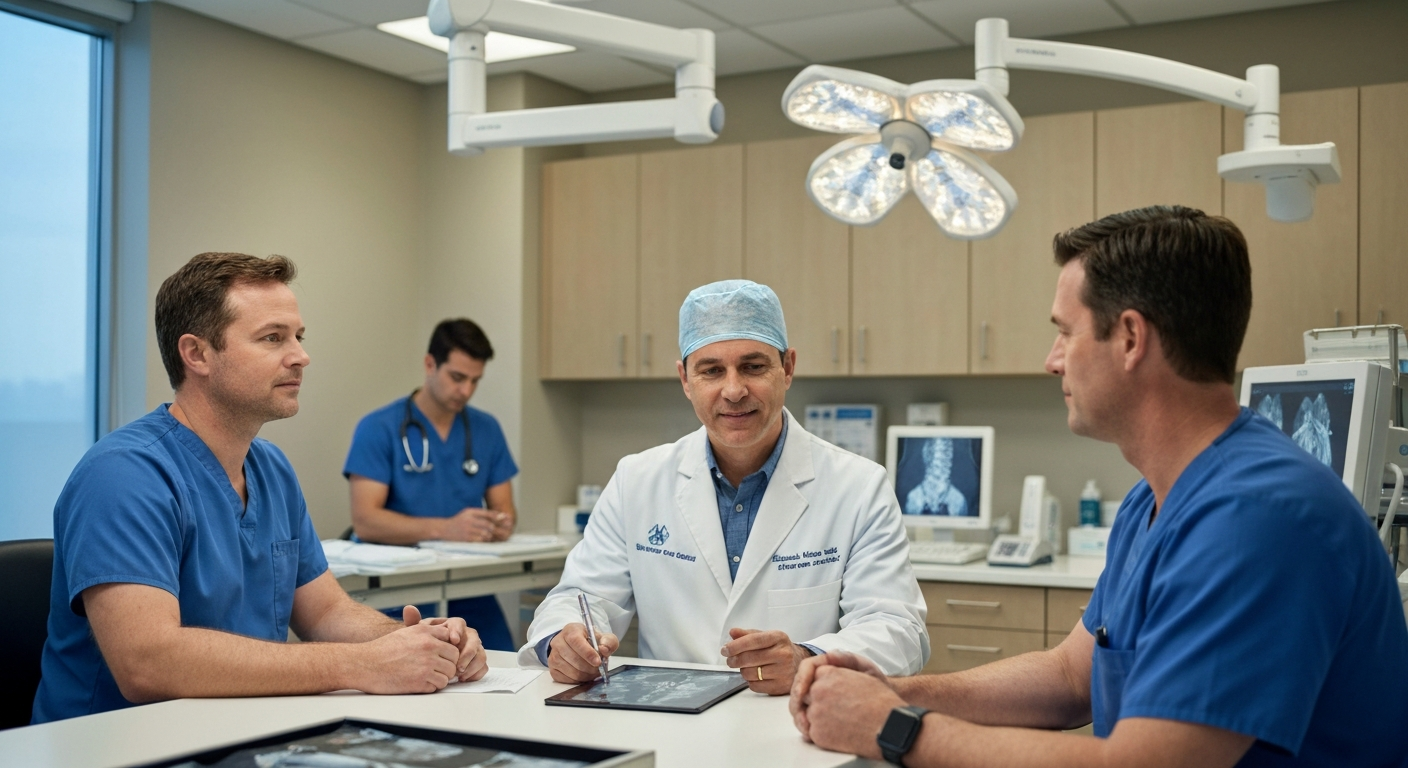
Within neurosurgery, spine surgery has emerged as a distinct subspecialty. Many neurosurgeons choose to focus exclusively on spine conditions rather than brain tumors, vascular neurosurgery, or trauma. Fellowship-trained spine surgeons complete specifically in spine procedures after their neurosurgery residency.
Board certification validates this expertise and demonstrates a surgeon’s commitment to maintaining current knowledge. The American Board of Neurological Surgery requires ongoing continuing education to maintain board certification, ensuring that certified neurosurgeons stay current with the latest techniques and treatment protocols.
Not all neurosurgeons perform spine surgery regularly. Some focus primarily on pediatric neurosurgery, skull base tumors, or neurological trauma. This is why asking specifically about spine specialization matters when selecting your surgeon.
Key Credentials to Look for in a Spine Surgeon
Understanding which credentials indicate true expertise helps you evaluate potential surgeons effectively. The most important qualifications include:
- Board certification by the American Board of Neurological Surgery (ABNS): ABNS board certification requires completion of an accredited neurosurgery residency and passage of comprehensive examinations. This certification demonstrates that the surgeon has met national standards for knowledge, skill, and ethical practice.
- Fellowship training in spine surgery: Fellowship training in spine surgery typically requires 1-2 years of focused training in minimally invasive and open spine techniques. This additional training provides specialized expertise that general neurosurgery residency alone may not offer.
- FAANS designation: Fellow of the American Association of Neurological Surgeons recognizes surgeons who have demonstrated exceptional commitment to the field and met rigorous membership criteria.
- Hospital privileges and affiliations: Surgeons affiliated with reputable medical centers undergo credentialing processes that verify their training, experience, and track record.
- Years of experience performing your specific procedure: A surgeon who regularly performs the procedure you need develops refined technical skills and can better anticipate and manage potential complications.
Some spine surgeons bring additional credentials that enhance their practice. which can translate to better-coordinated care and improved systems for monitoring results.
At Legent Spine, our fellowship-trained specialists, including Dr. Ricky Kalra, bring board certification and extensive experience to every patient consultation.
Board Certification vs. Board Eligibility
This distinction confuses many patients, but it matters significantly. Board certification means a surgeon has completed their training and successfully passed comprehensive written and oral examinations administered by the American Board of Neurological Surgery.
Board eligibility simply means the surgeon meets the requirements to sit for the examinations but hasn’t yet passed them. While newly trained surgeons may be board eligible immediately after residency, they should obtain full board certification within a reasonable timeframe.
Always ask directly about certification status rather than assuming eligibility equals certification. A board-certified neurosurgeon has demonstrated mastery of their field through rigorous testing.
Minimally Invasive Spine Surgery Expertise
The surgical approach your neurosurgeon uses can significantly impact your recovery experience and outcomes. These techniques use smaller incisions, specialized instruments, and advanced imaging to access the spine while minimizing disruption to surrounding muscles and tissues.
However, not all spine surgeons offer or specialize in minimally invasive approaches. The ideal spine surgeon has training in both traditional and minimally invasive techniques, allowing them to recommend the approach best suited to your specific condition rather than defaulting to one method for all patients.
Experience with specific minimally invasive platforms and technology matters because these techniques require different skills than open surgery.
When researching a spine surgeon in Plano or surrounding areas, ask specifically about their minimally invasive experience and what percentage of their cases use these approaches.
Finding Expert Spine Care in the Dallas Area
The Greater Dallas area offers access to exceptional spine care, with board-certified spine neurosurgeons serving patients throughout North Texas. Many specialists, including those at Legent Spine, operate at multiple locations for patient convenience. For more information, see our page on expect seeing board certified neurosurgeon spine care.
which ensures patients have access to facilities that meet rigorous safety and quality standards. Teaching hospitals and academic medical centers in the area often employ highly trained spine surgeons who combine clinical practice with research and education.
Hospital affiliation and surgical center accreditation indicate important quality standards. Surgeons who perform procedures at accredited facilities undergo regular credentialing reviews and work within systems designed to optimize patient safety.
When Dallas spine patients are choosing the right neurosurgeon, proximity matters, but expertise should remain the primary consideration. A slightly longer drive to see a fellowship-trained specialist often pays dividends in better outcomes and fewer complications.
Questions to Ask During Your Consultation
Your initial consultation provides an opportunity to evaluate not just the surgeon’s credentials but also their communication style and treatment philosophy. Come prepared with specific questions:
- Are you board-certified by the American Board of Neurological Surgery? This straightforward question establishes foundational credentials.
- Did you complete fellowship training in spine surgery? Follow up by asking where and when to understand the depth of their specialized preparation.
- How many times have you performed this specific procedure? Experience with your particular condition or surgery type matters more than general surgical volume.
- What are your success rates and complication rates for this procedure? Reputable surgeons track outcomes and can discuss realistic expectations.
- Do you recommend conservative treatment before surgery? The most experienced surgeons exhaust appropriate non-surgical options first.
- What minimally invasive options do you offer? Understanding the surgeon’s technical capabilities helps you evaluate whether they can provide the full spectrum of treatment approaches.
- Which hospitals and surgical centers do you work with? Affiliations with accredited facilities indicate quality standards and can affect your insurance coverage.
Pay attention not just to the answers but to how the surgeon communicates. Do they take time to explain concepts clearly? Do they welcome questions or seem rushed?
Understanding Treatment Philosophy
Experienced spine surgeons often recommend non-surgical treatment first. Physical therapy, targeted injections, medications, and lifestyle modifications successfully manage many spine conditions without surgery. A surgeon who immediately recommends surgery for a condition that typically responds to conservative care may not have your long-term interests in mind.
Surgery should be recommended when conservative treatments haven’t provided adequate relief after a reasonable trial period, or in emergency situations where neurological function is at risk. A surgeon who takes time to discuss all available options, explains why they’re recommending a particular approach, and respects your preferences demonstrates a patient-centered philosophy.
This comprehensive approach to care reflects a commitment to finding the right solution for each individual patient. When a surgeon discusses both the benefits and limitations of surgery honestly, you can trust they’re prioritizing your long-term wellness over surgical volume.
The Importance of Comprehensive Evaluation
Accurate diagnosis forms the foundation of effective treatment. A surgeon who rushes through evaluation or bases recommendations on limited information may miss important details that affect treatment success.
Experienced spine surgeons take time to understand not just your imaging findings but also how symptoms affect your daily life, what treatments you’ve already tried, and what your goals are for treatment. They perform thorough physical examinations to assess strength, sensation, reflexes, and range of motion.
Dedicated care coordinators who help manage the entire treatment journey—from initial consultation through recovery—provide continuity and support that improves the patient experience.
Transparent communication about realistic expectations matters tremendously. A surgeon who promises perfect results isn’t being honest about the realities of spine surgery. The most trustworthy physicians discuss potential complications openly, explain what success looks like for your specific condition, and set realistic timelines for recovery.
What Happens After Surgery: Recovery and Follow-Up Care
Your relationship with your spine surgeon extends well beyond the operating room. Recovery protocols vary significantly based on the procedure performed, with minimally invasive approaches generally allowing faster return to activities than traditional open surgery. Minimally invasive spine surgery patients typically return to light activities within 2-4 weeks, while recovery from open surgery may take 6-12 weeks.
Follow-up appointments serve critical functions in monitoring healing and addressing potential complications early. Surgeons who maintain robust follow-up programs and make themselves accessible during recovery demonstrate commitment to long-term results.
Physical therapy often plays a crucial role in recovery success. Your surgeon should provide clear guidance about when to begin therapy, what activities to avoid, and how to progress safely. Some surgeons work closely with specific physical therapists who understand their surgical techniques and recovery protocols.
Access to your surgical team during recovery provides peace of mind. When you can reach someone who knows your case if questions or concerns arise, you feel supported throughout the healing process.
Making Your Decision: How to Choose the Right Surgeon
After gathering information, trust your judgment to make the final decision. Prioritize board certification and fellowship training as foundational requirements. Consider the surgeon’s specific experience with your condition—a neurosurgeon who regularly treats your diagnosis will have refined expertise that improves outcomes.
Evaluate communication style carefully. You need a surgeon who listens to your concerns, explains concepts clearly, and treats you as a partner in treatment decisions. The physician-patient relationship significantly impacts your experience and satisfaction with care.
Check hospital affiliations and read patient reviews, but recognize that online reviews may not tell the complete story. Some of the most skilled surgeons treat the most complex cases, which can result in higher complication rates than surgeons who select only straightforward cases.
Don’t choose based on cost alone. While insurance coverage and out-of-pocket expenses matter, expertise and experience provide value that extends far beyond the initial price. Complications from inadequate surgery can cost far more—financially and personally—than investing in expert care from the beginning.
Trust your instinct about the surgeon-patient relationship. If you feel rushed, dismissed, or uncomfortable during your consultation, those concerns are valid. You deserve a surgeon who makes you feel heard, respected, and confident in their care.
If you’re searching for a spine surgeon in Plano or anywhere in the Greater Dallas area, Legent Spine offers the board certification, fellowship training, and patient-centered approach you deserve. Our specialists combine technical excellence with compassionate care, taking time to understand your unique situation and develop personalized treatment plans. Contact us today to schedule a comprehensive evaluation and take the first step toward lasting relief from spine pain.