
Choosing the right specialist for your spine care is one of the most important decisions you’ll make when dealing with back or neck pain. If you’ve been referred to see a neurosurgeon, or are considering dallas spine patients choosing right neurosurgeon, understanding what to expect during your care can reduce anxiety and help you make informed decisions. At Legent Spine, our fellowship-trained specialists provide comprehensive spine care to patients throughout the Greater Dallas area, combining advanced medical expertise with personalized, patient-centered treatment.
Many patients wonder why they’re being referred to a neurosurgeon rather than seeing their regular doctor or a general orthopedic surgeon. The answer lies in the specialized training and expertise that board-certified neurosurgeons bring to complex spine conditions. This guide will walk you through what happens when you expect seeing board certified neurosurgeon spine care, from your first consultation to understanding treatment options.
Understanding the Role of a Board-Certified Neurosurgeon
Board-certified neurosurgeons represent the highest level of training in surgical spine care. Unlike general practitioners or even some orthopedic surgeons, neurosurgeons complete including residency and often fellowship programs specifically focused on the spine and nervous system. This extensive education equips them to handle both straightforward and highly complex spine conditions.
The path to board certification is rigorous and demanding. After completing medical school, aspiring neurosurgeons enter residency programs where they gain hands-on experience treating conditions affecting the brain, spine, and nervous system. The American Board of Neurological Surgery certification requires passing comprehensive examinations demonstrating deep expertise in diagnosing and treating these intricate conditions.
Many neurosurgeons, including our specialists at Legent Spine, pursue additional fellowship training beyond residency. in complex spine procedures and minimally invasive techniques. This advanced preparation allows them to offer the latest surgical innovations while also providing expert guidance on conservative, non-surgical treatments.
Credentials like FAANS (Fellow of the American Association of Neurological Surgeons) indicate that a neurosurgeon has met stringent requirements for experience, ethical practice, and continuing education. When you see these credentials alongside a surgeon’s name, you’re working with someone committed to maintaining the highest standards of spine care.
What Happens During Your First Neurosurgeon Consultation
Your initial consultation with a neurosurgeon is designed to be thorough and informative. Rather than rushing through an appointment, Dr. Ricky Kalra and our team take time to understand your complete medical history, symptoms, and how your spine condition affects your daily life.
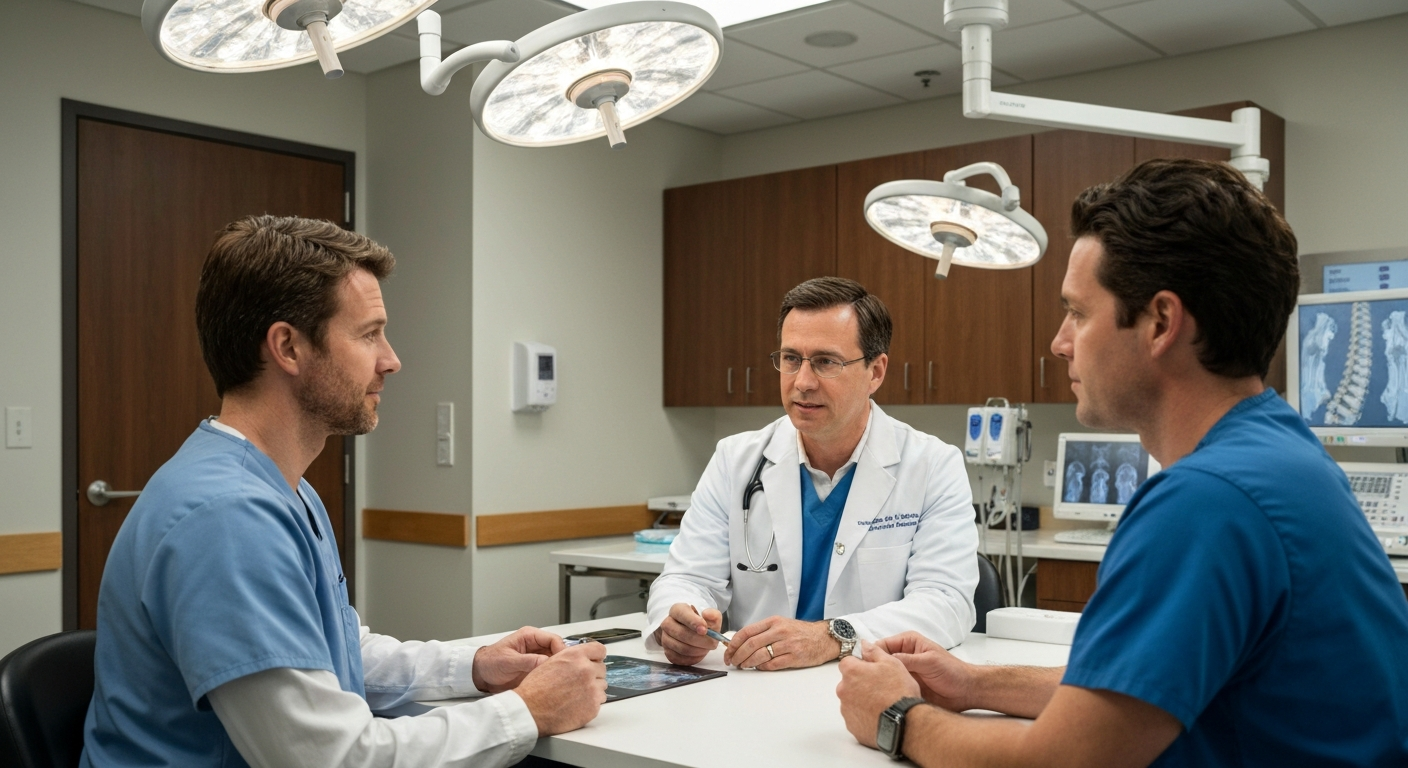
The consultation typically begins with a detailed discussion of your symptoms. Your neurosurgeon will ask specific questions about when your pain started, what makes it better or worse, whether you experience numbness or weakness, and how the condition impacts your work, sleep, and activities. This conversation provides crucial context that imaging alone cannot reveal.
Next comes the physical and neurological examination. to assess nerve function. Your neurosurgeon may ask you to perform specific movements, walk on your heels or toes, or respond to light touches at various points along your body. These tests help pinpoint which nerves or spinal structures might be affected.
If you’ve already had imaging studies like X-rays, MRI, or CT scans, your neurosurgeon will review these carefully during your appointment. and identify the source of compression or damage causing your symptoms. Your surgeon will often show you these images, pointing out areas of concern and explaining exactly what’s happening in your spine.
One of the most valuable aspects of this consultation is receiving a clear explanation of your diagnosis. Board-certified neurosurgeons translate complex medical terminology into language you can understand, ensuring you know not just what’s wrong, but why it’s causing your specific symptoms.
Finally, your neurosurgeon will present personalized treatment recommendations. These may range from conservative approaches like physical therapy and medication to interventional procedures or surgery. A qualified spine specialist will explain all options available to you, including the benefits and risks of each approach.
Minimally Invasive Spine Surgery: A Modern Approach
When surgery becomes necessary, minimally invasive techniques have revolutionized what patients can expect during recovery. These advanced approaches represent a significant departure from traditional open spine surgery, offering substantial benefits for appropriate candidates.
compared to traditional open surgery incisions that may be several inches in length. This smaller access point means less disruption to the muscles and tissues surrounding your spine.
The advantages of minimally invasive surgery extend well beyond smaller scars. By preserving more of the muscle and soft tissue, patients typically experience less post-operative pain and require fewer pain medications during recovery. The reduced tissue trauma also translates to lower infection risk and less blood loss during the procedure.
Recovery times represent one of the most significant benefits for patients. for traditional open spine surgery. This faster return to normal activities means less time away from work, family responsibilities, and the activities you enjoy.
Hospital stays are also typically shorter with minimally invasive approaches. Many patients go home the same day or after just one overnight stay, rather than spending several days in the hospital. This not only reduces healthcare costs but also allows you to recover in the comfort of your own home.
It’s important to understand that minimally invasive surgery isn’t appropriate for every condition or every patient. when performed by experienced surgeons. Your neurosurgeon will evaluate whether you’re a candidate for these techniques based on your specific diagnosis, anatomy, and overall health.
Advanced Technology in Modern Spine Surgery
Fellowship-trained spine surgeons utilize sophisticated technology to enhance surgical precision and safety. Computer-assisted navigation, intraoperative imaging, and specialized instruments allow surgeons to work through smaller incisions while maintaining excellent visualization and control throughout the procedure.
Finding the Right Neurosurgeon in the Greater Dallas Area
For residents throughout Dallas, Plano, Frisco, and surrounding communities, selecting the right spine specialist requires careful consideration. The quality of your surgeon directly impacts your treatment experience and outcomes, making this decision worth the time and research. For more information, see our page on best spine surgeon in plano tx 2.
Start by verifying board certification and credentials. or the American Board of Neurological Surgery. This independent verification confirms that the surgeon has met rigorous training and examination requirements.
Experience with your specific condition matters significantly. so don’t hesitate to ask about procedure volume and success rates. A best spine surgeon in plano tx will be transparent about their experience and outcomes.
Fellowship training provides an additional layer of expertise. Surgeons who have completed fellowship programs in spine surgery have dedicated extra years specifically to mastering complex spine procedures and staying current with the latest techniques. At Legent Spine, our fellowship-trained specialists bring this advanced expertise to every patient consultation and treatment plan.
Hospital affiliations also matter when evaluating spine surgeons. Surgeons who maintain privileges at respected hospitals have passed additional credentialing reviews and quality assessments. These affiliations ensure access to quality facilities and support staff should you need surgery.
Finally, consider the surgeon’s commitment to patient communication. Excellent neurosurgeons take time to listen to your concerns, answer questions thoroughly, and ensure you understand your condition and treatment options. This partnership approach to care leads to better decision-making and higher patient satisfaction.
The Importance of Conservative Care Before Surgery
Responsible spine specialists recognize that surgery should rarely be the first treatment option. At Legent Spine, our neurosurgeons emphasize conservative care whenever appropriate, reserving surgical intervention for situations where non-surgical treatments haven’t provided adequate relief.
Research shows that 80-90% of patients with acute back pain improve within 4-6 weeks with conservative treatment including physical therapy, medication, and activity modification. This statistic underscores why rushing into surgery rarely makes sense for most spine conditions.
Physical therapy and targeted exercise programs often form the foundation of conservative treatment. A skilled physical therapist can teach you exercises that strengthen supporting muscles, improve flexibility, and reduce stress on affected spinal structures. These benefits often provide lasting relief without surgical intervention.
Anti-inflammatory medications, whether over-the-counter or prescription, can help reduce pain and swelling around irritated nerves and joints. Your neurosurgeon will recommend appropriate medications based on your specific condition and medical history.
For some conditions, epidural steroid injections can provide significant relief by delivering anti-inflammatory medication directly to the affected area of your spine. These injections can reduce nerve irritation and pain, sometimes providing months of improvement.
Activity modification and ergonomic adjustments often play important roles in conservative care. Your spine specialist may recommend changes to your workspace, sleeping position, or daily activities that reduce stress on your spine and promote healing.
before considering surgical intervention for most non-emergency conditions. This timeframe allows your body’s natural healing processes to work while giving conservative treatments time to take effect.
What Sets Experienced Spine Specialists Apart
As you evaluate potential neurosurgeons in the Dallas area, certain qualities distinguish truly exceptional spine specialists from the rest. These characteristics reflect not just technical skill but a philosophy of patient-centered care.
Transparent communication about risks and benefits represents a cornerstone of ethical spine care. Experienced surgeons discuss both the potential advantages and possible complications of any recommended treatment, ensuring you can make informed decisions about your care. report higher satisfaction and better outcomes.
Personalized treatment plans, rather than one-size-fits-all protocols, acknowledge that every patient’s situation is unique. Your age, occupation, activity level, overall health, and personal goals all influence which treatments are most appropriate for you. Dr. Duane Pitt and our team develop individualized approaches tailored to each patient’s specific needs.
Dedicated care coordination throughout your treatment journey ensures you’re never left wondering what comes next. From scheduling appointments to coordinating with physical therapists and managing follow-up care, exceptional spine practices provide seamless support at every stage.
A commitment to evidence-based techniques means your surgeon stays current with the latest research and incorporates proven innovations into practice. Medicine evolves rapidly, and experienced neurosurgeons continuously refine their approaches based on emerging evidence about what works.
Perhaps most importantly, exceptional spine specialists focus on patient outcomes rather than simply performing procedures. They measure success not by how many surgeries they perform, but by how many patients achieve meaningful improvements in pain, function, and quality of life.
Your Partner in Spine Health Throughout Greater Dallas
At Legent Spine, we understand that dealing with spine pain or considering surgery can feel overwhelming. Our board-certified, fellowship-trained neurosurgeons are committed to providing the expert care you deserve while treating you with the compassion and respect you expect. For more information, see our page on expect seeing board certified neurosurgeon spine care 2.
From our state-of-the-art facilities serving the Dallas area, we offer comprehensive evaluations, advanced minimally invasive surgical techniques, and dedicated support throughout your treatment journey. Whether you’re dealing with a herniated disc, spinal stenosis, degenerative conditions, or complex spine problems, our team has the expertise to help.
If you’re experiencing persistent back or neck pain, numbness, weakness, or other spine-related symptoms, we encourage you to schedule a consultation. During your visit, we’ll conduct a thorough evaluation, explain your diagnosis clearly, and discuss all treatment options available to you. Our goal is to help you make informed decisions about your spine health and achieve the best possible outcome.
Contact Legent Spine today to learn more about how our fellowship-trained neurosurgeons can help you find relief from spine pain and return to the activities you love. Your journey to better spine health starts with the right specialist, and we’re here to provide the expert, compassionate care you need.