
Introduction: Understanding Your Treatment Options
If you’re among the many active Dallas-area residents experiencing persistent leg pain, numbness, or difficulty walking due to lumbar spinal stenosis, understanding your surgical options is crucial. Laminectomy spinal stenosis treatment and spinal fusion represent two primary surgical approaches, each with distinct benefits and considerations.
creating symptoms that can significantly impact your quality of life.
The right choice between these procedures depends on your individual anatomy, the severity of your stenosis, and specific factors like spinal stability. At Legent Spine, our board-certified surgeons evaluate each patient’s unique situation to recommend the most appropriate surgical approach. For those exploring their options, comparing laminectomy vs spinal fusion provides essential insight into what each procedure offers and which might be better suited to your condition and lifestyle goals.
What is Lumbar Stenosis?
This narrowing of the spinal canal places pressure on the nerve roots that travel through your lower back, creating symptoms that affect your daily activities.
Common symptoms include leg pain (often described as burning or aching), numbness or tingling that radiates down one or both legs, weakness in the legs or feet, and progressive difficulty walking longer distances. Many patients notice that —a pattern known as neurogenic claudication.
Age-related degeneration is the primary cause, making this condition increasingly common among active adults in their 50s, 60s, and beyond. For those maintaining busy lifestyles in the Greater Dallas area, the progressive nature of lumbar stenosis often requires intervention to preserve mobility and prevent permanent nerve damage.
Understanding Laminectomy: The Decompression Approach
Think of it as creating more room within the spinal canal by removing the bony overhang that’s pinching the nerves.
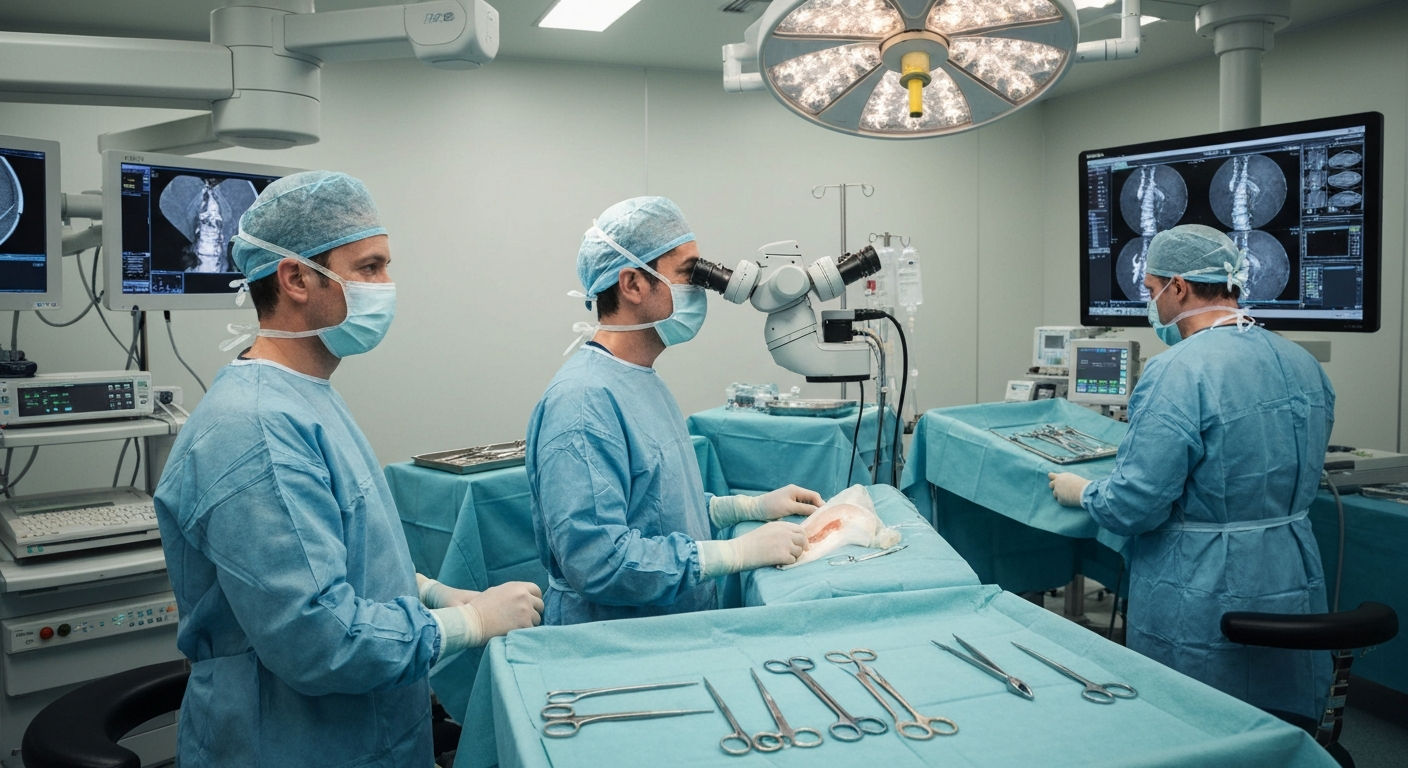
This decompression approach relieves pressure without fusing vertebrae together, which means your spine maintains its natural ability to move and flex at the treated level. Modern minimally invasive techniques have transformed this procedure, allowing fellowship-trained specialists like Jean Louis Benae to perform laminectomies through smaller incisions with specialized instruments.
For many Dallas patients with lumbar stenosis who don’t have significant spinal instability, laminectomy offers effective symptom relief while preserving spinal motion—an important consideration for those hoping to maintain active lifestyles.
Laminectomy Benefits and Considerations
The advantages of laminectomy make it an attractive option for appropriate candidates. may Patients typically experience shorter surgical times and hospital stays compared to fusion procedures, often leaving the hospital within 24 hours or even the same day for minimally invasive approaches.
Because the surgery maintains natural spinal mobility at the treated level, many patients find they can return to a wider range of activities without permanent motion restrictions. The smaller incisions used in minimal access techniques also carry lower infection risks and result in less post-operative discomfort.
However, it’s important to understand the considerations as well. In cases where underlying instability exists or develops later, some patients may require additional surgery. Your spine specialist will carefully evaluate imaging studies and physical findings to determine whether laminectomy alone provides sufficient treatment for your specific condition.
Understanding Spinal Fusion: The Stabilization Approach
This combined approach first addresses the nerve compression through decompression, similar to a laminectomy, then adds stabilization by fusing the affected vertebrae.
The fusion process uses bone graft material—either from your own body or synthetic sources—along with metal hardware to create a solid connection between vertebrae. Over several months, the bone grows together into a single, solid segment. This permanently prevents abnormal motion at the treated level, which is precisely the goal when instability or deformity accompanies stenosis.
For patients whose spinal segments have begun to slip out of position or who have developed abnormal movement between vertebrae, fusion provides the long-term stability that decompression alone cannot achieve.
Spinal Fusion Benefits and Considerations
Spinal fusion offers distinct advantages for patients with combined stenosis and instability. The procedure provides long-term stability and can correct alignment issues that contribute to symptoms and progressive degeneration.
By eliminating motion at the problematic segment, fusion prevents the progression of listhesis (vertebral slippage) and reduces the likelihood of needing additional surgery at the same level. However, patients should understand the trade-offs involved.
The fused segment no longer moves, which means adjacent spinal levels must compensate for this loss of motion—potentially increasing stress on those segments over time. The rehabilitation process requires patience and commitment to physical therapy, and some permanent activity modifications may be necessary, particularly for high-impact sports or activities involving significant twisting motions.
Key Differences: Laminectomy vs. Spinal Fusion
Understanding the fundamental differences between these approaches helps frame expectations and decision-making. Motion preservation represents laminectomy’s primary advantage—your spine continues to flex and move at the treated level, which many patients value for maintaining their active lifestyles. Fusion, conversely, provides superior stability and durability when instability exists, addressing mechanical problems that decompression alone cannot fix.
The recovery timelines differ substantially: may laminectomy patients typically return to normal activities within 6-8 weeks, while fusion patients require 3-6 months for initial healing and may need up to a year for complete fusion to occur.
Long-term activity considerations also vary. Laminectomy patients generally face fewer permanent restrictions, though they must remain aware of potential future degeneration. Adjacent segment degeneration represents a concern with both approaches, though the altered biomechanics following fusion may accelerate this process at neighboring levels. For more detailed comparisons, reviewing laminectomy vs spinal fusion 2 resources can provide additional perspective on these important distinctions.
Factors That Influence Your Surgical Choice
Your spine specialist considers multiple factors when recommending either laminectomy or fusion. Flexion-extension X-rays reveal whether your vertebrae move abnormally when you bend forward and backward, while MRI studies show the degree of nerve compression and disc degeneration.
The severity of your symptoms and how they limit your daily function also guide treatment selection—more severe cases may warrant the comprehensive approach that fusion provides.
Your age and overall health status factor into the equation as well, as fusion requires a longer healing commitment and the ability to undergo a more extensive procedure. The presence of degenerative disc disease at the stenotic level may push the recommendation toward fusion, as unstable discs benefit from stabilization. Finally, your activity level and personal goals matter tremendously—a patient hoping to return to golf or tennis may prioritize motion preservation differently than someone whose primary goal is simply walking without leg pain.
Recovery and Rehabilitation Expectations
Setting realistic expectations about post-surgical recovery helps patients plan appropriately and stay motivated through the healing process. Following laminectomy, most patients spend one night in the hospital or may even go home the same day if minimally invasive techniques are used. The initial recovery period spans 2-4 weeks, during which you’ll gradually increase activity while avoiding heavy lifting and excessive bending.
By 6-8 weeks, many patients return to normal daily activities, though high-impact sports may require additional healing time.
Fusion recovery follows a more gradual trajectory. Spinal fusion patients typically require 8-12 weeks of activity restrictions, including no lifting, bending, or twisting, during the early healing phase. The fusion process itself takes 3-6 months as bone grows together, and full return to activities often requires 4-6 months or longer.
Physical therapy plays a critical role in both procedures, helping you rebuild core strength, improve flexibility, and learn proper body mechanics to protect your spine. Understanding Baytown patients guide laminectomy recovery essential principles can help set expectations, though your surgeon will provide personalized guidance based on your specific procedure and healing progress.
Minimally Invasive Options in the Dallas Area
Dallas-area residents have access to advanced surgical techniques that reduce surgical trauma and accelerate recovery. These techniques use tubular retractors that create a working channel to the spine while gently moving muscles aside rather than cutting through them.
For laminectomy, this means smaller incisions (often 1-2 inches rather than 3-4 inches), less disruption to the back muscles and soft tissues, and typically reduced post-operative pain and faster mobilization. Even some fusion procedures can be performed using minimally invasive approaches, though not all cases are suitable for these techniques.
At Legent Spine, our surgeons evaluate each patient’s anatomy and pathology to determine whether minimally invasive techniques are appropriate—the goal is always the best outcome rather than using a particular technique for its own sake. When minimally invasive approaches are suitable, patients typically experience shorter hospital stays, less pain medication requirements, and faster return to their daily routines.
Success Rates and Long-Term Outcomes
Evidence-based medicine provides reassuring data about both surgical approaches when applied to appropriately selected patients. These success rates reflect patients whose primary problem is nerve compression without significant mechanical instability.
The key phrase here is “carefully selected”—outcomes improve dramatically when the right procedure is matched to the right patient and pathology.
Individual results vary based on numerous factors including age, overall health, severity of nerve compression before surgery, duration of symptoms, and commitment to post-operative rehabilitation. Long-term satisfaction depends heavily on proper patient selection—performing fusion on someone who only needed decompression may result in unnecessary motion loss and prolonged recovery, while attempting decompression alone when instability exists sets up a higher likelihood of symptom recurrence. Adjacent segment degeneration occurs over time with both approaches, though it represents a natural continuation of the degenerative process rather than a failure of the original surgery.
What Dallas Patients Should Consider When Choosing
Your surgeon’s recommendation, based on objective findings from MRI, CT scans, and X-rays, provides the medical foundation for the decision.
The severity of your symptoms and your functional goals guide the urgency and aggressiveness of intervention—someone unable to walk across a parking lot has different needs than someone whose stenosis limits distance hiking. Your activity level and lifestyle requirements also factor prominently into the discussion.
Patients who are more concerned with motion preservation and shorter recovery may prefer laminectomy, while those with significant instability require fusion for durable long-term outcomes. Understanding the trade-offs between motion preservation and stability helps clarify your priorities. Finally, consider the recovery timeline in the context of your life—can you commit to 3-6 months of modified activity if fusion is recommended, or does your work and family situation require a faster return to full function?
Having honest conversations with Dr. Paul Salinas or another fellowship-trained specialist ensures your treatment plan aligns with both your medical needs and personal circumstances. Additional context from laminectomy vs spinal fusion 3 perspectives can further inform your understanding.
Conclusion: Getting Expert Guidance for Your Decision
Both laminectomy and spinal fusion have proven effectiveness when applied to appropriate clinical situations—the key lies in matching the right procedure to your specific anatomy, symptoms, and goals. Your individual pathology determines the best approach: patients with isolated stenosis and stable spines often achieve excellent outcomes with laminectomy alone, while those with concurrent instability or listhesis require the comprehensive treatment that fusion provides.
Board-certified spine specialists evaluate multiple factors including imaging findings, physical examination results, symptom severity, and your activity requirements to formulate personalized recommendations. Early intervention, when symptoms become functionally limiting despite conservative treatment, prevents this progression and optimizes outcomes.
Moving forward requires partnering with experienced specialists who can explain your options clearly and help you make an informed decision.
If you’re experiencing persistent leg pain, numbness, or walking difficulties from lumbar stenosis, our team at Legent Spine is ready to provide the expert evaluation and personalized care you deserve. Contact our dedicated care coordinators to schedule a comprehensive consultation and take the first step toward relief from your symptoms.