
Understanding C5-C6 Foraminal Stenosis
Cervical foraminal stenosis occurs when the openings through which nerve roots exit your spinal canal become narrowed, potentially compressing the nerves. This narrowing typically develops from disc degeneration, bone spurs, or thickened ligaments—all of which reduce the space your nerve root needs to pass through comfortably. For more information, see our page on signs you may spinal canal stenosis.
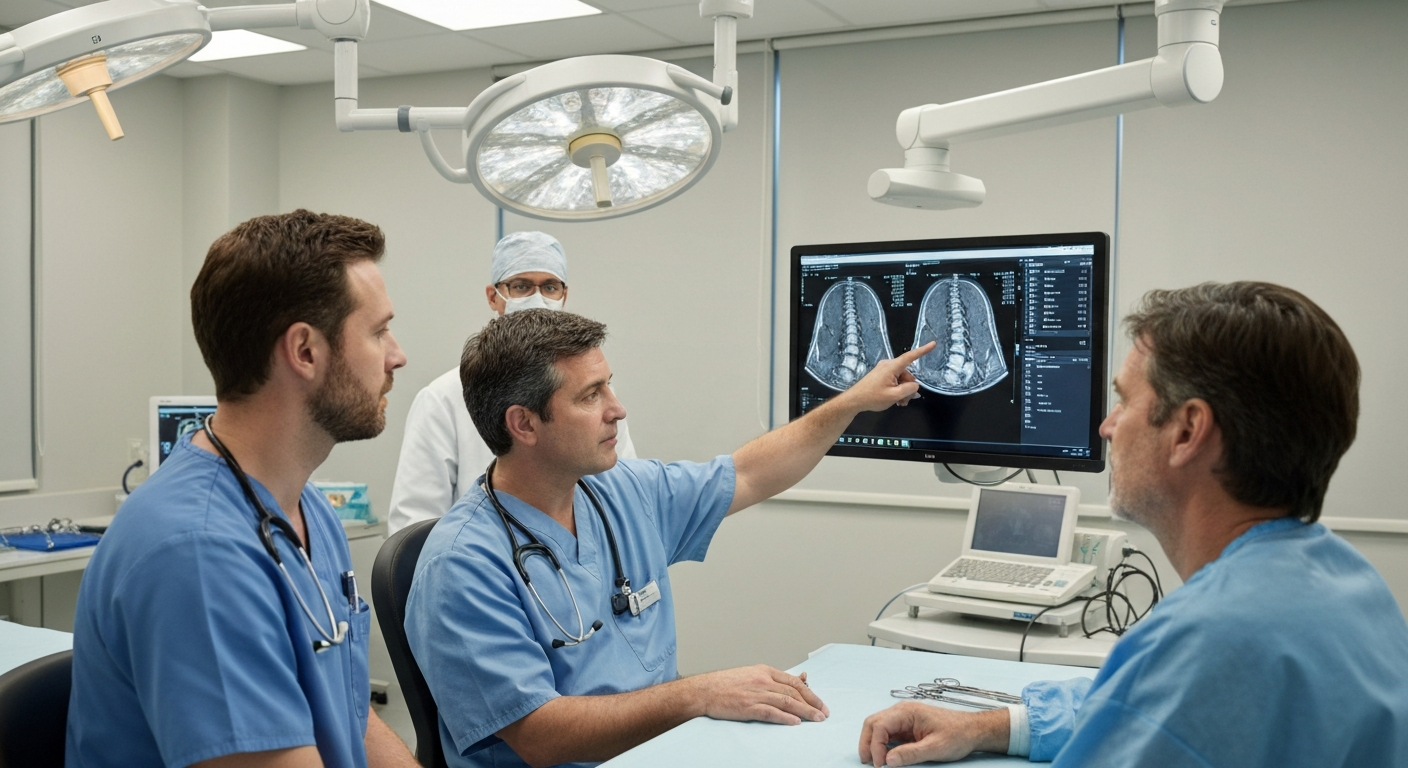
The C5-C6 level is particularly vulnerable because it’s a highly mobile segment that experiences substantial stress during everyday activities. When this nerve becomes compressed, you may experience a distinctive pattern of symptoms that can significantly impact your daily life. Recognizing these spinal canal stenosis symptoms early helps you seek timely evaluation and treatment.
This condition predominantly affects middle-aged and older adults, with degenerative changes being the primary cause. Research indicates that degenerative disc disease affects over 90% of people aged 60 years or older, making age-related wear and tear a significant risk factor. However, younger individuals with previous neck injuries, poor posture, or jobs requiring repetitive neck movements may also develop foraminal stenosis. Early diagnosis and intervention are particularly important for preserving nerve function and preventing long-term complications.
At Legent Spine, our board-certified spine specialists provide comprehensive evaluations for patients throughout the Greater Dallas area experiencing symptoms related to cervical foraminal stenosis. If you’re dealing with persistent neck or arm pain, scheduling a consultation can help determine whether C5-C6 foraminal stenosis might be contributing to your symptoms and which treatment approach would work best for your specific situation.
Common Symptoms of C5-C6 Foraminal Stenosis
The symptom pattern typically follows the C6 nerve root distribution, which means you’ll often notice issues affecting specific areas of your arm rather than generalized discomfort.
Neck pain and stiffness are frequently the first symptoms you might notice, particularly when turning your head or looking upward. This discomfort may stay localized to one side of your neck or radiate across your shoulder blade. Many patients report that symptoms worsen with certain positions or activities—such as driving for extended periods, working at a computer, or sleeping in particular positions that compress the affected nerve root.
Radiating arm pain is a hallmark of C6 nerve root compression. This pain often travels from your neck down through your shoulder, along the outside of your upper arm, and into your thumb and index finger. creating a “pins and needles” feeling that can be particularly bothersome at night or upon waking.
Weakness represents a more concerning symptom that suggests significant nerve compression. You may notice difficulty with activities requiring biceps strength, such as carrying groceries or lifting objects. Weakness in wrist extension—the movement that pulls your hand upward—can also occur, making everyday tasks like opening jars or gripping tools firmly more challenging.
Understanding the difference between mild and severe symptoms helps determine urgency of treatment. Mild symptoms might include occasional tingling or discomfort that resolves with rest. Severe symptoms involve persistent weakness, constant pain that interferes with sleep, or progressive numbness affecting hand function. If you’re experiencing any combination of these symptoms, particularly those affecting hand strength or coordination, seeking evaluation from a spine specialist is advisable.
How Foraminal Stenosis Is Diagnosed
During your initial consultation, your spine specialist will ask when symptoms began, which activities make them worse or better, and whether you’ve experienced any progression over time. This conversation provides valuable context for interpreting physical examination findings and imaging studies.
The physical examination includes neurological testing to assess strength, reflexes, and sensation throughout your upper extremities. Reflex testing, particularly of the biceps reflex, can reveal subtle changes indicating nerve involvement. Additionally, provocative maneuvers like the Spurling test—which involves extending and rotating your neck toward the affected side—may reproduce your symptoms, suggesting nerve root compression.
Unlike X-rays, which primarily show bone structures, MRI provides detailed visualization of soft tissues including discs, nerves, and ligaments. This allows your spine specialist to see exactly how much space remains in the foramen and what structures are contributing to the narrowing. CT scans may be ordered as a complementary study, particularly when bone spurs or specific bony anatomy needs closer evaluation.
In some cases, nerve conduction studies or electromyography (EMG) testing may be recommended to confirm which specific nerve root is affected and assess the severity of nerve damage. These electrodiagnostic tests measure how well electrical signals travel through your nerves and muscles, providing objective data about nerve function that complements imaging findings.
Specialist evaluation is essential for accurate diagnosis because cervical foraminal stenosis can sometimes mimic other conditions affecting the shoulder or arm. Conditions like rotator cuff tears, carpal tunnel syndrome, or peripheral nerve entrapment may produce similar symptoms. A fellowship-trained spine surgeon has the expertise to differentiate between these diagnoses and develop an appropriate treatment plan based on comprehensive evaluation findings. For more information, see our page on foraminal stenosis vs spinal stenosis 2.
What Imaging Reveals
When reviewing your MRI results, your spine specialist will look for several key findings that contribute to foraminal narrowing at C5-C6. Each of these factors reduces the available space within the foramen through which the C6 nerve root must pass.
Disc bulging or herniation at the C5-C6 level occurs when disc material extends beyond its normal boundaries, potentially pressing against the nerve root as it exits the spinal canal. Bone spurs, which develop as part of the degenerative process, can form along the vertebral margins or within the foramen itself, creating additional mechanical compression. Thickening of the ligamentum flavum—a ligament that runs along the back of the spinal canal—may also contribute to stenosis, particularly when combined with other degenerative changes. For more information, see our page on tomball patients spinal canal stenosis.
Imaging studies allow grading of stenosis severity, typically classified as mild, moderate, or severe based on the degree of foraminal narrowing and nerve root compression visible on the scan. This grading helps guide treatment decisions, as mild stenosis might respond well to conservative management, while severe stenosis with significant nerve compression may require surgical intervention to prevent permanent neurological damage.
Complications of Untreated C5-C6 Foraminal Stenosis
While not all cases progress rapidly, the compressive forces on your nerve root can gradually worsen over time, particularly as degenerative changes continue. This progressive nature makes monitoring and appropriate intervention important considerations for long-term outcomes.
Once nerve fibers sustain prolonged compression, they may lose their ability to fully recover even after the pressure is relieved through treatment. This is why patients experiencing progressive weakness or worsening neurological symptoms are often advised to consider more aggressive treatment approaches rather than waiting for spontaneous improvement.
Beyond neurological complications, untreated foraminal stenosis can significantly impact daily activities and overall quality of life. Persistent pain may interfere with sleep quality, affecting energy levels and mood. Activities that once brought enjoyment—such as gardening, playing sports, or spending time with grandchildren—may become difficult or impossible due to pain and weakness. Occupational limitations can also develop, particularly for individuals whose work involves manual tasks or overhead reaching.
The timeline for symptom progression varies considerably among patients. Some individuals experience gradual worsening over months or years, while others may have relatively stable symptoms for extended periods before noticing deterioration. Acute exacerbations can occur if additional disc herniation develops or if inflammatory processes increase pressure on the already compromised nerve root. Regular follow-up with your spine specialist allows monitoring of symptom progression and timely adjustment of your treatment plan when necessary.
Non-Surgical Treatment Options
For many patients with mild to moderate stenosis, these non-surgical approaches can effectively manage symptoms and improve function without requiring operative intervention.
Physical therapy plays a central role in conservative management, focusing on exercises that strengthen your neck muscles, improve posture, and reduce mechanical stress on the C5-C6 level. Your physical therapist may incorporate cervical traction techniques, which gently separate the vertebrae to increase the space available for the nerve root. Stretching exercises can improve flexibility and reduce muscle tension that may be contributing to nerve compression.
Nonsteroidal anti-inflammatory medications (NSAIDs) like ibuprofen or naproxen can help reduce inflammation around the compressed nerve root, providing pain relief and improving tolerance for therapeutic exercises. For patients who cannot tolerate NSAIDs or who need additional pain management, other medication options including muscle relaxants or neuropathic pain medications may be considered under medical supervision.
These injections deliver anti-inflammatory medication directly to the area around the compressed nerve, potentially reducing swelling and pain for several weeks to months. While not a permanent solution, injections may provide sufficient relief to participate more effectively in physical therapy or to manage symptoms while determining whether surgical intervention becomes necessary.
Activity modification involves identifying and adjusting movements or positions that aggravate your symptoms. This might include ergonomic changes to your workstation, avoiding overhead reaching, or using proper neck positioning during sleep. A cervical collar may be prescribed for short-term use during acute symptom flares, though prolonged collar use is generally avoided as it can lead to muscle weakening.
Conservative care may be most effective for patients with mild to moderate stenosis who have not developed significant weakness and whose symptoms are manageable with these interventions. Your spine specialist will monitor your response to conservative treatment and discuss surgical options if symptoms progress or fail to improve adequately.
Surgical Treatment for C5-C6 Foraminal Stenosis
Surgical intervention becomes appropriate when conservative treatments fail to provide adequate relief, when you develop progressive neurological deficits such as worsening weakness, or when imaging reveals severe nerve compression that poses risk for permanent damage. The goal of surgery is to decompress the affected nerve root by removing or addressing the structures causing the narrowing.
This approach involves accessing the spine through the front of your neck, removing the damaged disc that may be contributing to nerve compression, and placing a spacer filled with bone graft between the vertebrae. Over time, the vertebrae fuse together, eliminating motion at that segment while maintaining the decompression achieved during surgery.
ACDF is particularly effective when disc degeneration, disc herniation, or bone spurs arising from the disc space are primary contributors to foraminal stenosis. The procedure typically provides reliable decompression and has well-established success rates for relieving arm pain and preventing progression of neurological symptoms. Recovery involves wearing a soft cervical collar for several weeks and gradually returning to normal activities over a period of months.
Posterior foraminotomy represents an alternative surgical approach that accesses the spine from the back of your neck to directly enlarge the foramen. This procedure removes bone spurs and other tissue compressing the nerve root without requiring fusion. Because motion is preserved at the C5-C6 level, some patients prefer this option when anatomically feasible.
The choice between ACDF and foraminotomy depends on several factors including the specific anatomy of your stenosis, whether instability exists at the C5-C6 level, and the extent of disc degeneration. Your spine surgeon will review your imaging studies and discuss which approach offers the best combination of effective decompression and long-term stability for your particular situation.
Recovery timelines vary depending on the specific procedure performed and individual patient factors. Most patients undergoing minimally invasive procedures can return to light activities within a few weeks, while those requiring fusion may need several months before returning to unrestricted activity. Your surgical team will provide detailed recovery guidelines tailored to your procedure and personal health circumstances.
Minimally Invasive Approaches
These advanced techniques utilize specialized instruments and visualization technology to achieve the same decompression goals while minimizing disruption to surrounding tissues.
Minimally invasive foraminotomy, for example, can often be performed through an incision measuring just a few centimeters, using tubular retractors that create a working channel to the spine while gently moving muscles aside rather than cutting through them. This muscle-sparing approach typically results in less post-operative pain and allows you to mobilize more quickly after surgery.
The advantages of minimally invasive techniques extend beyond the immediate post-operative period. Reduced tissue trauma generally means less inflammation and faster healing, allowing many patients to reduce their reliance on pain medications more quickly. Hospital stays are often shorter—sometimes even same-day discharge is possible depending on the specific procedure and patient circumstances. Return to work and normal activities typically occurs sooner compared to traditional open surgery, which can be particularly important for patients with demanding occupational or family responsibilities.
Not every patient is a candidate for minimally invasive approaches, as the appropriateness depends on the specific anatomy of the stenosis and other individual factors. Fellowship-trained spine surgeons with expertise in minimally invasive techniques can assess whether these approaches are suitable for your particular case and explain the potential benefits and limitations during your consultation.
Why Dallas Patients Choose Legent Spine for C5-C6 Treatment
When experiencing symptoms of cervical foraminal stenosis, choosing the right spine care team can significantly impact your treatment experience and outcomes. Patients throughout the Greater Dallas area trust Legent Spine for expert evaluation and personalized treatment of complex spine conditions including C5-C6 foraminal stenosis. For more information, see our page on spinal stenosis foraminal bellaire patients.
Our board-certified spine specialists bring fellowship-trained expertise specifically in spine surgery, meaning they’ve completed additional years of specialized training beyond general orthopedic or neurosurgical residency. This advanced training provides deep knowledge of the latest surgical techniques, including minimally invasive approaches that can potentially reduce recovery time and post-operative discomfort.
The comprehensive evaluation process at Legent Spine ensures that every aspect of your condition is thoroughly assessed before recommending treatment. We take time to review your complete medical history, perform detailed physical examination, and carefully analyze imaging studies to understand not just what your scans show, but how those findings correlate with your symptoms and functional limitations. This thorough approach allows us to distinguish between cases that may respond well to conservative management and those that would benefit from surgical intervention.
Personalized treatment planning is central to our philosophy at Legent Spine. We recognize that every patient’s situation is unique—from symptom severity and lifestyle demands to personal treatment preferences and goals for recovery. Rather than applying a one-size-fits-all approach, we work collaboratively with you to develop a treatment plan that aligns with your specific circumstances and priorities. Whether you’re seeking relief to return to competitive sports, caring for grandchildren, or performing your professional responsibilities, your treatment plan will reflect those individual goals.
Our dedicated care coordinators ensure that your experience remains smooth and well-supported throughout the entire treatment process, from initial consultation through recovery. They serve as your primary point of contact, helping schedule appointments, coordinate imaging studies, answer questions between visits, and facilitate communication with your surgical team when needed.
If you’re experiencing symptoms that may be related to C5-C6 foraminal stenosis, we encourage you to schedule a consultation with our spine specialists. Understanding your diagnosis and exploring your treatment options is the first step toward finding relief and preventing potential complications from progressive nerve compression.
What to Expect During Your Spine Evaluation
Your initial consultation at Legent Spine is designed to provide a comprehensive understanding of your condition and potential treatment pathways. The evaluation typically begins with a detailed discussion of your symptoms, including when they started, what makes them better or worse, and how they’re affecting your daily life. This conversation helps your spine specialist understand the full impact of your condition beyond what imaging studies can reveal.
Physical examination includes assessment of your neck range of motion, muscle strength throughout your upper extremities, reflexes, and sensory function. Your spine specialist will perform specific tests to help localize which nerve root may be affected and determine whether your symptoms match the pattern expected for C5-C6 foraminal stenosis. These examination findings are then correlated with your imaging studies to confirm the diagnosis.
Imaging review represents a critical component of your evaluation. If you’ve had recent MRI or CT scans, please bring copies or ensure they’re available for review. Your spine specialist will walk you through your imaging findings, explaining what the scans show and how those findings relate to your symptoms. This educational approach ensures you understand your diagnosis and can participate meaningfully in treatment decisions.
Treatment option presentation occurs after your spine specialist has gathered all relevant information from your history, examination, and imaging review. You’ll learn about both conservative and surgical approaches appropriate for your situation, including expected outcomes, potential risks, and recovery timelines for each option. This is an excellent time to ask questions about anything you don’t understand or any concerns you may have about recommended treatments.
Important questions to consider asking your spine specialist include: What is causing my foraminal stenosis? How severe is the nerve compression? What are the chances my symptoms will improve with conservative treatment? If surgery becomes necessary, which approach would you recommend and why? What is the expected recovery timeline? What are potential risks and complications I should be aware of?
Together with your spine specialist, you’ll create a personalized treatment timeline that reflects your diagnosis severity, symptom progression, lifestyle factors, and treatment preferences. This timeline might include a trial of conservative management with scheduled follow-up to assess response, or it might recommend proceeding with surgical evaluation if examination and imaging findings suggest significant nerve compression warranting intervention.
Key Takeaways About C5-C6 Foraminal Stenosis
C5-C6 foraminal stenosis involves narrowing of the opening through which the C6 nerve root exits the spine, potentially causing compression that produces pain, numbness, weakness, or tingling affecting your arm and hand. This condition requires professional evaluation by a spine specialist who can accurately diagnose the severity of stenosis and nerve compression through physical examination and imaging studies.
Both conservative and surgical treatment options are available depending on the severity of your symptoms and degree of nerve compression. Many patients experience improvement with non-surgical approaches including physical therapy, anti-inflammatory medications, and activity modifications. When conservative treatments prove insufficient or when progressive neurological deficits develop, surgical decompression can effectively relieve nerve compression and prevent permanent damage.
Early diagnosis and appropriate treatment are essential for preventing permanent nerve damage that can result from prolonged compression. While not all foraminal stenosis cases progress rapidly, monitoring symptoms and maintaining regular follow-up with your spine specialist allows timely intervention if deterioration occurs. Symptoms that should prompt urgent evaluation include progressive weakness, worsening numbness, or loss of hand coordination.
Minimally invasive surgical options now available can potentially reduce recovery time compared to traditional open approaches while achieving the same decompression goals. These advanced techniques often involve smaller incisions, less tissue trauma, and faster return to normal activities—advantages that can be particularly meaningful for patients with demanding work or family responsibilities.
Board-certified spine specialists with fellowship training in spine surgery possess the expertise needed to create personalized treatment plans that address your specific anatomy, symptom pattern, and individual goals. At Legent Spine, our team is committed to providing the expert care and support you need throughout your treatment journey.
If you’re experiencing neck pain, arm pain, numbness, or weakness that may be related to cervical foraminal stenosis, don’t wait for symptoms to progress. Contact Legent Spine today to schedule a comprehensive evaluation with one of our fellowship-trained spine specialists. Understanding your diagnosis and exploring your treatment options is the first step toward finding relief and protecting your long-term neurological health.