
Understanding Spinal Fractures: An Overview
A spinal fracture occurs when one or more vertebrae in your backbone break or crack. This injury can range from a minor compression to a severe break that affects your spine’s stability and surrounding tissues. Unlike soft tissue problems such as back spasms or muscle strains, spinal fractures involve actual bone damage that requires specialized evaluation and treatment.
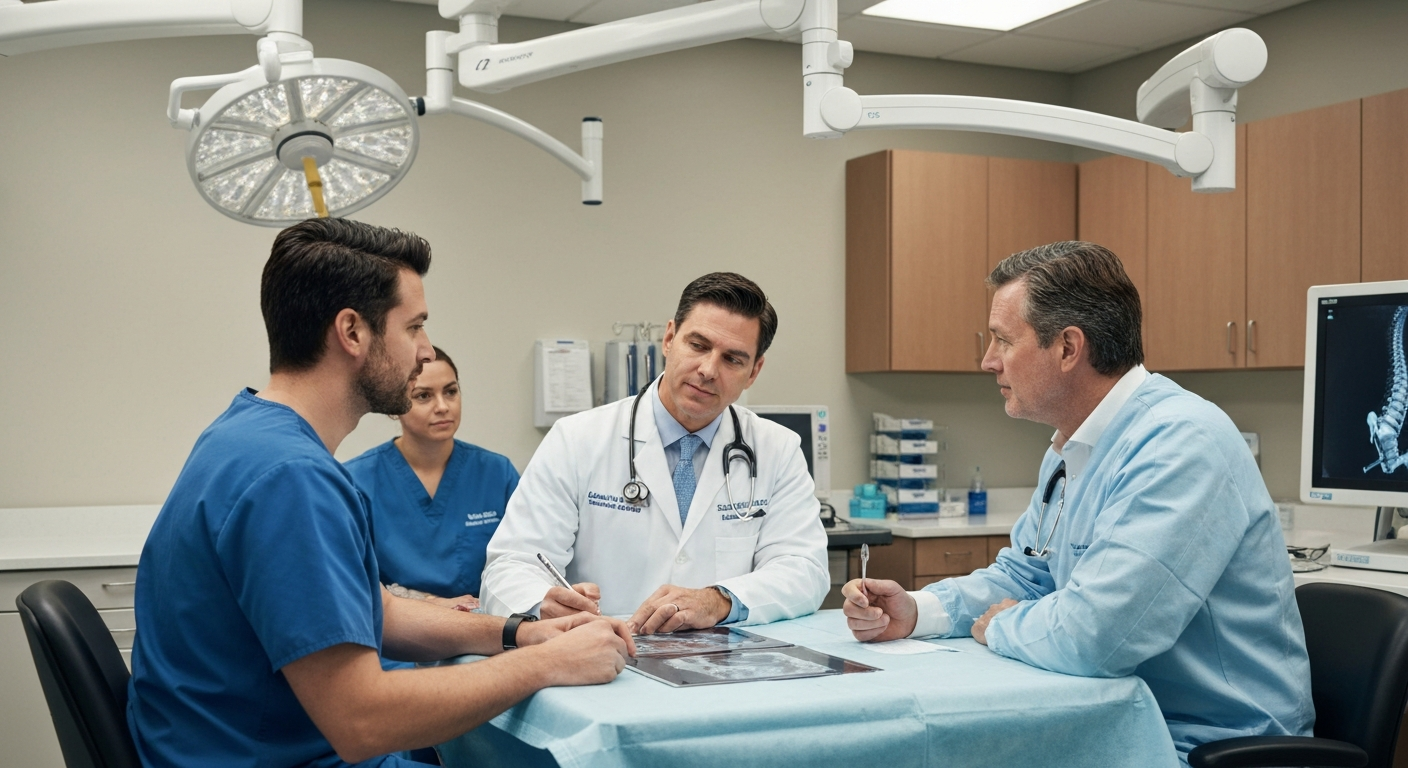
The difference between spine injuries matters because recognizing spinal fracture symptoms early can significantly impact your treatment options and recovery. Your vertebral column provides essential support while protecting your delicate spinal cord, making it vulnerable to injury from both high-impact trauma and gradual deterioration from conditions like osteoporosis.
If you’re experiencing unexplained back pain following an injury or have concerns about your spine health, comprehensive evaluation by board-certified specialists can provide clarity. At Legent Spine, we help patients throughout the Greater Dallas area understand their symptoms and access expert care when they need it most.
Common Symptoms of Spinal Fractures
Recognizing the signs of a potential spinal fracture is the first step toward getting appropriate care. This pain typically intensifies with movement, standing, or any activity that places stress on the injured vertebra.
The most common symptoms include:
- Acute pain at the fracture site: Sharp, stabbing pain that develops immediately or shortly after an injury, often unlike typical muscle soreness
- Pain that worsens with activity: Discomfort that increases when you move, twist, bend, or bear weight on the injured area
- Stiffness and limited mobility: Difficulty moving your back or neck through normal ranges of motion
- Numbness or tingling: Unusual sensations in your arms, hands, legs, or feet suggesting potential nerve involvement
- Weakness in extremities: Difficulty controlling or moving your arms or legs normally
- Visible swelling or bruising: Inflammation or discoloration over the injured area of your spine
Symptoms may not always appear immediately. Some people experience relatively mild discomfort initially, only to have symptoms intensify as inflammation develops or as they attempt to resume normal activities.
One critical warning sign requires immediate attention: loss of bladder or bowel control combined with spinal fracture symptoms. Loss of bladder or bowel control combined with spinal fracture symptoms indicates potential spinal cord compression and requires emergency medical attention. This symptom suggests serious nerve involvement that demands urgent evaluation.
Types of Spinal Fractures and Their Unique Symptoms
Different fracture patterns create distinct symptom profiles. Understanding these variations can help you communicate more effectively with healthcare providers about your experience.
Compression Fractures
A spinal compression fracture occurs when a vertebra partially or completely collapses under pressure. These injuries frequently affect older adults with osteoporosis but can also result from trauma. Patients often notice gradual height loss, development of a stooped posture, and pain that improves with rest but worsens with standing or walking.
Burst Fractures
often Burst fractures involve the vertebra breaking in multiple directions. Burst fractures involve the vertebra breaking in multiple directions, and bone fragments may enter the spinal canal, potentially causing neurological symptoms such as weakness or numbness. These severe injuries typically result from high-impact trauma and create intense pain at the fracture site along with potential symptoms in the arms or legs if bone fragments affect nerves or the spinal cord.
Chance Fractures
These flexion-distraction injuries often occur in motor vehicle accidents when a seatbelt restrains the lower body while the upper body folds forward violently. Along with back pain, patients may experience abdominal discomfort or bruising across their midsection where the seatbelt contacted their body.
Location-Specific Symptoms
Cervical (neck) fractures: These can be particularly serious due to the spine’s role in protecting the upper spinal cord. Patients may also experience headaches, difficulty holding their head upright, or in severe cases, breathing difficulties.
Thoracic (mid-back) fractures: Pain typically concentrates between the shoulder blades and may wrap around the rib cage, sometimes mimicking heart or lung conditions.
Lumbar (lower back) fractures: These injuries create lower back pain that may radiate into the buttocks or legs, particularly when the fracture affects nearby nerve roots. This concern is similar to what patients experience with conditions like foraminal stenosis.
Stable fractures generally produce less severe symptoms and maintain the spine’s structural alignment. Unstable fractures involve multiple vertebral structures and create greater risk of progressive deformity or neurological damage.
Causes of Spinal Fractures: Understanding Your Risk
Spinal fractures develop through various mechanisms. Understanding these causes can help you assess your own risk factors and take appropriate precautions.
High-Impact Trauma
Motor vehicle accidents account for a significant percentage of spinal fractures, particularly in high-traffic metropolitan areas like Dallas-Fort Worth. Motor vehicle accidents account for a significant percentage of spinal fractures, particularly in high-traffic metropolitan areas like the Dallas-Fort Worth region. The Greater Dallas area’s extensive highway system and growing population create daily exposure to traffic-related risks. Motorcycle accidents, falls from heights, and high-velocity sports injuries also commonly cause spinal fractures in younger, otherwise healthy individuals.
Osteoporosis and Bone Density Loss
usually Osteoporosis increases fracture risk because bone density decreases with age, making vertebrae more susceptible to breaking. Osteoporosis increases fracture risk because bone density decreases with age, making vertebrae more susceptible to breaking from minor falls or trauma. What might seem like a minor stumble or even routine activities like lifting a grocery bag can cause compression fractures in people with significantly weakened bones. This risk increases substantially in postmenopausal women and older adults of both sexes.
Other Contributing Factors
often Repetitive stress from athletic activities or physically demanding occupations can gradually weaken vertebrae over time. Pathological fractures occur when cancer spreads to the spine or when severe osteoporosis causes spontaneous collapse without any trauma. Workplace accidents, particularly in construction or industrial settings, represent another significant source of spinal injuries.
When to Seek Emergency Care vs. Specialist Evaluation
Understanding the urgency of your symptoms helps ensure you receive appropriate care at the right time and place.
Emergency Warning Signs
Immediate emergency care is necessary if you experience certain serious symptoms following spinal trauma. These symptoms indicate potential spinal cord involvement requiring immediate intervention. Other emergency situations include severe pain following significant trauma, visible deformity of the spine, difficulty breathing after a neck or upper back injury, or rapidly progressing weakness or numbness.
If you experience these serious warning signs, particularly after recognizing symptoms of a broken back, call 911 or go directly to the nearest emergency room.
When to Contact a Spine Specialist
Progressive neurological symptoms such as increasing weakness or numbness indicate worsening nerve compression. Progressive neurological symptoms such as increasing weakness or numbness indicate worsening nerve compression and require urgent specialist evaluation. You should also seek specialist care when back pain persists beyond a few days following an injury, when symptoms interfere with daily activities, or when you have risk factors like osteoporosis combined with new back pain.
Fellowship-trained spine surgeons like Dr. Scott C. Kutz bring specialized expertise to complex spinal conditions. This specialized training enables comprehensive evaluation that goes beyond what general practitioners can provide.
Diagnosis and Expert Evaluation in Dallas
Accurate diagnosis forms the foundation of effective spinal fracture treatment. The evaluation process typically begins with a thorough physical examination where your spine specialist assesses your pain levels, range of motion, and neurological function through various tests of strength, sensation, and reflexes.
Imaging Studies
X-ray imaging can detect most vertebral fractures, while CT scans provide more detailed three-dimensional information. X-rays serve as an initial screening tool, but CT scans offer superior detail when planning treatment approaches, particularly for complex fractures with multiple fragments.
MRI imaging is particularly valuable for assessing spinal cord integrity, nerve compression, and soft tissue injury. This technology allows specialists to evaluate not just the broken bone but also ligament damage, disc injuries, and any impact on the spinal cord or nerve roots.
Specialized Expertise Matters
often Fellowship-trained spine surgeons complete specialized training in spinal anatomy, biomechanics, and both surgical and non-surgical treatment approaches. Fellowship-trained spine surgeons complete specialized training in spinal anatomy, biomechanics, and both surgical and non-surgical treatment approaches. This advanced education enables spine specialists to distinguish between fractures that will heal with conservative care and those requiring surgical stabilization. Board-certified surgeons like Dr. Grant Booher bring this specialized perspective to every patient evaluation.
For patients throughout the Greater Dallas area, accessing comprehensive spine care means having your imaging properly interpreted and your treatment options clearly explained by someone who focuses exclusively on spinal conditions.
Treatment Options and Recovery Expectations
Spinal fracture treatment must be individualized based on fracture type, location, stability, your overall health, and your specific functional goals. No single approach works for everyone, which is why comprehensive evaluation by spine specialists matters so much.
Conservative Management
usually Stable spinal fractures without neurological involvement may be managed conservatively with immobilization and gradual return to activity as healing progresses. Stable spinal fractures without neurological involvement may be managed conservatively with immobilization and gradual return to activity as healing progresses. This approach typically includes a period of rest to allow initial healing, potentially wearing a brace to maintain proper spinal alignment, pain management through medications and other modalities, and eventually physical therapy to restore strength and flexibility.
Many compression fractures, particularly those related to osteoporosis, respond well to non-surgical treatment when they meet specific stability criteria and don’t threaten neurological structures.
Surgical Interventions
Surgical treatment becomes necessary when fractures are unstable, when bone fragments compress nerves or the spinal cord, when progressive deformity threatens to worsen, or when conservative treatment fails to provide adequate relief. These advanced approaches, when appropriate for your specific fracture pattern, may help you return to activities more quickly.
Recovery and Rehabilitation
generally Physical therapy and rehabilitation following spinal fracture treatment help restore strength, flexibility, and functional mobility throughout the recovery period. Physical therapy and rehabilitation following spinal fracture treatment help restore strength, flexibility, and functional mobility throughout the recovery period. Recovery timelines vary considerably based on fracture severity, treatment approach, your age and overall health, and your commitment to rehabilitation protocols. Some patients return to normal activities within several weeks, while others require months of gradual progression.
Your spine specialist will provide realistic expectations based on your specific situation and monitor your progress throughout recovery to ensure optimal healing.
Taking the Next Step: Getting Expert Care
If you’re experiencing symptoms that concern you or have sustained an injury that might have affected your spine, professional evaluation provides the clarity you need.
At Legent Spine, we serve the Greater Dallas area with comprehensive spine care built on expertise, transparency, and genuine concern for each patient’s wellbeing. Our initial consultations provide thorough evaluation including detailed review of your symptoms and medical history, physical examination with neurological assessment, review of imaging studies or coordination of necessary testing, clear explanation of findings in terms you can understand, and discussion of all appropriate treatment options from conservative to surgical approaches.
Dedicated care coordinators can help manage scheduling, insurance questions, and treatment planning to ensure a smooth patient experience. This support helps remove barriers to getting the care you need when spine concerns arise.
You don’t need to navigate spinal fracture symptoms alone or wonder whether your pain warrants professional attention. Our team is here to provide honest, expert guidance tailored to your unique situation. Whether your path involves conservative management, advanced imaging, or surgical consultation, we’re committed to helping you understand your options and make informed decisions about your spine health.
Contact Legent Spine to schedule a comprehensive evaluation with one of our fellowship-trained spine specialists. World-class spine care is available right here in Dallas, providing the expertise you deserve without requiring travel to distant medical centers.