
What Is a Disc Rupture?
Your spine is cushioned by discs that sit between the vertebrae. Each disc has a tough outer ring, called the annulus, and a soft, gel-like center, called the nucleus.
A ruptured disc occurs when the soft inner material of a spinal disc pushes through a tear in the tougher outer layer. The escaped material can irritate or press on nearby nerves.
You may hear “ruptured,” “herniated,” and “slipped” disc used interchangeably. A “bulging” disc is a related but milder change. The disc extends beyond its normal boundary without a full tear. The good news is that many symptomatic disc herniations improve over time with nonsurgical care.
If you live in Richardson or elsewhere in Greater Dallas and are dealing with back, neck, or limb pain, you can request a comprehensive evaluation with a board-certified spine specialist at Legent Spine.
Symptoms of a Ruptured Disc
Symptoms depend on where the rupture is and which nerve is affected. Common signs include:
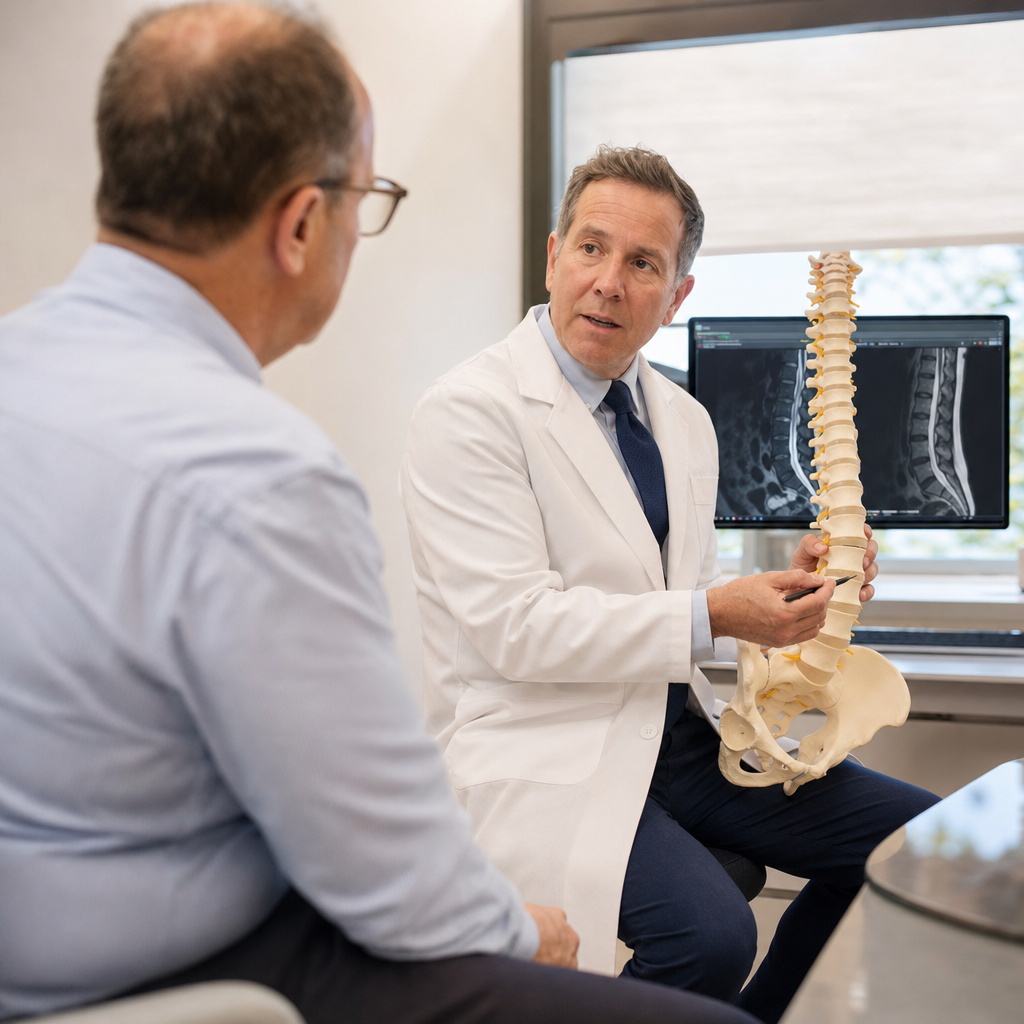
- Back or neck pain that may spread into an arm or leg
- Numbness, tingling, or a pins-and-needles sensation
- Muscle weakness, such as trouble gripping objects or lifting the front of the foot
A ruptured lumbar disc can compress a nerve root and cause sciatica, which is pain radiating from the lower back down the leg. In the neck, a ruptured cervical disc can cause pain, numbness, or weakness that travels into the shoulder, arm, or hand.
Red-Flag Symptoms
Seek medical attention right away if you notice any of the following:
- Loss of bladder or bowel control
- Numbness in the groin or inner thighs (saddle numbness)
- Rapidly worsening weakness in one or both legs
Loss of bladder or bowel control with a ruptured disc can signal cauda equina syndrome, which requires immediate medical evaluation. Go to an emergency room if these symptoms appear.
Common Causes and Risk Factors
The most common cause is age-related wear. Spinal discs lose water content and flexibility with age, which makes them more prone to tearing. A sudden strain from heavy lifting, awkward twisting, or an accident can also trigger a rupture.
Several factors can raise your risk:
- Excess body weight, which adds mechanical load on the lumbar spine
- Physically demanding work
- Smoking, which is associated with an increased risk of disc degeneration
- Family history and genetics
Lifestyle matters too. Long hours at a desk or in traffic on US-75 and across the DFW area can put steady stress on your spine. Good posture, regular core-strengthening exercise, and a healthy weight can all help protect your discs.
How a Ruptured Disc Is Diagnosed
A thorough evaluation starts with your medical history and a physical exam. Your doctor will check your reflexes, muscle strength, and sensation to see which nerves may be involved.
Imaging usually comes next. MRI is the imaging test most commonly used to visualize herniated discs and affected nerve roots. Your doctor may add X-rays or CT scans in select cases. If the source of your symptoms is unclear, a nerve study (EMG) can help.
Imaging has to be matched to your symptoms, because disc herniations can appear on imaging in people who have no symptoms. A finding on a scan is not always the cause of your pain.
At Legent Spine, a fellowship-trained spine specialist explains your results in clear, transparent terms. Together, you build a personalized plan around them.
Nonsurgical Treatment Options
Most patients with a symptomatic lumbar disc herniation are initially treated with nonsurgical care. The goals are to reduce pain and inflammation, restore function, and avoid unnecessary procedures. Your plan may combine the approaches below.
Heat, Cold, and Pain Relievers
Ice can help in the first few days. Heat can then relax tight muscles. Over-the-counter NSAIDs or acetaminophen may help when used as directed.
For stronger relief, your physician may discuss prescription options or epidural steroid injections, which may provide short-term relief of radiating leg pain from a herniated disc. Talk with a doctor before using any medication long term.
Stay Active and Try Physical Therapy
Short periods of rest are fine, but prolonged bed rest is generally not recommended for back pain. Gradually return to light activity, such as walking.
Physical therapy typically focuses on core strength, flexibility, and posture. Richardson and Dallas-area patients can often coordinate therapy close to home or work. Avoid heavy lifting and high-impact twisting until your care team clears you.
Complementary Care
Some patients find relief with massage, acupuncture, or chiropractic care. These options can supplement medical care, but they should not replace a proper evaluation. Talk with a spine specialist first, especially if you have numbness, tingling, or weakness.
When to Consider Surgery
Surgery may be worth discussing if your symptoms persist despite several weeks of conservative care. It may also be an option if pain significantly limits your daily life or if weakness is getting worse. Common procedures include:
- Microdiscectomy: removal of the portion of disc pressing on a nerve
- Endoscopic discectomy: a similar goal, using a very small incision and a thin camera
- Cervical disc procedures: such as anterior cervical discectomy and fusion (ACDF) or cervical disc replacement
Minimally invasive techniques use smaller incisions and may support a faster recovery for appropriate candidates. No surgery is right for everyone, and outcomes vary.
Our surgeons, including Dr. Paul Salinas, will give you an honest discussion of the benefits, risks, and alternatives before you decide anything. Throughout the process, a dedicated care coordinator helps guide you from your first visit through recovery.
Take the Next Step Toward Relief
A ruptured disc can be painful and worrying, but most patients have options, and many improve without surgery. If symptoms are affecting your work, sleep, or daily routine in Richardson or anywhere in the Dallas area, reach out to Legent Spine to schedule a comprehensive evaluation. Our team is ready to provide expert, personalized care at whatever pace is right for you.