
Living with persistent hip pain can significantly impact your daily activities. For many people across the Dallas and Greater Dallas area, the underlying cause may be more complex than a simple hip problem. When can scoliosis cause hip pain, the connection between spinal curvature and hip discomfort creates a challenging diagnostic puzzle that requires specialized expertise.
Dr. Scott C. Kutz and the fellowship-trained specialists at Legent Spine regularly evaluate patients who have spent months treating hip pain without addressing the true source. Often, an abnormal curvature of the spine fundamentally changes how the body distributes weight and stress.
Understanding the Connection Between Scoliosis and Hip Pain
The relationship between scoliosis hip pain starts with understanding how the spine and pelvis work together as an integrated system. creating a structural abnormality that affects far more than just the back itself. This abnormal curvature fundamentally shifts how your body distributes weight during standing, walking, and all daily activities.
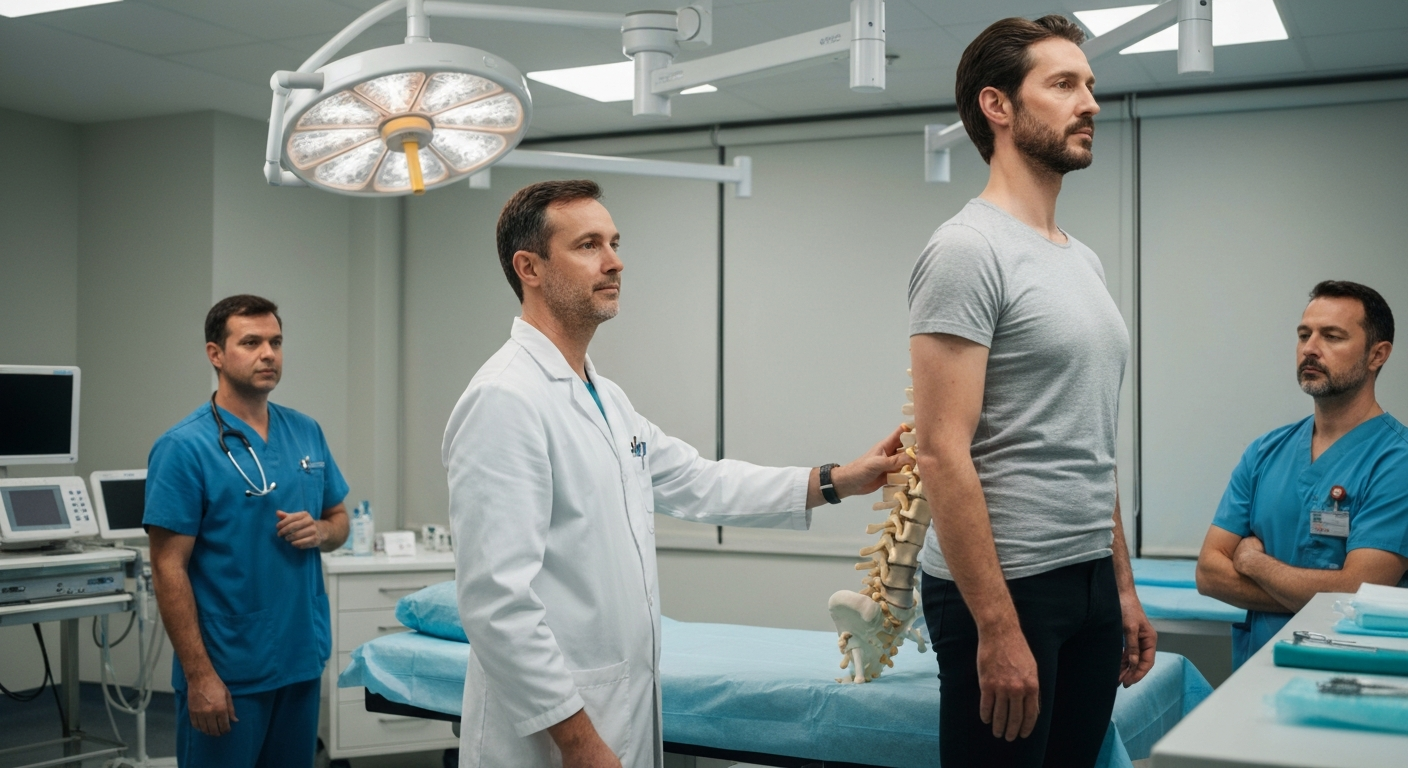
When the spine curves to one side, it creates uneven loading patterns across the hip joints. Instead of bearing weight equally, one hip may experience significantly more pressure while the other works harder to maintain balance. The muscles surrounding both hips must constantly compensate for this imbalance, leading to chronic tension, fatigue, and eventually pain.
The sacroiliac joint, which, becomes a critical factor in this equation. This large, weight-bearing joint serves as the junction between your upper body and lower extremities. When spinal alignment changes due to scoliosis, the sacroiliac joint must absorb additional stress from altered loading patterns, often becoming inflamed and painful.
Many patients visiting spine specialists in the Dallas area are surprised to learn that their hip pain may not originate from the hip joint itself. Instead, the discomfort they experience often stems from referred pain, muscle compensation patterns, or sacroiliac joint dysfunction—all consequences of the underlying spinal curvature.
Common Symptoms of Scoliosis-Related Hip Pain
Recognizing the specific symptoms of scoliosis-related hip discomfort helps patients and healthcare providers identify the true source of pain. Unlike isolated hip joint problems, understanding scoliosis hip pain causes symptoms requires attention to patterns that indicate spinal involvement.
Patients frequently describe sharp or aching pain concentrated on one side of the hip—typically the side experiencing greater weight-bearing stress from the spinal curve. creating predictable patterns of one-sided discomfort.
The pain often intensifies with prolonged standing or walking as the compensatory mechanisms become fatigued. Many patients notice significant stiffness and reduced range of motion in the hip, particularly when attempting to lift the leg, rotate the hip, or perform activities that require flexibility.
Lower back pain frequently accompanies hip discomfort in scoliosis patients, providing an important diagnostic clue. This combined presentation suggests a spinal source rather than an isolated hip problem. Muscle tightness in the hip flexors, glutes, and lateral hip muscles develops from chronic compensation, creating additional discomfort and limiting movement.
Perhaps most noticeably, many people develop uneven gait patterns or subtle limping. The body unconsciously adjusts walking mechanics to minimize pain and accommodate the structural imbalance, creating movement patterns that further reinforce muscle imbalances and perpetuate the problem.
How Scoliosis Causes Hip Pain
The biomechanical cascade that links spinal curvature to hip dysfunction involves multiple interconnected systems. Understanding these mechanisms helps patients appreciate why comprehensive spinal evaluation is essential for resolving their hip symptoms.
Spinal misalignment directly changes pelvic tilt and stability. When the spine curves abnormally, it pulls the pelvis out of its neutral position, creating an asymmetric foundation for the hip joints.
Hip muscles—including the gluteal muscles, hip flexors, adductors, and deep rotators—must work overtime to compensate for this spinal imbalance. Muscles on one side may become chronically shortened and tight while the opposite side lengthens and weakens. This muscular imbalance creates pain, reduces efficiency, and eventually leads to chronic discomfort that persists even during rest.
Sacroiliac joint dysfunction develops predictably from altered spinal loading patterns. The joint experiences abnormal movement patterns and stress distribution, triggering inflammation and pain that radiates into the hip, buttock, and sometimes down the leg. This pain source is frequently mistaken for hip joint pathology by both patients and providers unfamiliar with the scoliosis-hip connection. For more information, see our page on katy patients hip pain scoliosis.
Additionally, nerve irritation from the spinal curve may radiate into the hip region. When vertebrae rotate or compress as part of the scoliotic curve, nearby nerves can become compressed or irritated, sending pain signals that the brain interprets as originating from the hip. creating a self-reinforcing cycle of pain and dysfunction.
Sacroiliac Joint Pain in Scoliosis Patients
The sacroiliac joint deserves special attention when evaluating scoliosis causes hip painand dallas patients because it represents such a common pain source that’s frequently misidentified. This large joint bears tremendous stress from spinal curvature, absorbing forces that would normally distribute more evenly across a properly aligned spine and pelvis.
Inflammation and joint irritation develop from these abnormal movement patterns and loading forces. Over time, the joint becomes painful, stiff, and hypersensitive to movement and weight-bearing activities. leading many patients to assume they have a hip problem requiring orthopedic treatment.
The location and quality of sacroiliac joint pain can vary considerably between individuals. Some experience a deep ache in the buttock, others feel sharp pain in the groin or outer hip, and still others describe discomfort that radiates down the back of the thigh. This variability makes accurate diagnosis challenging without comprehensive evaluation.
Proper diagnosis requires imaging studies and professional evaluation by providers experienced in distinguishing between different pain sources. Physical examination techniques can isolate sacroiliac joint dysfunction, but imaging confirms the underlying spinal curvature driving the problem and rules out other potential causes of hip-region pain.
Diagnosis: When to See a Spine Specialist
Knowing when hip pain requires evaluation by a spine specialist rather than a general practitioner can save patients months of ineffective treatment. Persistent hip pain lasting more than a few weeks—especially when accompanied by lower back discomfort or an uneven gait—warrants comprehensive spinal evaluation.
Board-certified spine specialists use a combination of advanced imaging and clinical examination to assess spinal curvature and alignment. providing objective measurements that determine whether scoliosis reaches clinically significant levels and whether the curve pattern corresponds to the patient’s hip pain distribution.
This differential diagnosis proves essential because treatment approaches differ significantly depending on the underlying cause.
Early diagnosis prevents progressive worsening of both the spinal curvature and the compensatory hip problems. When caught relatively early, conservative treatment approaches often succeed in reducing pain and preventing further deterioration. Delayed diagnosis allows muscle imbalances to become more entrenched and structural changes to progress, potentially requiring more intensive intervention.
Dallas-area residents have access to fellowship-trained spine specialists with extensive experience in complex scoliosis cases. Dr. Grant Booher and the Legent Spine team provide comprehensive evaluation that includes not just imaging review but also detailed physical assessment to understand exactly how scoliosis affects each patient’s unique biomechanics and pain patterns.
Treatment Options for Scoliosis-Related Hip Pain
The good news for patients dealing with scoliosis-related hip pain is that conservative management addresses most cases successfully. A comprehensive treatment approach targets both the underlying spinal alignment issues and the secondary hip problems they create.
Physical therapy forms the cornerstone of treatment, strengthening supporting muscles and improving alignment through targeted exercises. These programs are customized to each patient’s specific curve pattern and compensatory mechanisms.
Anti-inflammatory medications provide symptom relief during the active treatment phase, reducing inflammation in stressed joints and muscles while therapeutic exercises begin to address the underlying biomechanical problems. These medications work best as part of a comprehensive program rather than as standalone treatment.
When conservative care reaches a plateau or symptoms remain significantly disabling despite appropriate therapy, minimally invasive procedures become available options. These advanced techniques allow spine specialists to correct structural problems while minimizing recovery time and surgical risks.
Surgical intervention remains reserved for severe cases or curves demonstrating significant progression. Modern surgical approaches for scoliosis have advanced dramatically, offering better outcomes with less invasive techniques than previous generations of procedures.
Conservative Treatment Approaches
Before considering any invasive procedures, most patients benefit substantially from structured conservative care. These approaches address pain and functional limitations while giving the body time to respond to therapeutic interventions.
Structured physical therapy programs reduce pain and improve function through progressive exercise sequences designed to stabilize the spine and rebalance compensating muscles. Therapists experienced in scoliosis treatment understand how to modify exercises based on curve direction and severity.
Core strengthening provides essential support for spinal stability. The deep abdominal muscles, back extensors, and pelvic floor muscles work together to reduce abnormal spinal stress and improve overall posture. Flexibility and stretching routines alleviate muscle tension that develops from chronic compensation, particularly in the hip flexors and lateral hip muscles.
Pain management through appropriate medications helps patients remain active during the rehabilitation process. Ergonomic modifications at work and home reduce daily stress on the spine—everything from proper workstation setup to appropriate sleeping surfaces and positions.
Activity modification doesn’t mean eliminating enjoyable activities but rather learning to perform them in ways that minimize spinal stress. Patients learn to pace activities, take appropriate breaks, and modify techniques to work with their body rather than against it.
Advanced Treatment Options
For patients whose symptoms persist despite appropriate conservative care, advanced treatment options provide additional pathways to relief and improved function. These interventions target specific pain sources while preserving as much normal spinal function as possible.
Minimally invasive procedures can target specific pain generators with remarkable precision. These approaches use specialized instruments and imaging guidance to achieve surgical goals through small access points rather than large incisions.
Targeted injections provide sacroiliac joint relief in cases where this specific structure drives the majority of symptoms. Under image guidance, anti-inflammatory medication can be placed directly at the pain source, both confirming the diagnosis and providing therapeutic benefit.
Spinal fusion may be considered for severe or progressive scoliosis when curve magnitude threatens to worsen significantly or when structural instability creates persistent pain despite comprehensive conservative treatment. Modern fusion techniques preserve mobility in unaffected spinal segments while stabilizing the curved region.
Recovery times with minimally invasive approaches are considerably shorter than traditional open procedures. Many patients return to light activities within weeks rather than months, with continued improvement over the following months as tissues heal and strength rebuilds.
Managing Scoliosis Hip Pain at Home
Between professional treatment sessions, patients can take numerous steps at home to manage symptoms and support their recovery. These self-care strategies complement professional treatment and often provide significant relief.
Regular, gentle exercise maintains spinal flexibility and prevents muscles from becoming stiff and painful. Activities like swimming, walking on even surfaces, and specific stretching routines recommended by your physical therapist keep the body mobile without aggravating symptoms. Heat or ice application provides temporary relief—heat relaxes tight muscles while ice reduces acute inflammation.
Simple postural awareness throughout the day makes a meaningful difference in overall comfort levels.
Supportive footwear improves overall alignment by providing a stable foundation for the entire kinetic chain. Worn-out or inappropriate shoes can amplify alignment problems, while proper footwear supports better posture and reduces stress throughout the spine and hips.
Sleep positioning minimizes nighttime pain for many patients. Using pillows to support the spine and hips in neutral positions prevents sustained stress during the hours of rest. Activity pacing throughout the day prevents symptom flare-ups—alternating between different activities and taking regular breaks prevents any single movement pattern from overloading compensating structures.
Living with Scoliosis in the Greater Dallas Area
Patients throughout the Dallas and Greater Dallas area benefit from access to experienced spine specialists with specific expertise in scoliosis and its related complications. Legent Spine brings board-certified surgeons and comprehensive care coordination to patients seeking answers about persistent hip pain related to spinal problems.
Fellowship-trained specialists offer comprehensive evaluation and personalized treatment plans based on each patient’s unique curve pattern, symptoms, and treatment goals. Rather than one-size-fits-all approaches, these specialists understand that scoliosis affects each person differently, requiring individualized care strategies.
Local practices provide ongoing care coordination and support throughout the treatment journey. Dedicated care coordinators help patients navigate appointments, understand treatment options, and access the resources they need for successful outcomes. Access to minimally invasive surgical techniques reduces recovery burden when surgery becomes necessary, allowing patients to return to work, family responsibilities, and recreational activities more quickly.
Community resources throughout the Dallas area support long-term spine health management, from specialized physical therapy providers experienced in scoliosis treatment to support groups connecting patients dealing with similar challenges.
Next Steps: Getting the Right Evaluation
If you’re experiencing persistent hip pain—especially combined with back discomfort or noticeable postural changes—scheduling a comprehensive evaluation with a spine specialist represents an important step toward understanding and addressing the true source of your symptoms.
Bring any previous imaging records and a detailed symptom history to your appointment. Information about what makes your pain better or worse, how symptoms change throughout the day, and what treatments you’ve already tried helps specialists quickly understand your situation and develop appropriate diagnostic and treatment plans.
Discuss your treatment goals and preferences openly with your provider. Whether you’re hoping to return to specific recreational activities, manage work demands more comfortably, or simply reduce daily pain, clear communication about your priorities helps ensure treatment recommendations align with what matters most to you.
Expect transparent communication about all available options—from conservative care through advanced interventions if necessary. The specialists at Legent Spine believe patients deserve honest, complete information to make informed decisions about their spine health. Your personalized treatment plan will be based on your individual needs, curve severity, symptom patterns, and treatment goals.
World-class spine care is available right here in the Dallas area. Taking that first step toward comprehensive evaluation opens the door to better understanding your condition and finding relief from the hip pain that’s been limiting your quality of life.