
Introduction: Understanding the Scoliosis-Hip Pain Connection
If you’re experiencing both spinal curvature and persistent discomfort in your hips, you’re not alone. Many scoliosis patients develop hip pain as a secondary symptom, creating a complex relationship between spinal alignment and lower body mechanics. This connection can significantly impact your daily quality of life, affecting everything from sitting comfortably at work to enjoying recreational activities throughout the Greater Dallas area. For more information, see our page on scoliosis causes hip painand dallas patients.
The good news is that scoliosis hip pain doesn’t automatically mean you need surgery. Understanding the relationship between these conditions is the first step toward finding effective relief. At Legent Spine, our board-certified spine specialists help Dallas-area patients navigate the complexities of understanding scoliosis hip pain causes symptoms through comprehensive evaluation and personalized treatment plans.
Hip pain affects 40-60% of adult scoliosis patients and can worsen progressively when spinal curvature remains untreated. Whether you’re dealing with mild discomfort or severe pain that limits your mobility, professional evaluation is essential for accurate diagnosis and effective treatment. Not all hip pain stems from scoliosis, which is why working with fellowship-trained spine specialists ensures you receive the precise care your condition requires.
What Is Scoliosis and How Does It Develop
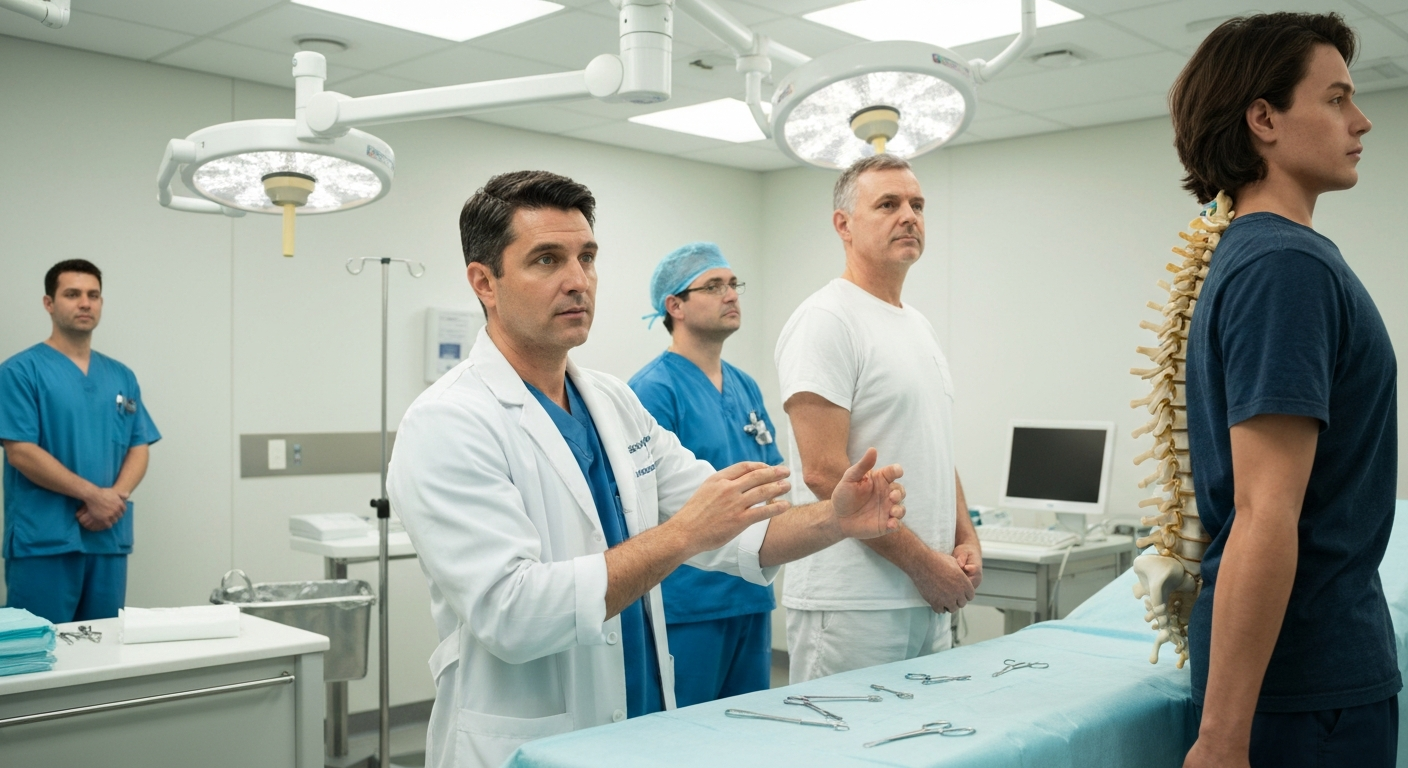
Scoliosis is an abnormal sideways curvature of the spine, typically appearing as a C-shaped or S-shaped curve when viewed from behind. Rather than maintaining its normal straight vertical alignment, the spine deviates laterally, affecting posture, balance, and overall spinal function.
The condition develops through different pathways depending on when it appears. Idiopathic scoliosis typically emerges during childhood or adolescence, with the exact cause remaining unknown in most cases. Approximately 80% of scoliosis cases are classified as idiopathic. This form often progresses during growth spurts and may stabilize once skeletal maturity is reached.
Adult-onset scoliosis, also called degenerative scoliosis, develops due to age-related changes in the spine. as intervertebral discs lose height, facet joints wear down, and supporting ligaments weaken. This gradual deterioration allows the spine to shift laterally over time, creating curves that weren’t present during youth.
Medical professionals classify scoliosis severity by measuring the curve’s angle using the Cobb method on X-ray imaging. These measurements help spine specialists at Legent Spine determine appropriate treatment approaches and monitor progression over time.
The Connection Between Scoliosis and Hip Pain
The relationship between spinal curvature and hip discomfort involves complex biomechanical changes throughout your musculoskeletal system. When examining can scoliosis cause hip pain, it’s important to understand how spinal misalignment creates a cascade of compensatory changes affecting the pelvis and lower extremities.
This altered weight distribution means one hip may bear significantly more load than the other, accelerating joint wear and creating chronic discomfort. Your body attempts to maintain balance despite spinal curvature, but these compensatory mechanisms often generate new problems in the hips.
Muscle imbalances develop as your body works to stabilize an asymmetric spine. Muscles on the concave side of the curve typically shorten and tighten, while those on the convex side lengthen and weaken. This muscular asymmetry extends into the hip region, where hip flexors, abductors, and rotators must work inefficiently to maintain upright posture and walking mechanics.
Hip pain can manifest on either the concave or convex side of the spinal curve, depending on individual biomechanics. Some patients experience pain on the side bearing increased weight, while others develop discomfort from muscular strain on the opposite side. that patients often describe as a deep, aching sensation in the buttocks or lateral hip region.
How Spinal Curves Affect Pelvic Alignment
Lateral spinal curves force the pelvis to compensate in specific ways that directly impact hip joint function. As the spine deviates from its normal vertical alignment, the pelvis must tilt to maintain the body’s center of gravity over the feet. This pelvic tilt isn’t a one-time adjustment—it becomes a chronic postural pattern that persists throughout daily activities.
This altered joint angle changes how forces distribute across the cartilage surfaces during weight-bearing activities like walking, standing, or climbing stairs. Over time, these abnormal stress patterns can accelerate degenerative changes in the hip joint itself.
Muscle groups surrounding the pelvis work inefficiently when forced to stabilize a tilted structure. Hip flexors must maintain constant tension to prevent the pelvis from dropping further, while hip abductors strain to keep the pelvis level during single-leg stance phases of walking. This chronic muscular effort creates fatigue, tension, and eventually pain that many Dallas-area patients describe as a constant, nagging ache.
Sacroiliac Joint Pain as a Secondary Symptom
The sacroiliac (SI) joint represents a critical connection point where the spine meets the pelvis, and scoliosis frequently disrupts its normal function. serving as a shock absorber that distributes forces between the upper body and lower extremities. When spinal curves alter pelvic alignment, the SI joint loses its optimal positioning and stability.
Scoliosis disrupts normal sacroiliac motion patterns, causing the joint to move asymmetrically or become partially locked in abnormal positions. This dysfunction commonly produces pain in the hip region, buttocks, or lower back—areas where patients don’t immediately suspect spinal curvature as the underlying cause. SI joint problems are often overlooked in scoliosis pain management because the pain location doesn’t obviously point to the spine. For more information, see our page on katy patients hip pain scoliosis.
This referred pain pattern makes accurate diagnosis essential, as patients and even some healthcare providers may attribute these symptoms to primary hip pathology rather than recognizing them as secondary consequences of spinal misalignment. The fellowship-trained specialists at Legent Spine understand these complex pain referral patterns and can distinguish between primary hip conditions and scoliosis-related dysfunction.
Common Symptoms to Watch For
Recognizing the characteristic symptom patterns of scoliosis-related hip pain helps you determine whether professional evaluation is warranted. These symptoms often develop gradually, making them easy to dismiss initially as normal aging or overexertion.
Hip pain that worsens with prolonged sitting or standing represents one of the most common complaints. Patients frequently report that the first few steps after sitting feel particularly stiff and painful, with gradual improvement as they move around.
Additional symptoms to monitor include:
- Pain radiating into the buttocks or thigh: Discomfort that spreads beyond the hip joint itself, often following specific patterns down the leg
- Stiffness or limited hip mobility: Difficulty with movements like putting on shoes, getting in and out of cars, or bending to pick up objects
- Muscle weakness or instability sensations: Feeling like the hip might “give out” during weight-bearing activities or difficulty maintaining balance on one leg
- Pain asymmetry: One side consistently more painful than the other, corresponding to spinal curve patterns
- Progressive worsening: Symptoms that gradually intensify over weeks or months rather than improving with rest
These symptoms can significantly impact your ability to work, exercise, and enjoy recreational activities throughout the Dallas area. Early recognition and professional assessment prevent minor discomfort from progressing to debilitating pain that limits your lifestyle.
When to Seek Professional Evaluation
Knowing when to consult a spine specialist can make the difference between effective early intervention and prolonged suffering with progressive symptoms. Certain warning signs indicate that self-care measures aren’t sufficient and that comprehensive evaluation is necessary.
Persistent hip pain lasting more than a few weeks deserves professional attention, especially when it doesn’t respond to over-the-counter medications and basic rest. Pain that interferes with daily activities or work—preventing you from completing job duties, exercising, or enjoying time with family—has crossed the threshold from minor annoyance to significant health concern requiring expert assessment.
Pain accompanied by numbness, tingling, or weakness in the legs represents a more urgent situation that may indicate nerve involvement. If you have a history of scoliosis and develop new or worsening hip symptoms, this connection strongly suggests the conditions are related and warrant evaluation by specialists familiar with both spinal and hip disorders.
When conservative treatments like rest, ice, heat, or over-the-counter pain relievers provide minimal relief after several weeks, it’s time to seek expert care. At Legent Spine, our comprehensive evaluation approach ensures accurate diagnosis before recommending any treatment plan.
Dallas-area residents have access to fellowship-trained spine specialists like Dr. Scott C. Kutz who can thoroughly assess the relationship between spinal curvature and hip symptoms. Early evaluation often leads to more effective treatment with less invasive interventions than waiting until symptoms become severe.
Treatment Options for Scoliosis-Related Hip Pain
Effective treatment for hip pain related to scoliosis follows a progressive approach, starting with conservative management and advancing to more invasive interventions only when necessary. The good news is that many patients achieve significant relief without surgery through comprehensive conservative care.
Conservative management serves as the first-line treatment for most patients experiencing scoliosis-related hip pain. This approach focuses on addressing symptoms, improving function, and preventing progression. Physical therapy addresses the muscle imbalances and mobility restrictions that develop from spinal curvature, helping restore more balanced movement patterns throughout the body.
Medications play a supporting role in managing pain and inflammation during the treatment process. Anti-inflammatory medications can reduce acute symptoms while physical therapy and lifestyle modifications address underlying mechanical problems. For some patients, targeted injections may provide temporary relief that facilitates participation in rehabilitation programs.
Minimally invasive procedures offer intermediate options for patients who don’t respond adequately to conservative care but want to avoid traditional open surgery. These advanced techniques can address specific structural problems while minimizing tissue disruption, leading to faster recovery times and reduced surgical risks.
Surgery is reserved for severe cases with neurological involvement or progressive symptoms that fail to improve with comprehensive conservative care. The specialists at Legent Spine carefully evaluate each patient’s unique situation to determine the most appropriate treatment pathway.
Non-Surgical Approaches
Conservative treatment strategies form the foundation of effective scoliosis-related hip pain management, with most patients experiencing significant improvement through dedicated non-surgical care.
Physical therapy and targeted exercises represent the cornerstone of conservative treatment. Therapists design programs that strengthen core musculature to better support the spine, stretch tight muscles that contribute to pelvic misalignment, and improve overall movement patterns. Regular physical therapy can improve hip pain from scoliosis in 60-70% of patients without requiring surgical intervention.
Additional conservative approaches include:
- Anti-inflammatory medications: NSAIDs like ibuprofen or naproxen reduce inflammation and pain during acute flare-ups
- Activity modification and postural awareness: Learning to avoid positions and movements that aggravate symptoms while maintaining appropriate activity levels
- Heat and ice therapy: Strategic use of temperature therapy to manage acute pain and muscle tension
- Bracing: In certain cases, particularly for adolescent patients with progressive curves, bracing may help stabilize the spine and prevent worsening
- Ergonomic adjustments: Optimizing workspace setup, sleeping positions, and daily habits to reduce strain on the spine and hips
These conservative measures work best when implemented consistently over several weeks to months, allowing the body time to adapt and strengthen. Many Dallas-area patients find that committed participation in physical therapy produces lasting improvements that enhance their quality of life without surgical intervention.
When Minimally Invasive Surgery May Help
For patients experiencing severe pain unresponsive to comprehensive conservative care, minimally invasive surgical techniques offer effective alternatives to traditional open procedures. These advanced approaches can address structural problems while minimizing recovery time and surgical complications.
Minimally invasive spinal fusion can stabilize problematic curves and relieve pressure on nerves that may contribute to hip pain. These techniques use specialized instruments and imaging guidance to achieve the same surgical goals as open procedures but with less tissue disruption.
Surgery becomes an appropriate consideration when patients experience progressive neurological symptoms, debilitating pain that prevents normal daily function despite months of conservative treatment, or documented curve progression that threatens future function. The fellowship-trained surgeons at Legent Spine carefully evaluate whether surgical intervention offers meaningful benefits for each individual patient’s situation.
Minimally invasive approaches work best for specific curve patterns and patient demographics. Age, overall health status, curve severity and location, and previous treatment history all factor into surgical planning. Dallas-area spine surgeons like Dr. Grant Booher offer the latest minimally invasive techniques, ensuring patients have access to advanced surgical options when conservative care proves insufficient.
What to Expect During a Specialist Evaluation
Understanding the diagnostic process can ease anxiety about seeking professional evaluation and help you prepare for your first appointment with a spine specialist. The evaluation follows a systematic approach designed to accurately identify the source of your symptoms and determine the most effective treatment pathway.
Your comprehensive medical history review covers not just your current symptoms but also their onset, progression patterns, previous treatments you’ve tried, and how pain impacts your daily life. This detailed history provides crucial context that guides the physical examination and subsequent diagnostic testing.
The physical examination assesses spinal alignment, hip mobility, neurological function, and muscle strength. Specialists look for characteristic signs of scoliosis-related hip dysfunction, including pelvic tilt, leg length discrepancies, and specific movement restrictions. This hands-on assessment helps differentiate between primary hip pathology and secondary symptoms stemming from spinal misalignment.
and can help determine if hip pain relates to structural spinal changes. Depending on your symptoms, additional imaging like MRI or CT scans may provide detailed visualization of soft tissues, nerve structures, or hip joint conditions. These studies ensure accurate diagnosis before recommending any treatment approach.
Following diagnostic testing, your spine specialist discusses findings and explains how your symptoms relate to identified structural problems. This collaborative conversation results in personalized treatment recommendations tailored to your specific condition, lifestyle needs, and treatment goals. The transparent approach at Legent Spine ensures you understand your options and can make informed decisions about your care.
Managing Scoliosis Hip Pain in Daily Life
Beyond professional treatment, practical self-management strategies can significantly reduce daily symptoms and prevent flare-ups. These lifestyle adjustments complement professional care and give you tools to maintain improvements over the long term.
Ergonomic workstation setup reduces hip strain during prolonged sitting, which represents a major aggravating factor for many Dallas professionals. Adjusting chair height so feet rest flat on the floor, positioning monitors at eye level, and using lumbar support helps maintain neutral spinal alignment. Regular movement breaks prevent stiffness and give muscles opportunity to relax from sustained postures.
Simple exercises performed consistently—even just 10-15 minutes daily—often provide more benefit than occasional intensive workout sessions. Physical therapists can teach appropriate exercises that address your specific curve pattern and muscle imbalances.
Additional daily management strategies include:
- Proper sleeping positions: Using pillows to support spinal alignment, typically sleeping on your side with a pillow between knees
- Activity pacing: Breaking up prolonged activities into shorter segments with rest periods to prevent symptom flare-ups
- Appropriate footwear: Wearing supportive shoes that promote balanced weight distribution and proper posture
- Stress management: Reducing overall stress levels, which can increase muscle tension and pain perception
These self-management approaches work best when integrated into your daily routine rather than attempted sporadically during symptom flare-ups. Consistency allows your body to adapt gradually and maintain improvements over time.
Conclusion: Taking the Next Step Toward Relief
The connection between hip pain and scoliosis is real, biomechanically complex, and—most importantly—treatable. Understanding how spinal curvature affects pelvic alignment and hip function empowers you to recognize symptoms early and seek appropriate professional care before minor discomfort progresses to debilitating pain.
Whether you’re experiencing mild hip discomfort or severe pain that limits your daily activities throughout the Greater Dallas area, multiple treatment options exist for various severity levels. Early evaluation prevents symptom progression and often allows for effective relief through conservative measures, avoiding the need for surgical intervention in many cases.
At Legent Spine, our board-certified spine specialists understand the intricate relationship between spinal alignment and hip function. We provide comprehensive evaluation that accurately identifies whether your hip pain stems from scoliosis or represents a separate condition requiring different treatment approaches. Our fellowship-trained surgeons offer the full spectrum of care—from conservative management through advanced minimally invasive surgical techniques—ensuring you receive treatment precisely matched to your condition’s severity.
Dallas-area residents experiencing the dual burden of scoliosis and hip pain don’t have to simply endure worsening symptoms. Professional evaluation opens the door to personalized treatment plans designed around your specific needs, lifestyle, and treatment goals. Our dedicated care coordinators guide you through every step of the process, from initial consultation through treatment and recovery.
If you’re dealing with persistent hip pain alongside known or suspected scoliosis, consider scheduling a comprehensive evaluation with our spine specialists. Early intervention often leads to better outcomes with less invasive treatments. The path to relief starts with understanding your condition—and taking that first step toward expert care designed to restore your comfort and function for the activities you value most.