
Introduction: When Your Spine Affects Your Legs
Many Dallas-area residents experience unexpected leg weakness without realizing their spine may be the cause. You might notice difficulty climbing stairs at your office building, struggling to walk through NorthPark Center, or feeling your legs give out during your morning routine. These symptoms often puzzle patients who assume leg weakness must originate in the legs themselves.
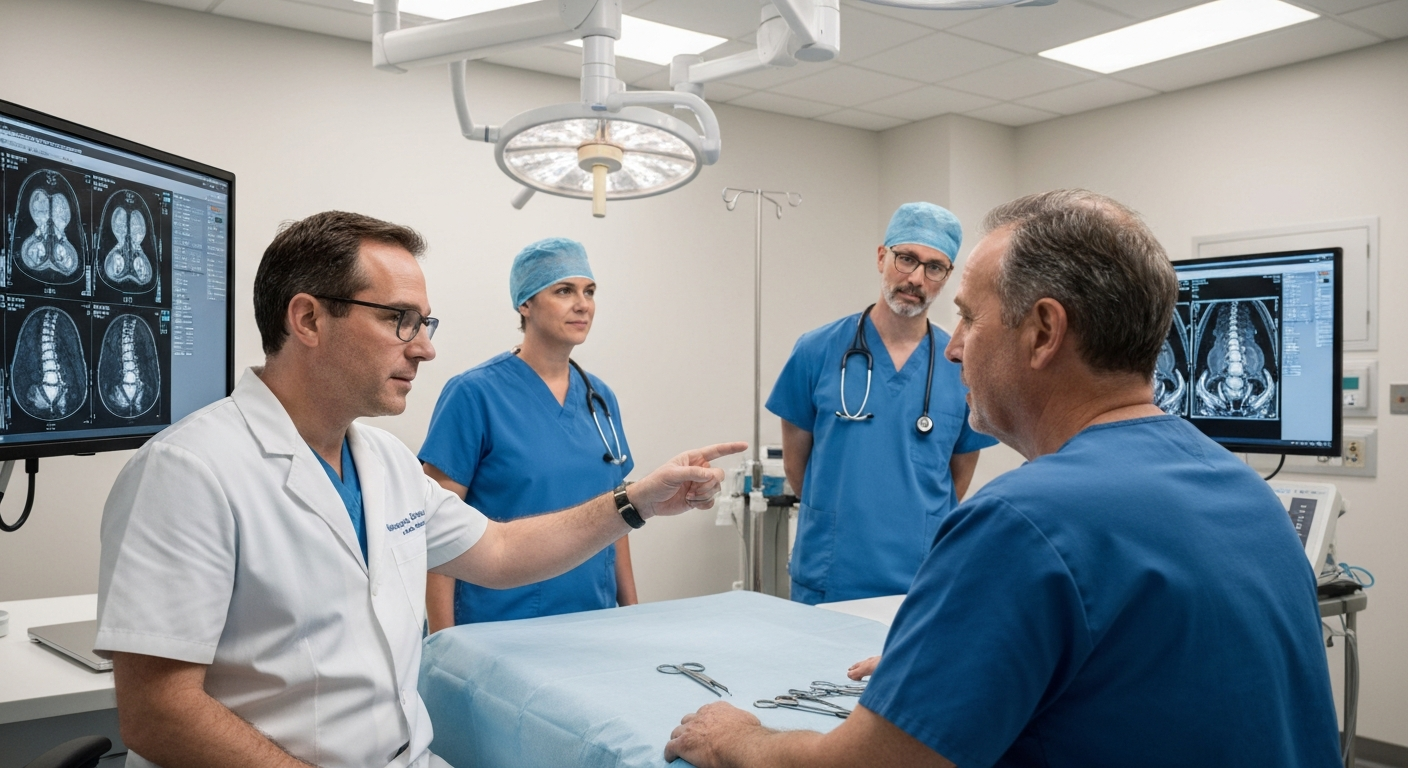
However, the source frequently lies in the spine, where can spinal stenosis cause leg weakness becomes a critical question. Spinal stenosis ranks among the most common spine conditions affecting mobility and quality of life, particularly as we age.
This narrowing creates a cascade effect that extends far beyond your back. Understanding the connection between your spine and leg function empowers you to recognize symptoms early and seek appropriate treatment before the condition progresses.
At Legent Spine, we’ve helped countless patients in the Greater Dallas area regain their strength and mobility by addressing the root cause of their leg weakness. This distinction matters because it determines the most effective treatment approach.
What Is Spinal Stenosis?
The term “stenosis” literally means narrowing, and spinal stenosis describes exactly that—a progressive reduction in the space available within your spinal column. Think of your spinal canal as a protective tunnel housing your spinal cord and nerve roots.
When this tunnel narrows, the delicate neural structures inside become compressed, much like a garden hose pinched by a heavy object. Spinal stenosis can develop in different regions of your spine. The cervical spine in your neck can narrow and affect your arms and hands, while the lumbar spine in your lower back represents the most frequent location for stenosis that causes leg weakness.
For most patients, spinal stenosis develops gradually over months or years rather than appearing suddenly. Your spinal discs lose height and hydration over time, while your facet joints develop arthritis.
Your body responds by forming bone spurs and thickening ligaments, which paradoxically create less space for your nerves rather than more. Understanding spinal canal stenosis symptoms helps distinguish this condition from other spine problems that might cause similar discomfort.
How Spinal Stenosis Causes Leg Weakness
The connection between your spine and leg weakness involves a straightforward mechanical problem with profound functional consequences. Your lumbar spine serves as the origin point for major nerves that control your leg muscles.
When stenosis narrows the space around these nerves, their ability to conduct electrical signals diminishes. Imagine trying to speak through a phone with a frayed wire—the message gets through, but not clearly. Similarly, compressed nerves struggle to deliver complete motor commands to your leg muscles.
The muscles receive weakened or incomplete signals, resulting in reduced strength and coordination. As the spinal canal becomes narrower, nerve compression intensifies, and leg weakness becomes more pronounced.
Your symptoms may fluctuate based on your position and activities. Standing upright narrows your spinal canal further, while sitting or leaning forward creates more space. This positional sensitivity helps distinguish spinal stenosis from other conditions causing leg weakness.
The pattern of weakness also provides clues about stenosis location. typically Central canal stenosis typically affects both legs, while foraminal stenosis may cause predominantly one-sided symptoms. Patients seeking information about spinal stenosis foraminal bellaire patients often have unilateral leg weakness matching this pattern.
Recognizing Leg Weakness From Spinal Stenosis
Leg weakness from spinal stenosis rarely announces itself dramatically. Instead, most patients describe a gradual onset that slowly interferes with daily activities. You might first notice difficulty lifting your foot when climbing into your truck or catching your toe on curbs around downtown Dallas.
Leg weakness from spinal stenosis typically worsens with walking or standing upright, and improves when sitting or leaning forward. This characteristic pattern, called neurogenic claudication, distinguishes spinal stenosis from vascular claudication caused by poor circulation. If you find yourself seeking shopping carts at the grocery store not to carry items but to lean forward and relieve your legs, spinal stenosis may be the culprit.
The weakness rarely occurs in isolation. Most patients experience a constellation of symptoms including leg pain, numbness, tingling, or a heavy feeling in the legs. Some describe their legs as “giving out” or feeling unstable, particularly after walking for several minutes.
These specific patterns reflect which nerves bear the brunt of compression. The L4 nerve root controls your ability to lift your foot, while generally the L5 nerve root enables heel walking and big toe extension.
Many residents researching signs you may spinal canal stenosis recognize themselves in these descriptions after months of unexplained leg problems.
When to See a Spine Specialist in the Dallas Area
Progressive leg weakness warrants professional evaluation regardless of your age or activity level. While occasional leg fatigue affects everyone, weakness that worsens over weeks or months suggests an underlying structural problem requiring expert diagnosis. Board-certified spine specialists can distinguish spinal stenosis from other conditions causing similar symptoms.
Sudden onset leg weakness demands urgent medical attention. Unlike the gradual progression typical of degenerative stenosis, acute weakness may indicate a disc herniation, spinal fracture, or other serious condition requiring immediate intervention. If your legs become significantly weaker over hours or days rather than months, seek emergency evaluation.
Cauda equina syndrome, characterized by bilateral leg weakness, bowel or bladder dysfunction, and severe pain, requires emergency medical attention. This rare but serious condition represents a surgical emergency. Loss of bowel or bladder control, numbness in the saddle region, or severe weakness in both legs should prompt immediate emergency department evaluation.
MRI or CT imaging is typically required to confirm spinal stenosis and assess the severity of nerve compression. Physical examination provides important clues, but advanced imaging reveals the precise location and degree of stenosis. These studies allow spine specialists to correlate your symptoms with anatomical findings and develop targeted treatment plans.
Greater Dallas area residents have access to fellowship-trained spine surgeons who specialize in diagnosing and treating spinal stenosis. At Legent Spine, our board-certified specialists utilize comprehensive evaluation techniques combining clinical assessment with advanced imaging. Our dedicated care coordinators ensure you receive prompt evaluation and personalized attention from your first contact through your complete recovery.
Patients from surrounding communities, including those researching tomball patients spinal canal stenosis, benefit from our expertise in minimally invasive spine care tailored to each individual’s needs and goals.
Treatment Options for Spinal Stenosis-Related Leg Weakness
Most patients with spinal stenosis begin their treatment journey with conservative management approaches designed to reduce symptoms and improve function without surgery. This initial phase allows many patients to regain comfortable mobility through non-invasive methods.
Physical therapy plays a central role in conservative treatment by strengthening the muscles supporting your spine and improving flexibility. A skilled therapist teaches exercises that open your spinal canal, reduce nerve pressure, and enhance your ability to perform daily activities. Many patients experience significant improvement in leg strength through consistent participation in a structured physical therapy program.
Medications help manage the pain and inflammation associated with nerve compression. Anti-inflammatory drugs reduce swelling around compressed nerves, potentially creating more space within narrowed areas. Your spine specialist may also recommend targeted injections to deliver anti-inflammatory medication directly to the affected spinal levels.
Activity modification doesn’t mean abandoning the activities you enjoy, but rather adapting them to reduce spinal stress. Cycling often provides excellent cardiovascular exercise with less symptom aggravation than walking because the forward-leaning position opens your spinal canal. Understanding which positions and activities worsen your symptoms allows you to make informed choices about daily movements.
When conservative measures fail to provide adequate relief after an appropriate trial period, surgical intervention may offer the most effective path to improved leg strength and function. Modern surgical techniques allow spine surgeons to remove the bone, ligament, or disc material compressing your nerves through small incisions using specialized instruments and advanced visualization.
At Legent Spine, we specialize in minimally invasive techniques that reduce tissue disruption, minimize post-operative pain, and accelerate your return to normal activities. Our board-certified spine surgeons have extensive fellowship training in advanced surgical approaches that prioritize your safety and outcomes. We develop personalized treatment plans based on your specific anatomy, symptom severity, overall health, and personal goals.
The decision to pursue surgery represents a collaborative process between you and your spine specialist. We provide transparent, honest information about realistic outcomes, potential risks, and expected recovery timelines.
Conclusion: Taking the Next Step
Leg weakness caused by spinal stenosis represents a treatable condition when properly diagnosed and managed by experienced spine specialists. The narrowing of your spinal canal creates mechanical pressure on nerves responsible for leg strength and function, but this process can be interrupted through appropriate intervention. Whether through conservative care or advanced surgical techniques, effective treatments exist to help you regain the leg strength and mobility essential for an active, fulfilling life.
Early evaluation offers distinct advantages by allowing treatment before permanent nerve damage occurs. The compressed nerves in your spine possess remarkable healing capacity when pressure is relieved promptly, but prolonged compression may cause irreversible changes.
Professional diagnosis clarifies the true cause of your leg weakness, distinguishing spinal stenosis from other conditions requiring different treatment strategies. The peace of mind that comes from understanding your condition eliminates uncertainty and anxiety, replacing them with a clear path forward.
At Legent Spine, we provide expert, compassionate care for Dallas-area patients experiencing leg weakness and other symptoms of spinal stenosis. Our fellowship-trained spine surgeons combine advanced technical expertise with genuine concern for your wellbeing. If leg weakness is limiting your life, we invite you to schedule a comprehensive evaluation to explore your treatment options and take the first step toward restored strength and mobility.