
Understanding the Connection Between Scoliosis and Constipation
If you’ve been diagnosed with scoliosis and are experiencing digestive issues, you’re not alone in wondering about the connection. Many patients ask whether their spinal condition could be contributing to persistent constipation. The answer is more complex than a simple yes or no.
Scoliosis involves, creating a three-dimensional deformity that affects more than just your posture. Just as scoliosis can cause symptoms like stomach bloating, it can also impact your digestive system in unexpected ways.
The relationship between your spine and digestive function is more direct than many people realize. Your spinal cord and the nerve roots that exit between vertebrae play a crucial role in controlling involuntary digestive processes, including the muscular contractions that move waste through your intestines.
When scoliosis creates abnormal curvature, potentially disrupting these essential signals. Additionally, the physical presence of a curved spine can alter the space available in your abdominal cavity, affecting how your organs are positioned and how efficiently they function.
Understanding this connection validates what you may be experiencing. Constipation related to scoliosis is a legitimate secondary symptom that deserves attention from your healthcare team. At Legent Spine, our board-certified specialists evaluate the full scope of how your spinal condition affects your quality of life, including digestive concerns that might seem unrelated at first glance.
How Scoliosis Interrupts Your Digestive System
The mechanisms connecting spinal curvature to constipation involve both neurological and structural factors. First, let’s consider the nerve pathway disruption.
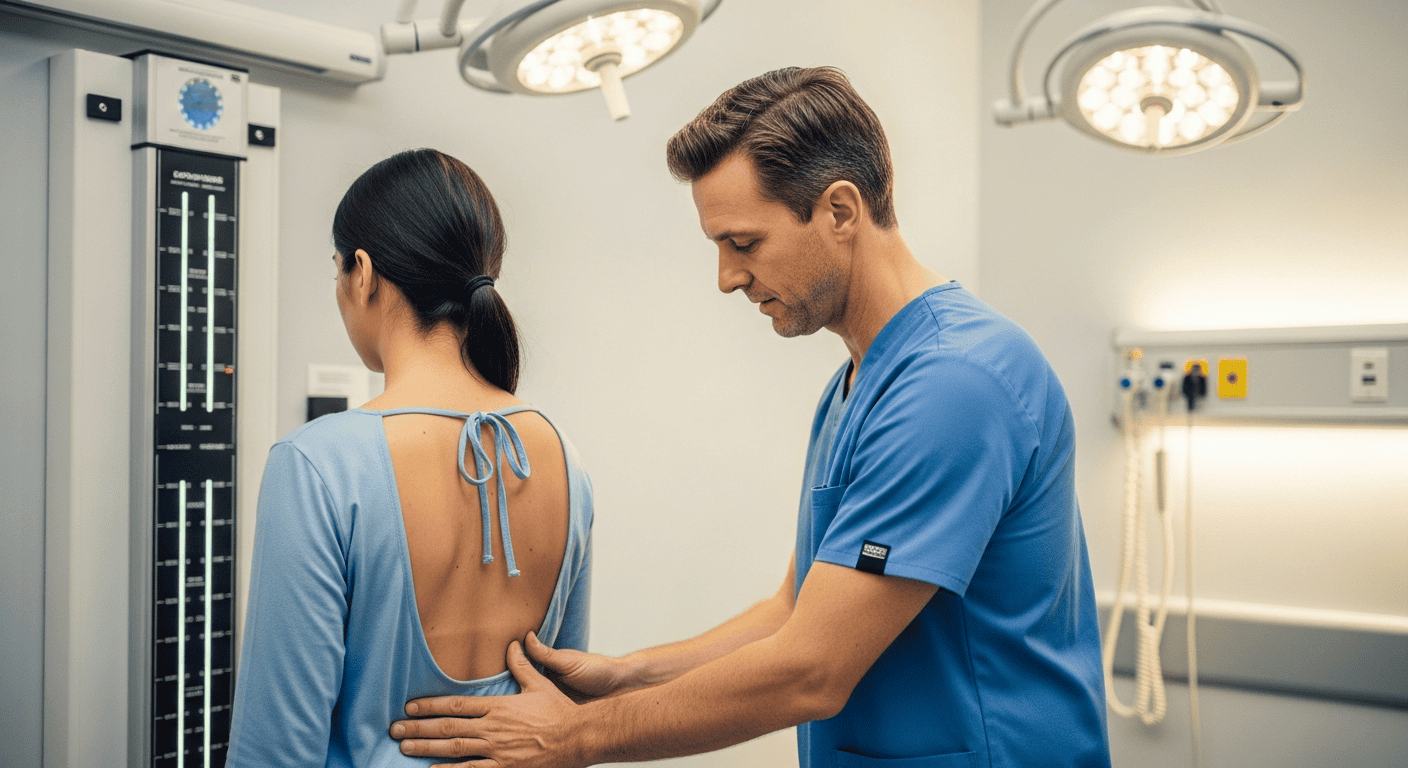
When vertebrae shift out of their normal alignment and rotate as part of the scoliotic curve, they can narrow the openings through which these nerve roots exit the spine. This compression interferes with the transmission of signals that regulate intestinal contractions and the coordinated wave-like movements that propel waste through your digestive tract.
Beyond nerve function, there’s a mechanical component to consider. Think of your abdominal cavity as a space designed to accommodate your digestive organs in specific positions that allow them to function optimally.
When scoliosis changes the shape of this space, organs may shift, compress against each other, or be positioned in ways that interfere with the natural progression of digestive processes.
Muscle tension and imbalance also play a role. Your body naturally compensates for spinal curvature by engaging certain muscle groups more than others to maintain balance and upright posture. This chronic muscle tension, particularly in the abdomen and surrounding areas, can create additional pressure on digestive organs and interfere with their normal movement patterns.
Nerve Compression and Digestive Dysfunction
To understand how nerve compression affects digestion, we need to focus on the specific spinal regions involved. These nerves exit the spine through small openings called neural foramina, which can become narrowed when vertebrae rotate and shift in scoliosis.
When these nerves are pinched or irritated, the signals they carry to your intestines may be weakened or interrupted. This signal disruption can slow intestinal motility—the speed at which food and waste move through your digestive system—leading to constipation.
The severity and duration of these symptoms vary considerably among patients. Some experience temporary digestive issues that correlate with periods of increased spinal pain or muscle tension, while others develop chronic constipation that persists as long as the nerve compression remains unaddressed.
Postural Changes and Organ Positioning
While nerve compression explains much of the neurological impact, the mechanical effect of spinal curvature on organ positioning is equally important. Your digestive organs—stomach, small intestine, and colon—are designed to occupy specific positions that optimize their function. Scoliosis disrupts this optimal arrangement.
When organs are compressed or shifted from their normal positions, the coordinated muscular contractions that move waste through your system become less effective. It’s similar to trying to squeeze toothpaste through a kinked hose—the mechanics just don’t work as efficiently.
This tension isn’t something you can simply relax away. It’s your body’s automatic response to maintaining balance with an asymmetrical spine.
Who Is Most Likely to Experience This Symptom?
Not every person with scoliosis will develop constipation. Understanding your risk factors can help you know what to monitor.
The severity of your spinal curve matters significantly. Patients with mild curves may never experience digestive issues related to their scoliosis, while those with moderate to severe curves are more likely to notice these secondary symptoms.
The location of your curve also influences your risk. If your primary curve is in the thoracic region, you’re positioned closer to organs like the stomach and portions of the intestines, making mechanical compression and nerve involvement more probable.
Age at onset and progression rate matter as well. Patients who develop scoliosis during adolescence and experience rapid curve progression may be more likely to develop digestive symptoms than those with slow-progressing adult-onset curves. Working with fellowship-trained specialists like Dr. Paul Salinas can help you understand your specific risk profile based on your unique presentation.
Recognizing Constipation Related to Your Scoliosis
Distinguishing scoliosis-related constipation from other causes requires paying attention to patterns and associations. If you notice that your digestive issues tend to worsen during periods when your back pain is flaring up or when you’ve been in positions that stress your spine, this correlation suggests a connection. For more information, see our page on can scoliosis cause groin pain 6. For more information, see our page on can scoliosis cause groin pain 5. For more information, see our page on can scoliosis cause groin pain 4. For more information, see our page on can scoliosis cause groin pain 3.
For example, if your constipation becomes more pronounced after long periods of sitting or standing, or if certain activities that aggravate your scoliosis symptoms also seem to worsen your digestive issues, these timing patterns are significant clues.
Other accompanying gastrointestinal symptoms can provide additional context. Some patients experience not just constipation but also bloating, discomfort that’s position-dependent, or digestive symptoms that don’t respond well to typical over-the-counter constipation treatments. If you’ve tried standard remedies—increased fiber, hydration, stool softeners—without significant relief, and you have a known scoliosis diagnosis, it’s worth exploring whether your spine condition is the underlying contributor.
Management Strategies for Scoliosis-Related Constipation
Addressing constipation related to scoliosis often requires a multi-faceted approach that targets both the spinal condition and the digestive symptoms. Physical therapy focusing on core strengthening and postural awareness can be particularly valuable.
When your core muscles are stronger and better balanced, they provide improved support for your spine, potentially reducing the mechanical stress and nerve compression that contribute to digestive issues.
Hydration and dietary adjustments remain foundational, even when the root cause is structural. While these measures alone may not completely resolve scoliosis-related constipation, they optimize your digestive function within the constraints created by your spinal condition.
Movement and activity modifications can also help. Gentle exercises that promote spinal mobility without aggravating your curve, along with movements that stimulate digestive function, can provide relief. Your healthcare team can guide you toward activities that support both spinal and digestive health based on your specific curve pattern and severity.
Non-Surgical Approaches
Conservative management should always be the first line of approach unless your scoliosis presents with severe neurological symptoms or rapid progression. Physical therapy targeting core and spinal muscles builds the muscular support system that can partially compensate for spinal asymmetry.
Breathing exercises can be particularly beneficial, as they engage the diaphragm and abdominal muscles in ways that both support spinal alignment and improve abdominal function. Dietary modifications go beyond simply adding fiber. Working with a nutritionist who understands the connection between spinal conditions and digestive function can help you identify foods that support optimal bowel function without causing bloating or additional abdominal pressure.
Regular, gentle movement and stretching—particularly yoga poses that promote spinal mobility and core engagement—can provide both spinal and digestive benefits. Many patients find that a consistent routine of appropriate exercises helps manage both their back symptoms and digestive function.
When Surgical Correction May Help
For some patients, surgical intervention to correct the spinal curvature may be the most effective way to address persistent constipation and other secondary symptoms. By straightening the spine and decompressing affected nerves, surgery addresses the root structural causes of digestive dysfunction.
However, it’s important to understand that While digestive symptoms contribute to the overall picture of how scoliosis affects your life, surgery is a significant intervention that must be justified by the totality of your symptoms and the severity of your spinal condition.
Patients whose curves have progressed beyond conservative management, who experience significant nerve compression causing multiple symptoms, or whose quality of life is severely impacted may be candidates for surgical correction. When constipation is part of a constellation of symptoms stemming from severe scoliosis, addressing the spinal deformity can provide broad relief that includes improved digestive function.
What Dallas-Area Patients Should Know
For patients in the Greater Dallas area dealing with scoliosis and digestive concerns, comprehensive evaluation is available locally without the need to travel to distant medical centers. At Legent Spine, our board-certified spine specialists have the expertise to assess your specific situation and determine whether your digestive symptoms are related to your spinal condition.
We understand that scoliosis affects each patient differently, and our approach involves looking at the complete picture of how your spine condition impacts your daily life. The Dallas area offers access to advanced minimally invasive surgical options when conservative treatments aren’t sufficient. These techniques, when appropriate, can provide effective correction with reduced tissue trauma and faster recovery times compared to traditional open surgery.
However, surgery is never the first recommendation. We believe in exhausting conservative options and ensuring that surgical intervention is truly necessary before proceeding. Working with Dr. Grant Booher and our team means having dedicated care coordinators who help you navigate the evaluation process, coordinate any necessary testing, and develop a treatment plan that addresses your specific needs.
Frequently Asked Questions About Scoliosis and Digestion
Does all scoliosis cause constipation? No, not everyone with scoliosis will experience constipation. The likelihood depends on several factors including the severity of your curve, its location, and individual anatomical variations. Mild curves rarely cause digestive symptoms, while moderate to severe curves are more likely to impact digestive function.
Will surgery definitely fix my constipation? While surgical correction of severe scoliosis can improve constipation by addressing nerve compression and restoring normal organ positioning, outcomes vary. If your constipation has multiple contributing factors beyond scoliosis, surgery may provide partial rather than complete resolution.
Can I manage this without surgery? Many patients successfully manage scoliosis-related constipation through conservative measures including physical therapy, dietary modifications, appropriate exercise, and postural awareness. The success of non-surgical management depends on the severity of your curve and the degree to which it’s affecting nerve and organ function.
When should I see a spine specialist? If your constipation persists despite standard treatments, correlates with your spinal symptoms, or is significantly affecting your quality of life, it’s time to consult a specialist. Additionally, if you notice worsening of digestive symptoms along with progression of your scoliosis, professional evaluation can help you understand the connection and explore treatment options.
Taking the Next Step: Comprehensive Scoliosis Evaluation
Understanding the potential connection between your scoliosis and digestive symptoms is the first step. Comprehensive evaluation by a spine specialist provides the clarity you need to move forward with confidence.
At Legent Spine, we conduct thorough assessments that include detailed imaging, neurological examination, and discussion of all symptoms—including those you might not initially think are related to your spine. A comprehensive scoliosis evaluation typically includes advanced imaging to assess curve severity and pattern, neurological testing to identify any nerve compression or dysfunction, and a complete medical history that explores the full range of symptoms you’re experiencing.
We consider how your digestive symptoms fit into the larger picture of your scoliosis and overall health, which is essential for developing an effective treatment strategy. Your digestive symptoms matter in your care because they provide important information about how your scoliosis is affecting your body beyond the obvious skeletal changes.
By addressing these secondary symptoms alongside your primary spinal condition, we can create a personalized management plan that targets your specific needs and improves your overall quality of life. If you’re experiencing persistent constipation along with scoliosis, we encourage you to schedule an evaluation to explore whether there’s a connection and what treatment options might help you find relief.