
Many patients in the Greater Dallas area experience groin pain without realizing its true origin lies in their spine. If you’ve been dealing with unexplained discomfort in your groin or inner thigh area, your scoliosis might be the underlying cause.
This connection between spinal curvature and groin pain surprises many people, yet it’s a common pattern that spine specialists evaluate regularly. While the relationship between scoliosis and hip pain is well-documented, the link to groin discomfort deserves equal attention.
Understanding how your spine affects seemingly distant areas of your body empowers you to seek the right care and find lasting relief. If you’re experiencing persistent groin pain alongside visible spinal asymmetry or known scoliosis, a comprehensive evaluation with a board-certified spine specialist can identify the connection and guide you toward effective treatment.
Understanding the Scoliosis and Groin Pain Connection
that affects the body’s structural alignment and weight distribution. This abnormal curvature doesn’t exist in isolation—it creates a cascade of compensatory changes throughout your musculoskeletal system.
When your spine curves abnormally, your body attempts to maintain balance by adjusting the position of your hips, pelvis, and lower extremities. These adjustments create mechanical stress on joints and soft tissues far from the actual spinal curvature.
Groin pain often represents referred pain, a phenomenon where nerve irritation in one area of the body causes pain sensations in a different, sometimes distant location.
In the case of scoliosis, dysfunction in the lumbar spine, sacroiliac joints, or hip region can trigger pain that manifests in the groin area. The interconnected nature of your nervous system means that problems originating from spinal misalignment can announce themselves through symptoms that seem completely unrelated.
generally The lumbar spine and sacroiliac joints work together to support the pelvis and distribute body weight during movement and daily activities. When scoliosis disrupts this collaboration, the resulting biomechanical inefficiency creates abnormal stress patterns that frequently extend into the groin region, where numerous muscles, tendons, and ligaments attach to the pelvis.
Many patients visiting our practice in Dallas initially seek treatment for what they assume is a pulled muscle or hip problem, only to discover their symptoms stem from spinal misalignment.
How Scoliosis Affects Your Hips, Pelvis, and Groin
The biomechanical pathway from spinal curvature to groin pain involves several interconnected structures. When your spine curves abnormally, the muscles on one side of your body work harder to compensate for the imbalance.
This creates significant muscle imbalances in the lower back and hip region, where some muscles become chronically tight while others weaken from underuse. The hip flexors, which attach to the lumbar spine and extend down to the front of the pelvis and upper thigh, often bear the brunt of this imbalance.
Uneven weight distribution represents another critical factor in scoliosis-related groin pain. Your spine normally distributes your body weight evenly through both sides of your pelvis and into your legs. Scoliosis disrupts this balance, forcing one side to carry more weight than the other.
This asymmetry strains the sacroiliac joint—the connection between your spine and pelvis—and the surrounding tissues. When the sacroiliac joint becomes inflamed or dysfunctional, pain frequently radiates into the groin, buttock, or inner thigh area.
The hip flexors and adductor muscles (inner thigh muscles) become particularly problematic in patients with scoliosis. These muscle groups attach to the pelvis and work constantly to maintain your posture and facilitate movement.
When spinal curvature creates pelvic tilt or rotation, these muscles must work overtime to stabilize your body. The chronic tension pulls on their attachment points in the groin area, creating pain that ranges from a dull ache to sharp sensations during certain movements. Similar to how scoliosis affects hip mechanics, these muscle imbalances compound over time.
typically Leg length discrepancies often accompany scoliosis, though they may be functional rather than actual. Even when both legs measure the same length, spinal curvature can create pelvic tilt that makes one leg appear shorter.
This functional leg length difference affects your gait pattern, forcing you to compensate with each step. The altered gait pattern places additional stress on the hip flexors, groin muscles, and pelvic structures with every stride, creating cumulative trauma that manifests as groin pain.
Symptoms: Recognizing Scoliosis-Related Groin Pain
Identifying whether your groin pain originates from scoliosis requires attention to specific symptom patterns. Groin pain that worsens with certain positions or activities strongly suggests spinal involvement.
You might notice increased discomfort when rotating your torso, bending forward, or transitioning from sitting to standing. The pain typically follows predictable patterns based on your body’s position and the demands you place on your spine and pelvis.
Visible spine curvature or asymmetry in your shoulders and hips often accompanies scoliosis-related groin pain. Look for signs like one shoulder blade protruding more than the other, uneven waist creases, or one hip appearing higher than the other.
These visible indicators confirm the presence of spinal misalignment that could explain your groin symptoms. Many Dallas patients initially dismiss these asymmetries as normal variations, not recognizing their connection to seemingly unrelated pain.
The character of your pain provides additional clues. Scoliosis-related groin pain may present as aching, sharp sensations, or tightness in the inner thigh and groin area.
Some patients describe a pulling sensation that extends from the lower back through the groin when they move in certain ways. Others experience a deep, persistent ache that intensifies with activity and improves with rest. The pain might radiate down the inner thigh or extend toward the front of the hip, following the path of affected muscles and nerves.
Timing patterns reveal important information about your pain’s origin. Many patients report symptoms that worsen after prolonged sitting—common for Dallas commuters navigating traffic—or standing for extended periods.
The sustained positions create cumulative stress on already-compromised structures. Additionally, pain that’s worse on one side, correlating with the direction of your spinal curve, strongly suggests a spine-related cause.
Diagnosis: How Spine Specialists Evaluate Groin Pain
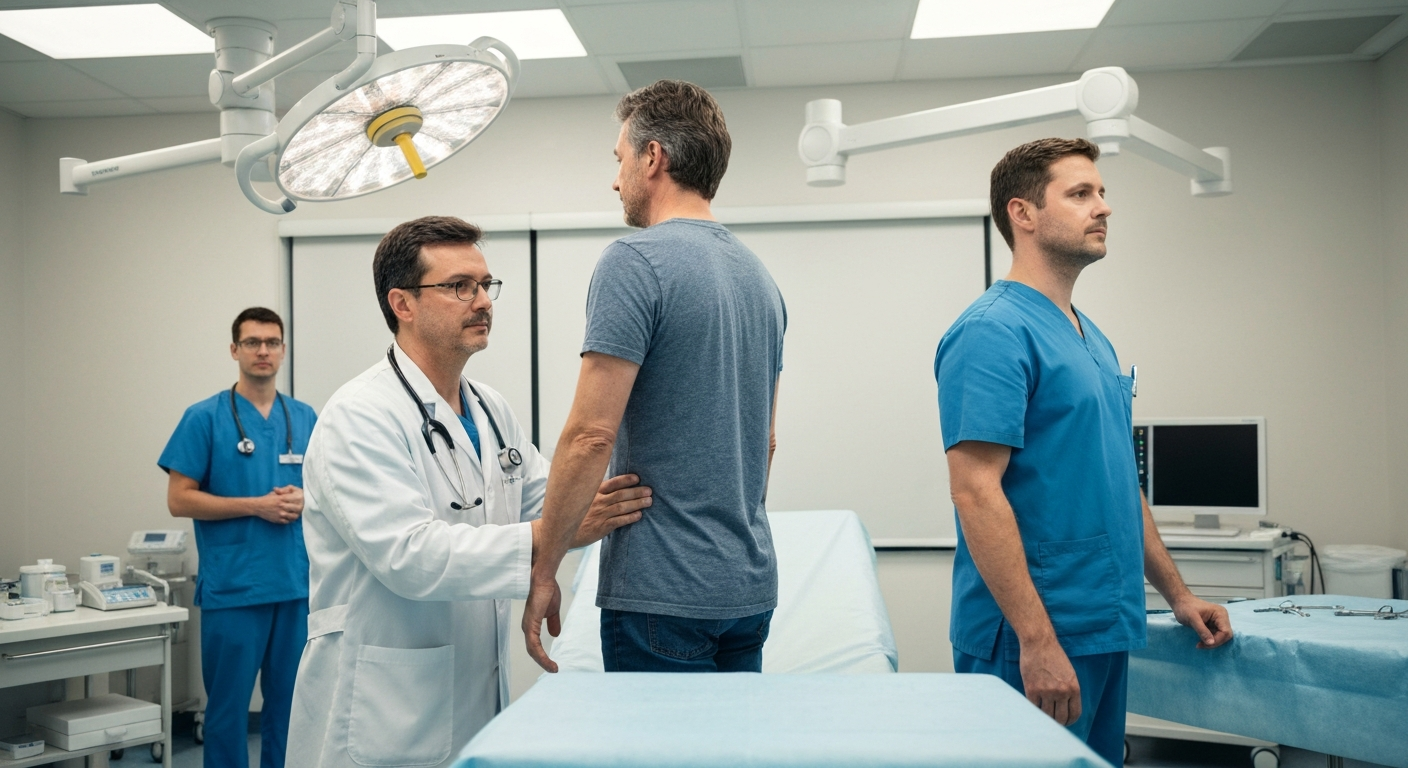
Proper diagnosis requires specialized evaluation from professionals who understand complex pain referral patterns. The physical examination includes comprehensive postural assessment and flexibility testing.
Your spine specialist will observe how you stand, walk, and move, noting any asymmetries or compensatory patterns. Flexibility tests reveal muscle tightness or weakness that contributes to your symptoms, while range-of-motion assessments identify limitations that suggest specific structural problems.
Imaging studies provide objective evidence of spinal curvature and alignment issues.
These images show your spine’s structure from multiple angles, revealing curves that might not be obvious during physical examination. Advanced imaging helps distinguish scoliosis-related issues from other potential causes of groin pain. For more information, see our page on does scoliosis cause hip pain 5.
MRI evaluation proves particularly valuable when assessing complex cases where multiple factors might contribute to symptoms.
This technology visualizes structures that X-rays cannot capture, including muscles, ligaments, nerves, and intervertebral discs. Understanding the full picture of your spine and pelvic anatomy guides more targeted treatment planning.
Specialized orthopedic tests assess sacroiliac joint dysfunction and muscle imbalances. Your spine specialist may perform specific maneuvers that reproduce or relieve your symptoms, helping pinpoint the exact source of your discomfort.
These provocation tests systematically evaluate different structures, distinguishing between hip joint problems, sacroiliac dysfunction, and referred pain from the spine. This comprehensive evaluation distinguishes spine-related groin pain from other causes like sports hernias, hip labral tears, or urological conditions.
Board-certified spine surgeons bring expertise that general practitioners often lack in understanding these complex pain referral patterns. Their fellowship training specifically addresses how spinal conditions create symptoms in distant body regions, and their experience evaluating hundreds of similar cases provides valuable pattern recognition.
Treatment Options for Scoliosis-Related Groin Pain
Conservative treatments address symptoms while improving spinal alignment and muscle balance. Most patients begin with non-surgical approaches that target the underlying biomechanical dysfunction.
These treatments aim to reduce pain, improve function, and prevent progression of symptoms through strategic interventions that address both the spinal curvature and its downstream effects on the pelvis and groin.
Physical therapy forms the foundation of conservative care for scoliosis-related groin pain. A specialized program focuses on strengthening your core muscles to better support your spine while addressing muscle imbalances that contribute to groin discomfort.
Your physical therapist will teach exercises that improve posture, increase flexibility in tight muscle groups, and strengthen weakened areas. Specific attention to the hip flexors, adductors, and lower back muscles helps reduce the mechanical stress causing your groin pain.
Anti-inflammatory medications and targeted injections provide relief during the treatment process. Over-the-counter options like NSAIDs reduce inflammation around stressed tissues, while prescription medications offer stronger effects when needed.
For persistent symptoms, your spine specialist might recommend targeted injections to the sacroiliac joint or surrounding tissues. These injections deliver anti-inflammatory medication directly to the pain source, providing relief that allows you to participate more effectively in physical therapy.
Minimally invasive procedures offer solutions when conservative treatments prove insufficient. Modern techniques allow spine specialists to address scoliosis with smaller incisions, less muscle disruption, and faster recovery compared to traditional open surgery.
These approaches might include procedures to stabilize the spine, decompress pinched nerves, or correct alignment issues contributing to your symptoms. The minimally invasive approach reduces post-operative pain and allows most patients to return to normal activities more quickly.
Surgical intervention remains reserved for severe cases or situations where conservative care has failed to provide adequate relief.
Surgical correction addresses the underlying spinal curvature, restoring more normal alignment and eliminating the biomechanical stress that creates groin pain. Advanced surgical techniques available in the Greater Dallas area achieve excellent outcomes with reduced risks compared to methods used in previous decades.
Treatment plans at our practice are personalized based on your specific curve pattern, symptom severity, and lifestyle goals. Some patients achieve complete relief through conservative care, while others require a combination of approaches. The key lies in accurate diagnosis and strategic intervention that addresses your unique situation.
When to See a Spine Specialist in Greater Dallas
Persistent groin pain lasting more than a few weeks warrants professional evaluation. While occasional discomfort might resolve on its own, ongoing symptoms suggest an underlying problem that requires attention.
Waiting too long to seek care can allow compensatory patterns to become ingrained, making treatment more challenging. Early intervention typically yields better outcomes and prevents the development of chronic pain patterns.
Pain worsening despite conservative treatment indicates a need for specialist input. If you’ve tried rest, over-the-counter medications, and basic exercises without improvement, your condition likely requires more sophisticated evaluation and treatment.
Continuing with ineffective approaches wastes time and allows your condition to progress unnecessarily. Understanding the connection between scoliosis and hip-related symptoms helps patients recognize when specialist care becomes necessary.
Visible spinal asymmetry combined with groin pain requires professional assessment. This combination strongly suggests your symptoms stem from structural problems that won’t resolve without targeted intervention.
Board-certified spine surgeons provide expertise that general practitioners may lack, particularly in understanding how spinal curvature creates pain in distant body regions. Their specialized training focuses specifically on these complex relationships.
Early evaluation can prevent progression and improve treatment outcomes. Addressing scoliosis-related groin pain before compensatory patterns become established makes treatment more straightforward and successful.
Many conditions that start with manageable discomfort can evolve into more complex problems when left untreated. For Dallas-area residents dealing with these symptoms, seeking expert evaluation sooner rather than later provides the best path to lasting relief.
What to Expect During Your Spine Evaluation
Your initial visit begins with a comprehensive history and symptom assessment. Your spine specialist will ask detailed questions about when your symptoms started, what makes them better or worse, and how they impact your daily activities.
This conversation provides crucial context that guides the physical examination and imaging decisions. Bringing a list of your symptoms, medications, and previous treatments helps maximize the efficiency of your appointment.
The detailed physical examination includes postural and flexibility assessment from multiple angles. Your specialist will observe how you move, identify asymmetries, and perform tests that reveal the source of your pain.
This hands-on evaluation often provides as much diagnostic information as imaging studies. The examination typically includes assessment of your spine, pelvis, hips, and groin area to understand how these interconnected structures relate to your symptoms.
Advanced imaging visualizes your spine structure and alignment in detail.
Your specialist will review these images with you, explaining what they reveal about your condition. This transparent approach ensures you understand your diagnosis and the reasoning behind treatment recommendations.
Discussion of findings leads to transparent treatment recommendations tailored to your specific situation. Your spine specialist will explain the connection between your scoliosis and groin pain, outline available treatment options, and discuss the expected outcomes of different approaches.
This collaborative conversation ensures you understand your choices and can make informed decisions about your care. The goal is developing a personalized care plan that aligns with your lifestyle, preferences, and treatment goals while addressing the root cause of your symptoms.
Key Takeaways About Scoliosis and Groin Pain
Yes, scoliosis can absolutely cause groin pain through referred pain and biomechanical dysfunction. The connection isn’t immediately obvious to most patients, but it follows clear anatomical and biomechanical pathways that spine specialists recognize and treat regularly.
The connection involves the sacroiliac joint, hip muscles, and pelvic alignment working together as an integrated system. Disruption at one point in this system creates compensatory changes elsewhere, often manifesting as groin pain even when the primary problem lies in your spine. Similar to other conditions where scoliosis affects surrounding structures, recognizing these patterns leads to more effective treatment.
Proper diagnosis requires specialized evaluation to distinguish spine-related pain from other potential causes. Generic treatment aimed at symptoms alone often fails because it doesn’t address the underlying spinal dysfunction creating those symptoms.
Multiple effective treatment options exist, ranging from conservative care like physical therapy and medications to minimally invasive procedures and surgical correction when necessary. Most patients respond well to non-surgical approaches, especially when treatment begins before compensatory patterns become entrenched.
If you’re experiencing persistent groin pain alongside known or suspected scoliosis, scheduling a comprehensive evaluation with a fellowship-trained spine specialist provides the clarity you need. Understanding the true source of your symptoms represents the first step toward effective treatment and lasting relief.
At Legent Spine, our team serves patients throughout the Greater Dallas area with world-class spine care that addresses not just your symptoms but the underlying conditions creating them. Contact our practice to schedule your personalized consultation and begin your journey toward improved comfort and function.