
Understanding Foraminal Stenosis: What Your Pain Might Be Telling You
If you’re experiencing radiating pain down your arm or leg, tingling sensations, or unexplained weakness, you may be dealing with foraminal stenosis. This spine condition occurs when the small openings on either side of your vertebrae—called neural foramina—become narrowed, potentially compressing the nerve roots that pass through them.
Understanding what’s happening in your spine is the first step toward finding relief and regaining your quality of life. Many patients arrive at our practice having heard confusing terms from other healthcare providers or after reviewing their imaging reports.
Terms like “foraminal narrowing” or “lateral stenosis” can sound overwhelming, but understanding your condition doesn’t have to be complicated. Whether you’re just beginning to experience symptoms or you’ve been managing pain for months, knowing the facts empowers you to make informed decisions about your care.
The good news? This condition is highly treatable. Options range from conservative therapies to advanced minimally invasive surgical techniques, depending on your specific situation.
At Legent Spine, our board-certified spine surgeons specialize in diagnosing and treating foraminal stenosis using the latest evidence-based approaches. If you’re experiencing persistent symptoms, we encourage you to schedule a comprehensive evaluation to determine the best path forward.
What Does ‘Foraminal Stenosis’ Really Mean?
Breaking down medical terminology helps demystify your diagnosis. This condition involves the narrowing of the neural foramen—the passageway through which nerve roots exit your spinal canal and branch out to serve different parts of your body.
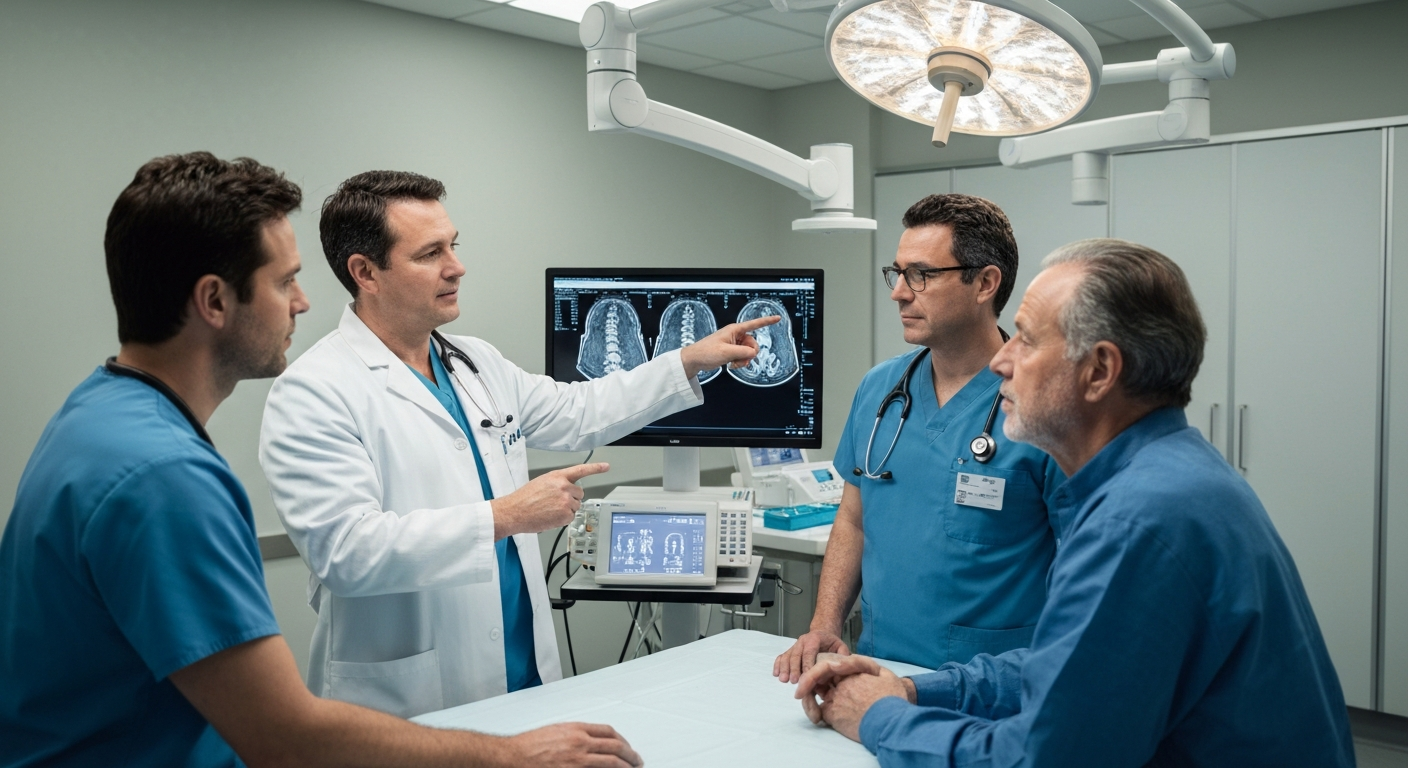
Think of these openings as doorways through which nerves must pass to reach your arms, hands, legs, and feet. When these doorways become narrowed due to degenerative changes, the nerve roots can become compressed or irritated, leading to the symptoms you’re experiencing.
It’s important to distinguish foraminal stenosis from other types of spinal narrowing. While spinal canal stenosis involves narrowing of the central canal where the spinal cord travels, foraminal stenosis targets the side openings where individual nerve roots exit.
This distinction matters because it affects both your symptoms and treatment approach. Foraminal stenosis can occur at any level of the spine—cervical (neck), thoracic (mid-back), or lumbar (lower back)—with the specific location determining which parts of your body experience symptoms.
The Anatomy Behind Foraminal Narrowing
To understand how foraminal stenosis develops, it helps to visualize your spinal column’s structure. These components work together to provide both stability and flexibility while protecting your spinal cord and nerve roots.
The neural foramen exists in the space created between adjacent vertebrae. It’s bounded by the disc in front, the facet joints behind, and bone on the top and bottom. Under normal circumstances, this space provides ample room for nerve roots to exit without interference.
However, several age-related changes can gradually reduce this space over time. As these degenerative changes progress, they can encroach upon the foramen from multiple directions simultaneously.
A disc that loses height creates less vertical space, while bone spurs and thickened ligaments narrow the opening from the sides and back. This mechanical compression triggers the pain, numbness, tingling, and weakness that characterize foraminal stenosis.
Common Causes of Foraminal Stenosis
Understanding what triggers foraminal narrowing helps you recognize risk factors and take preventive measures when possible. The most common cause is the natural aging process, which affects virtually everyone to some degree as they move through their fifth decade and beyond.
This wear-and-tear arthritis affects the facet joints that form the back border of the neural foramen. As these joints degenerate, they often develop bone spurs that project into the foramen space. Similar to degenerative disc disease long-term effects, these changes accumulate gradually over years.
Disc-related problems represent another significant contributor. Unlike central disc herniations that push backward into the spinal canal, foraminal disc herniations extend laterally into the nerve exit pathway. Additionally, as discs lose height with age, the vertebrae settle closer together, reducing the vertical dimension of the foramen.
The ligamentum flavum, a strong ligament that runs along the back of the spinal canal, can thicken with age and contribute to foraminal narrowing.
Previous spine injuries, spondylolisthesis (vertebral slippage), and scoliosis can also create conditions that predispose individuals to foraminal stenosis. Understanding these canal stenosis risks allows you to work proactively with your healthcare provider.
Recognizing Foraminal Stenosis Symptoms
Identifying the symptoms of foraminal stenosis is crucial for timely diagnosis and treatment. Unlike central stenosis, which often causes bilateral symptoms, foraminal stenosis typically produces one-sided symptoms that follow the path of the compressed nerve root.
Patients often describe an electric shock-like sensation that travels from the neck down through the shoulder, arm, and into specific fingers. The exact distribution depends on which nerve root is affected—for example, C6 nerve compression commonly causes thumb and index finger symptoms, while C7 compression affects the middle finger.
Lower back foraminal stenosis can create sciatica-like symptoms, though the pain pattern differs slightly from a typical disc herniation. Many patients notice that their symptoms fluctuate based on position and activity level.
This positional sensitivity is a hallmark of foraminal stenosis. Symptoms may start as intermittent discomfort that comes and goes, but can progress to persistent pain if left untreated.
Weakness in the affected extremity, difficulty with fine motor tasks, or dropping objects are warning signs that shouldn’t be ignored. If you’re experiencing these signs you may have spinal stenosis, professional evaluation is warranted.
How Spine Specialists Diagnose Foraminal Stenosis
Accurate diagnosis requires more than just imaging studies—it demands correlation between what we see on scans and what you’re experiencing clinically. When you visit Legent Spine, your comprehensive evaluation begins with a detailed medical history and thorough physical examination.
During the examination, our fellowship-trained specialists assess your range of motion, perform neurological testing to evaluate strength and sensation, and conduct maneuvers that may reproduce your symptoms. These clinical findings guide our imaging interpretation and treatment planning.
Unlike X-rays, which show only bone structures, MRI reveals the neural foramen, nerve roots, discs, and ligaments in exquisite detail. CT scans may be ordered as a complementary study, particularly if bone spur anatomy needs clarification or if you cannot undergo MRI.
In some cases, electrodiagnostic testing adds valuable information. This study measures the electrical activity in muscles and the speed of nerve conduction, helping pinpoint which nerve root is affected and the severity of compromise.
Critically, a diagnosis of foraminal stenosis requires both imaging evidence of foramen narrowing and clinical symptoms consistent with nerve compression. Many people have foraminal narrowing visible on MRI without experiencing any symptoms. Treatment is based on symptoms, not imaging alone—a principle that guides our patient-centered approach at Legent Spine.
Treatment Options: Conservative to Surgical Approaches
Most patients benefit from starting with conservative management, which forms the foundation of treatment for foraminal stenosis. The good news is that This non-surgical approach allows many people to avoid surgery while achieving meaningful symptom relief.
Physical therapy plays a central role in conservative care. A skilled physical therapist can teach you exercises that improve posture, strengthen supporting muscles, and create more space for compressed nerves. Manual therapy techniques may also provide relief by improving spinal mechanics and reducing muscle tension that contributes to symptoms.
Medications help manage pain and inflammation during the healing process. Non-steroidal anti-inflammatory drugs (NSAIDs) reduce inflammation around the compressed nerve, while muscle relaxants can ease associated muscle spasms. Some patients benefit from neuropathic pain medications that specifically target nerve-related discomfort.
These targeted injections deliver anti-inflammatory medication directly to the area of nerve compression, often providing weeks to months of symptom relief. Injections serve both diagnostic and therapeutic purposes, helping confirm the pain source while buying time for other conservative measures to work.
Activity modification doesn’t mean stopping everything you enjoy—it means working smarter to avoid positions and movements that aggravate your symptoms. Your care team will provide specific guidance based on your symptom pattern and lifestyle needs.
Surgery may also be recommended earlier if you’re experiencing progressive weakness, severe pain that significantly impacts quality of life, or signs of significant nerve damage.
The decision to proceed with surgery is always collaborative, involving an honest discussion about risks, benefits, and expected outcomes. Our surgeons may discuss options similar to laminectomy vs fusion for lumbar stenosis, depending on your specific anatomical situation.
Minimally Invasive Surgical Solutions
When surgery becomes necessary, advances in minimally invasive techniques have transformed foraminal stenosis treatment. This approach allows surgeons to precisely remove the bone spurs, thickened ligaments, or disc material compressing the nerve root while minimizing disruption to surrounding healthy tissues.
At Legent Spine, Dr. Todd Shanks and Dr. Saeid Aryan utilize advanced endoscopic and tubular retractor techniques that offer several advantages over traditional open surgery. The smaller incisions mean less blood loss, reduced postoperative pain, and shorter hospital stays—many patients go home the same day or after just one overnight observation.
Recovery timelines differ significantly between minimally invasive and traditional approaches. This faster recovery allows patients to resume work, daily activities, and eventually exercise sooner than with conventional surgery. The reduced tissue trauma also correlates with lower infection rates and fewer wound complications.
Your surgeon will determine whether you’re a candidate for minimally invasive surgery based on your anatomy, the severity of stenosis, and whether multiple levels require treatment. Not every case is suitable for these advanced techniques, but when appropriate, they offer compelling benefits for patients seeking efficient recovery.
Foraminal Stenosis Care in the Dallas Area
Residents of the Greater Dallas area have access to world-class spine care without traveling to distant medical centers. This local availability means you can receive expert evaluation and treatment close to home, with support from family and friends during your recovery.
At Legent Spine, we’ve built our practice on the principles of expertise, transparency, and personalized care. Our surgeons are fellowship-trained in spine surgery, meaning they’ve completed additional specialized training beyond their general orthopedic or neurosurgical residency.
We understand that spine care involves more than just technical skill—it requires communication, compassion, and coordination. That’s why every patient at Legent Spine works with a dedicated care coordinator who guides you through the evaluation and treatment process, ensuring your questions are answered and your concerns are addressed promptly.
Second opinions are not only welcomed but encouraged. Spine surgery is a significant decision, and we believe patients benefit from gathering information from multiple experts before proceeding with any invasive treatment. Our team is happy to review outside imaging and provide an honest assessment of your condition and treatment options.
When to Seek Professional Spine Care
Knowing when to move beyond self-care and seek expert evaluation is crucial for optimal outcomes. While some neck or back pain episodes resolve on their own with rest and over-the-counter medication, symptoms that persist or worsen deserve professional attention.
Certain warning signs demand more urgent evaluation. Progressive neurological symptoms such as increasing weakness or loss of bladder/bowel control require urgent evaluation. Dropping objects frequently, difficulty walking, stumbling, or foot drop are red flags indicating significant nerve compromise. These symptoms suggest that nerve compression may be causing damage that could become permanent without intervention.
Pain that interferes with sleep, work, or daily activities warrants specialist consultation even if it hasn’t been present for weeks. Quality of life matters, and you shouldn’t have to accept chronic pain as your new normal.
Similarly, if you’ve tried conservative treatments like physical therapy and medications without meaningful improvement after six to eight weeks, it’s time to explore additional options with a spine specialist. Failed conservative treatment doesn’t automatically mean surgery—it means a comprehensive evaluation by an expert who can offer additional diagnostic insights and treatment alternatives you may not have considered.
Moving Forward with Confidence
Foraminal stenosis is a common, well-understood condition with proven treatment pathways that can restore your quality of life. While the medical terminology may sound intimidating, the fundamental concept is straightforward: nerve roots need adequate space to exit the spine without compression, and when narrowing occurs, we can effectively address the resulting symptoms.
Early diagnosis and appropriate treatment improve your chances of successful outcomes, whether through conservative care or minimally invasive surgery. The key is working with spine specialists who take time to understand your unique situation, correlate your symptoms with imaging findings, and develop a personalized treatment plan aligned with your goals and lifestyle.
At Legent Spine, we’re committed to providing the Greater Dallas area with honest, expert spine care that puts your needs first. Our board-certified surgeons combine advanced surgical skills with a conservative treatment philosophy, recommending surgery only when it offers clear benefits over non-surgical alternatives. We believe in transparency, patient education, and collaborative decision-making at every step.
If you’re experiencing symptoms consistent with foraminal stenosis—radiating arm or leg pain, numbness, tingling, or weakness—we encourage you to schedule a comprehensive evaluation with our team. During your consultation, we’ll review your medical history, perform a thorough examination, analyze your imaging studies, and discuss all available treatment options in plain language you can understand.
Don’t let persistent nerve pain control your life. Contact Legent Spine today to take the first step toward relief and restored function. Our dedicated care coordinators are ready to help you schedule your evaluation and answer any questions about what to expect during your visit.