
Introduction: Understanding Spinal Canal Stenosis
Imagine walking through your favorite Dallas neighborhood, only to find your legs growing increasingly heavy and painful with each step. You stop, sit on a bench, and within minutes the discomfort fades. This frustrating cycle affects thousands of people living with spinal stenosis—specifically a condition affecting the final portions of the spinal canal.
While the medical terminology may sound intimidating, understanding this condition is the first step toward reclaiming your mobility and quality of life. Final canal stenosis refers to narrowing of the spinal canal at its terminal or distal portions where nerve roots branch away from the spinal cord.
Unlike general spinal stenosis that can occur at various spine levels, this condition specifically affects the lower regions where the spinal canal naturally tapers. This narrowing compresses the delicate nerve roots that control sensation and movement in your legs and feet, creating symptoms that significantly impact daily activities—from walking your dog to navigating grocery store aisles.
The good news? This condition is highly treatable. Whether through conservative approaches like physical therapy and targeted injections, or minimally invasive surgical techniques when necessary, board-certified spine specialists can develop personalized treatment plans that address your specific symptoms and goals. If you’re experiencing signs of spinal canal stenosis, consulting with an experienced specialist helps you understand your options and begin your journey toward relief.
What Is Final Canal Stenosis? Breaking Down the Medical Term
To understand final canal stenosis, let’s first demystify the anatomy involved. Your spinal canal is the protective tunnel within your vertebral column that houses the spinal cord and nerve roots. Think of it as a carefully designed passage that shields your nervous system’s most critical structures while allowing nerve branches to exit and communicate with the rest of your body.
The term “stenosis” simply means abnormal narrowing of a body passage or opening. You may have heard this term in other medical contexts, such as heart valve stenosis or arterial stenosis. In the spine, stenosis occurs when this protective canal becomes too tight, creating pressure on the nerves that pass through it.
The “final” or “terminal” designation refers to the distal regions of the spinal canal—typically in the lumbar spine where the spinal canal tapers naturally. This area is particularly vulnerable because the spinal cord ends and transitions into individual nerve roots called the cauda equina (Latin for “horse’s tail”) around the L1-L2 level.
As these nerve roots descend through the lower canal, any narrowing in this final portion can compress multiple nerves simultaneously. It’s important to distinguish final canal stenosis from other types of spinal narrowing. usually Central stenosis affects the middle portion of the spinal canal, while usually foraminal stenosis involves the openings where individual nerve roots exit the spine.
Final canal stenosis specifically targets the distal canal where multiple nerve roots are still traveling together before branching to their destinations in your legs and feet. This is why symptoms often affect both legs or multiple areas simultaneously.
Common Anatomical Areas Affected
Final canal stenosis most commonly occurs in the lower lumbar region, particularly at the L4-L5 and L5-S1 levels where the spine experiences the greatest mechanical stress and weight-bearing loads. These areas are especially prone to degenerative changes that contribute to canal narrowing over time.
Causes of Final Canal Stenosis
Understanding what causes final canal stenosis helps you recognize risk factors and take proactive steps to protect your spine health. While some factors are unavoidable, knowing the contributors allows for informed conversations with your spine specialist.
Age-related degenerative changes represent the most common cause of final canal stenosis. As we age, the spine undergoes natural wear and tear that gradually narrows the spinal canal. This includes degenerative disc disease, where the cushioning discs between vertebrae lose height and hydration.
When discs deteriorate, they can bulge into the spinal canal, reducing the available space for nerves. Bone spur development, medically termed osteophytes, occurs as the spine attempts to stabilize itself in response to degenerative changes. While these bony growths aim to strengthen the spine, they unfortunately can encroach on spinal canal space, particularly in the narrower distal regions.
Ligament thickening also contributes significantly to canal narrowing. The ligamentum flavum, a strong elastic ligament that runs along the back of the spinal canal, tends to thicken with age. This thickening reduces the canal diameter from behind, while disc bulging and bone spurs narrow it from the front, creating a pincer effect on the nerve roots.
Previous spine injuries or trauma can accelerate degenerative changes and increase the likelihood of developing final canal stenosis later in life. Whether from sports injuries, motor vehicle accidents, or workplace incidents, past trauma can alter spinal mechanics and set the stage for premature degeneration.
Genetic predisposition plays a role as well. Some individuals inherit spine anatomy that includes a naturally narrower spinal canal, making them more susceptible to symptomatic stenosis even with modest degenerative changes.
Symptoms: How Final Canal Stenosis Affects Your Daily Life
Recognizing the symptoms of final canal stenosis is crucial for seeking timely evaluation and treatment. The condition creates a distinctive pattern of discomfort that differs from other back problems, helping spine specialists identify it during evaluation.
Neurogenic claudication represents the hallmark symptom of final canal stenosis. This condition causes leg pain, numbness, or weakness that’s triggered by walking or standing and relieved by sitting or bending forward. Many patients describe feeling like their legs become heavy, tired, or “give out” after walking for a certain distance.
Unlike vascular claudication (caused by poor circulation), usually neurogenic claudication improves when you sit down or lean forward—positions that naturally open the spinal canal and reduce nerve compression. Numbness and tingling in your legs or feet may start subtly but often become more pronounced as the condition progresses.
Weakness in your lower extremities can affect your balance and coordination. Patients often report difficulty climbing stairs, rising from a seated position, or maintaining their footing on uneven surfaces. This weakness results from nerve compression interfering with the signals that control muscle contraction.
Balance and coordination problems emerge as the condition affects the nerves responsible for proprioception—your body’s awareness of its position in space. Many patients notice they feel unsteady or need to hold onto furniture or walls when walking.
The characteristic pain relief when sitting or bending forward distinguishes spinal stenosis from other conditions. This positional improvement occurs because flexing your spine forward increases the space within the spinal canal. Many patients unconsciously adopt a forward-leaning posture, such as leaning on a shopping cart, which provides temporary relief.
Diagnosis: How Spine Specialists Identify Final Canal Stenosis
Accurate diagnosis of final canal stenosis requires a comprehensive evaluation by a fellowship-trained spine specialist like Dr. Todd Shanks or Dr. Saeid AryanThe diagnostic process combines clinical assessment with advanced imaging to create a complete picture of your spinal health.
Your evaluation begins with a detailed medical history and symptom review. Your specialist will ask specific questions about when symptoms occur, what makes them better or worse, and how they impact your daily activities. This information helps distinguish final canal stenosis from other conditions that may cause similar symptoms.
A thorough physical examination includes assessment of your strength, reflexes, and sensory function to determine which nerves are affected. Your specialist may ask you to perform specific movements or walk to observe your gait and identify any limitations or abnormalities.
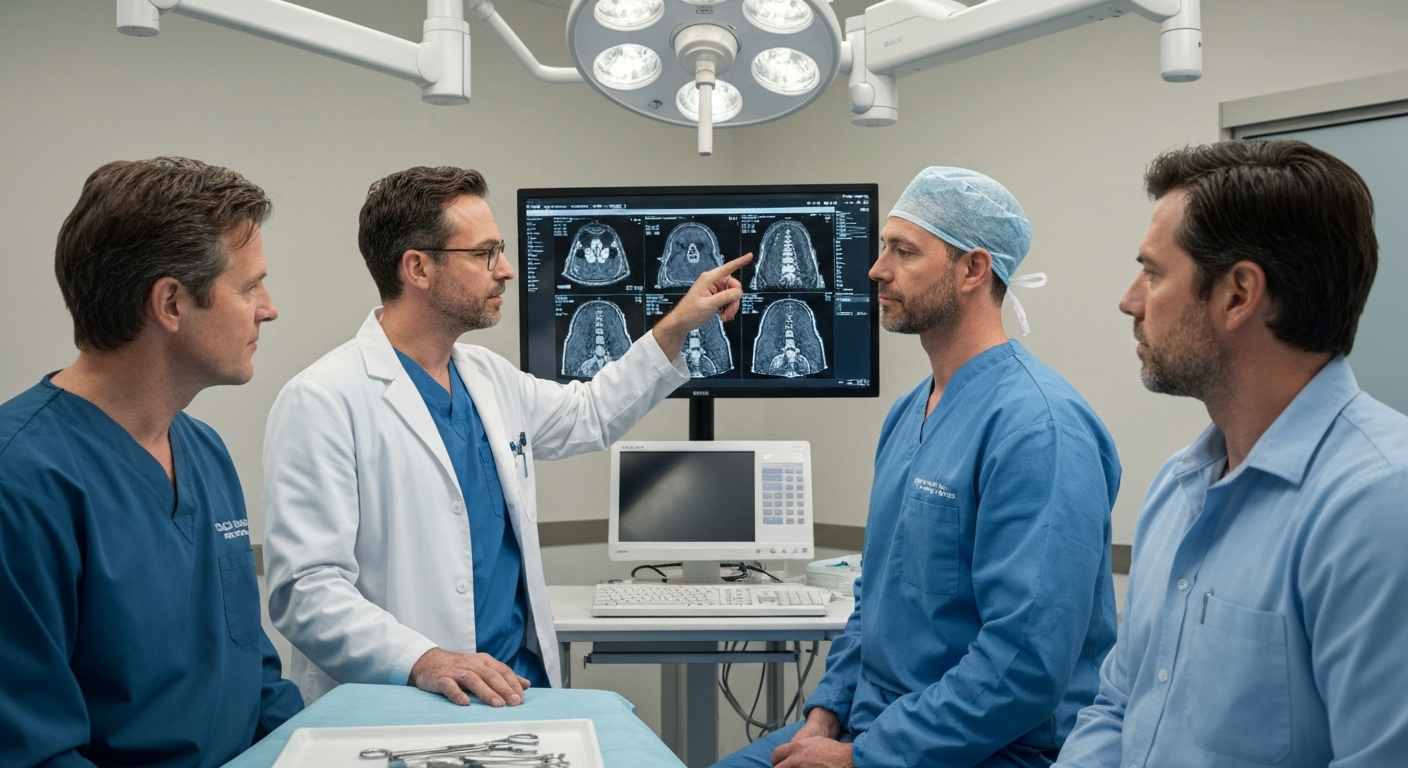
MRI imaging serves as the gold standard for evaluating spinal stenosis because it provides exceptional detail of soft tissues, including discs, ligaments, the spinal cord, and nerve roots. The images clearly show the degree of canal narrowing and precisely identify which nerve roots are compressed.
CT scans may complement MRI by providing superior bone detail. These scans excel at visualizing bone spurs, fractures, and bony canal dimensions, offering important information for surgical planning if intervention becomes necessary. Nerve conduction studies or electromyography (EMG) may be ordered if there’s uncertainty about the source of symptoms or concern about nerve damage.
Conservative Treatment Options
Most patients with final canal stenosis begin treatment with conservative approaches, and many achieve significant improvement without surgery. Board-certified spine specialists typically recommend a trial of non-surgical treatment lasting several weeks to months before considering surgical intervention.
Physical therapy forms the cornerstone of conservative management. A specialized physical therapy program focuses on core strengthening, flexibility exercises, and activities that reduce pain symptoms. Your therapist teaches you specific exercises that open the spinal canal, strengthen supporting muscles, and improve your overall function.
Anti-inflammatory medications, including over-the-counter NSAIDs like ibuprofen or naproxen, can help reduce inflammation around compressed nerves. Prescription medications may be appropriate for some patients, though spine specialists typically recommend using the lowest effective dose for the shortest necessary duration to minimize side effects.
Epidural steroid injections deliver anti-inflammatory medication directly to the area around affected nerve roots. These injections can provide significant relief lasting weeks to months. For many patients, injections provide enough symptom control to participate effectively in physical therapy and other conservative treatments.
Activity modification strategies help you maintain function while protecting your spine. This might include using assistive devices like trekking poles for walking, adjusting your exercise routine to emphasize activities that don’t aggravate symptoms, or modifying work tasks to reduce time spent standing or walking.
Surgical Treatment: When Surgery Becomes Necessary
When conservative treatments fail to provide adequate relief, or if you develop progressive neurological symptoms, surgical intervention may become necessary. Modern spine surgery offers effective solutions with excellent outcomes for appropriately selected patients.
Surgical intervention is typically indicated when you experience progressive weakness, significant functional limitations that affect quality of life, or persistent symptoms despite several months of comprehensive conservative treatment. Surgery aims to decompress the nerves by removing structures that narrow the spinal canal, creating more space for the neural elements.
Laminectomy represents the most common surgical procedure for final canal stenosis. This operation removes part of the lamina—the bony roof of the spinal canal—to widen the space and relieve nerve compression. The surgeon may also remove thickened ligaments, bone spurs, and protruding disc material that contribute to narrowing.
For patients weighing the options, understanding laminectomy versus fusion procedures can help inform treatment decisions. Minimally invasive surgical techniques allow surgeons to perform decompression through smaller incisions using specialized instruments and advanced visualization.
These approaches typically result in less tissue trauma, reduced blood loss, shorter hospital stays, and faster recovery compared to traditional open surgery. Many patients return home the same day or after an overnight observation.
Spinal fusion may be recommended if stenosis is accompanied by instability, significant disc degeneration, or abnormal motion between vertebrae. Fusion permanently joins two or more vertebrae together using bone graft and instrumentation. While fusion eliminates motion at the fused segment, it provides stability and can be highly effective for the right indications.
Recovery timelines vary depending on the specific procedure and individual factors, but most patients notice gradual improvement over weeks to months following surgery. Many patients can walk short distances the same day as surgery, with progressive increases in activity as healing occurs. Success rates for properly indicated spine surgery are generally favorable, with many patients experiencing significant improvement in leg pain, walking tolerance, and overall function decompression surgery for spinal stenosis achieves good to excellent results in 70-90% of appropriately selected patients.
Final Canal Stenosis in the Dallas Area: What Local Patients Should Know
The Dallas-Fort Worth metropolitan area has a rapidly growing population of older adults who may be at increased risk for degenerative spine conditions like final canal stenosis. As our community ages, access to specialized spine care becomes increasingly important.
Fortunately, Greater Dallas residents have access to leading spine specialists who utilize the latest diagnostic technologies and treatment techniques. Board-certified, fellowship-trained surgeons at centers like Legent Spine bring expertise in both conservative management and advanced surgical techniques, including minimally invasive approaches that minimize recovery time.
The Dallas region offers comprehensive spine care services ranging from initial evaluation through conservative treatment and, when necessary, sophisticated surgical intervention. Dedicated care coordinators help navigate insurance coverage, schedule appointments efficiently, and coordinate care among your healthcare team—ensuring you receive seamless, patient-centered treatment.
Choosing an experienced spine specialist who regularly treats final canal stenosis is crucial for optimal outcomes. Look for board-certified surgeons with fellowship training in spine surgery who stay current with evolving treatment techniques. The right specialist will take time to explain your condition, answer your questions thoroughly, and develop a personalized treatment plan aligned with your goals.
When to See a Spine Specialist
Knowing when to seek specialist evaluation can prevent unnecessary progression of symptoms and help you access appropriate treatment sooner. While occasional back discomfort is common, certain symptoms warrant prompt attention from a spine specialist.
Persistent symptoms lasting four to six weeks despite rest and over-the-counter treatments suggest it’s time for professional evaluation. While many episodes of back or leg pain resolve on their own, symptoms that persist beyond this timeframe often require more comprehensive assessment and treatment.
Progressive weakness or neurological changes demand immediate attention. If you notice increasing difficulty walking, new numbness that’s spreading, loss of bowel or bladder control, or weakness that’s worsening rather than improving, contact a spine specialist promptly.
Significant functional limitations that prevent you from performing daily activities, working, or enjoying recreational pursuits justify specialist consultation. You don’t need to live with debilitating symptoms—effective treatments can restore function and improve quality of life.
Early evaluation doesn’t necessarily mean early surgery—it means accessing expert guidance to prevent progression and optimize your treatment plan. Many patients find that specialist consultation provides reassurance, clarifies their diagnosis, and opens doors to effective conservative treatments they hadn’t previously tried.
Key Takeaways and Next Steps
Final canal stenosis, while challenging, is a treatable condition when properly diagnosed and managed. Understanding this spinal narrowing at the distal canal regions empowers you to recognize symptoms early and seek appropriate care before significant progression occurs.
Multiple treatment options exist, ranging from conservative approaches like physical therapy, medications, and injections to minimally invasive surgical techniques when necessary. The key is finding the right treatment approach for your specific situation—one that addresses your symptoms while aligning with your lifestyle and goals.
Early intervention can prevent symptom progression and maintain function. By consulting with a board-certified spine specialist when symptoms first develop, you gain access to the full spectrum of treatment options and benefit from expert guidance throughout your care journey.
The spine specialists at Legent Spine provide personalized care plans based on comprehensive evaluation of your unique condition. With expertise in both conservative management and advanced surgical techniques, our team helps you navigate treatment decisions with confidence.
If you’re experiencing symptoms of final canal stenosis—leg pain with walking, numbness, weakness, or balance problems—consider scheduling a comprehensive evaluation with one of our fellowship-trained spine specialists. Our team at Legent Spine serves the Greater Dallas area with expert, compassionate care designed to help you reclaim your mobility and quality of life.