
Understanding Your Spine Surgery Options
When you’re facing chronic back pain or nerve-related symptoms that haven’t responded to conservative treatments, the prospect of spine surgery can feel overwhelming. You’ve likely heard terms like “laminectomy” and “spinal fusion” during conversations with your doctor, and now you’re trying to understand which procedure might be right for your specific situation.
The truth is that both surgeries address different spine problems with different goals. Making an informed decision requires understanding not just the procedures themselves, but how they relate to your unique condition.
Choosing between laminectomy vs fusion for lumbar stenosis isn’t simply a matter of picking the less invasive option or the one with the fastest recovery time. Your spine surgeon must consider numerous factors specific to your anatomy, symptoms, and overall health.
For patients in the Greater Dallas area seeking clarity on these surgical approaches, understanding the fundamental differences between decompression and stabilization procedures is the essential first step toward recovery. If you’re weighing your options, consider scheduling a consultation with a spine specialist who can provide personalized recommendations based on comprehensive imaging and clinical evaluation.
What Is a Laminectomy?
A laminectomy is a surgical procedure that involves removing the lamina, which is. Think of the lamina as the roof of the bony tunnel that houses your spinal cord and nerves.
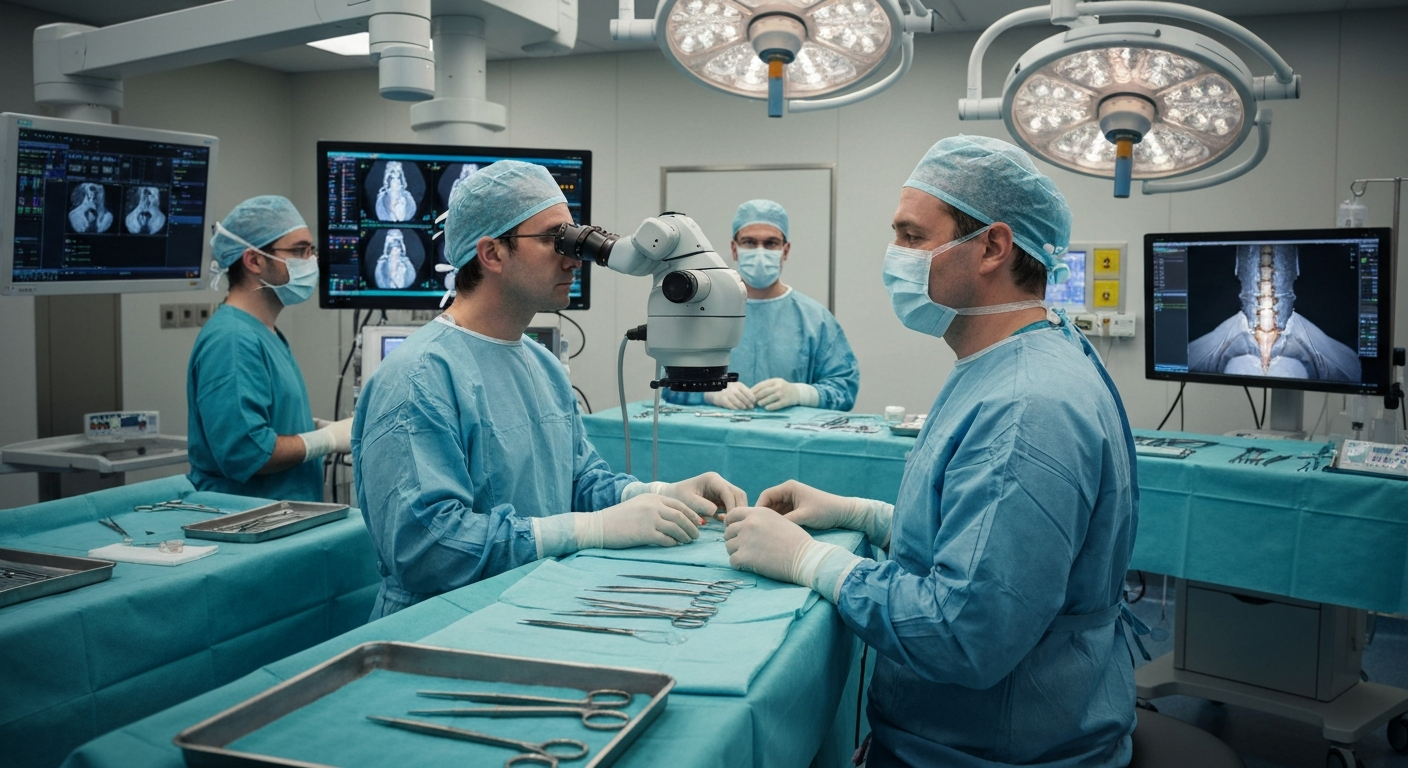
When this space becomes too narrow due to arthritis, bone spurs, or other degenerative changes, removing a portion of the lamina creates more room for the compressed nerves. The primary goal of laminectomy is decompression—relieving pressure on nerves that may be causing pain, numbness, weakness, or tingling in your legs or arms.
This is why you’ll sometimes hear it referred to as “decompression surgery.”, allowing patients to regain function and reduce discomfort.
Today’s advanced surgical techniques include minimally invasive variations that use smaller incisions, specialized instruments, and sometimes microscopic visualization. These approaches can result in less tissue disruption, reduced blood loss, and faster recovery compared to traditional open procedures. The specific technique your surgeon recommends will depend on your anatomy, the location of the compression, and the extent of the degenerative changes affecting your spine.
Common Conditions Treated with Laminectomy
Laminectomy proves particularly effective for conditions where nerve compression is the primary problem. Spinal stenosis is one of the most common reasons patients undergo this procedure.
When these spaces become too tight, you may experience leg pain, cramping, or difficulty walking that improves when you lean forward or sit down.
Herniated discs that cause nerve compression may also benefit from laminectomy, especially when the herniation occurs alongside other degenerative changes. Degenerative disc disease with associated symptoms can lead to bone spur formation that contributes to nerve impingement.
Spondylolisthesis—a condition where one vertebra slips forward on another—sometimes creates nerve compression that laminectomy can address. Additionally, bone spurs that develop with aging and arthritis often encroach on nerve pathways, making laminectomy an appropriate intervention.
such as physical therapy, medications, or epidural injections. For Dallas-area residents dealing with these conditions, understanding whether your symptoms stem primarily from compression rather than instability helps clarify whether laminectomy might be the right approach.
What Is Spinal Fusion?
Spinal fusion takes a fundamentally different approach to solving spine problems. Rather than simply creating more space for nerves, fusion surgery permanently joins two or more vertebrae together.
This stabilization procedure transforms what were once independent moving segments into a single, solid piece of bone.
The primary goal of fusion is to stabilize the spine and prevent abnormal movement that may be causing pain or progressive degeneration.
During the procedure, your surgeon places bone graft material between the vertebrae and typically uses metal screws, rods, or plates to hold everything in position while the fusion heals. This bone graft can come from your own body (autograft), from a donor (allograft), or from synthetic bone substitutes.
Over several months, the graft material encourages new bone growth that bridges the gap between vertebrae, creating a permanent connection. Fusion is generally more invasive than laminectomy alone and involves a more extensive surgical approach. However, for patients with significant instability or mechanical pain, this stabilization can provide relief that decompression alone cannot achieve.
Common Conditions Treated with Fusion
Degenerative disc disease with instability represents one of the primary indications for fusion surgery. When discs lose height and integrity, the vertebrae may move abnormally, causing pain that’s worse with movement and better with rest.
Spondylolisthesis requiring stabilization often needs fusion rather than decompression alone. While laminectomy can relieve the nerve compression caused by the slippage, fusion prevents the vertebra from slipping further.
Severe facet joint disease—arthritis of the small joints connecting vertebrae—can create instability and mechanical pain that fusion addresses effectively. Sometimes post-laminectomy instability develops after an initial decompression surgery, requiring a subsequent fusion to stabilize the spine.
This is why understanding laminectomy vs fusion for lumbar stenosis 2 considerations is crucial upfront. Fractures or trauma that compromise spinal stability also frequently require fusion to restore structural integrity.
Your spine surgeon evaluates these factors through a combination of physical examination, patient-reported symptoms, and advanced imaging studies.
Key Differences: Laminectomy vs. Fusion
Understanding the key differences between these procedures helps clarify why one might be recommended over the other for your situation. The surgical approach differs significantly: laminectomy is tissue-sparing, removing only the bone necessary to decompress nerves, while fusion involves more extensive dissection, instrumentation placement, and bone grafting to achieve stabilization.
The recovery timeline reflects this difference in invasiveness. usually Many patients who undergo minimally invasive laminectomy return to light activities within weeks, while generally fusion patients typically face a more gradual recovery measured in months.
Preserving motion represents perhaps the most fundamental difference:. This distinction matters because maintaining motion at treated levels can reduce stress on adjacent segments of your spine.
The complexity of fusion surgery exceeds that of laminectomy alone. Fusion requires precise instrumentation placement, careful preparation of bone surfaces, and often involves approaching the spine from multiple angles.
Finally, bone graft use distinguishes the procedures—fusion requires grafts to achieve the solid connection between vertebrae, while laminectomy simply removes bone to create decompression.
Pros and Cons of Each Procedure
Every surgical approach involves tradeoffs, and understanding these helps you have realistic expectations about your treatment. Laminectomy offers several advantages: it can be performed using minimally invasive techniques that reduce tissue trauma, recovery typically progresses faster with earlier return to activities, it preserves your natural spinal motion, and it generally carries lower risks of infection and complications compared to more extensive procedures.
For many Dallas-area patients dealing with nerve compression, these benefits make laminectomy an attractive option when appropriate for their condition.
However, laminectomy has limitationsIt addresses only the compression issue, not underlying instability. Some patients who undergo laminectomy may require subsequent fusion surgery if spinal instability develops or degenerative changes progress. Additionally, if your pain stems primarily from mechanical instability rather than nerve compression, laminectomy alone may not provide adequate relief.
Fusion surgery’s advantages include providing lasting stability that addresses the root cause of mechanical pain, effectively treating underlying instability that decompression alone cannot fix, and working well for multi-level disease where several segments need stabilization. For patients whose pain comes from abnormal vertebral movement, fusion can offer definitive treatment.
The downsides of fusion include more invasive surgery with greater tissue disruption, longer recovery periods as bone grafts need months to heal solidly, permanent restriction of motion at fused segments, and higher surgical complexity with associated risks. The decision between laminectomy vs spinal fusion 2 approaches requires weighing these factors against your specific diagnosis and goals.
Recovery and Rehabilitation Expectations
Setting realistic expectations for recovery helps you plan appropriately and reduces anxiety about the healing process. Laminectomy recovery typically involves an initial healing period of two to six weeks, depending on whether minimally invasive techniques were used and the extent of decompression needed.
Many patients notice immediate improvement in nerve-related symptoms like leg pain or numbness, though some numbness may take weeks or months to resolve fully. Patients undergoing minimally invasive laminectomy often experience reduced post-operative pain and require less time away from work compared to traditional open laminectomy.
You’ll gradually increase activities under your surgeon’s guidance, with most people returning to desk work within two to four weeks and more physical jobs within six to eight weeks. Resources like baytown patients guide laminectomy recovery essential information can help you understand what to expect during your healing journey.
Fusion recovery follows a different timeline because bone healing determines when you can safely resume activities. Spinal fusion requires a longer healing period because bone grafts need time to fuse and create a solid connection between vertebrae, typically 3-6 months for initial fusion.
During the first several weeks, you’ll have significant activity restrictions to protect the healing fusion. Your surgeon will use X-rays or CT scans to monitor fusion progress before clearing you for increased activity.
Physical therapy plays an important role in recovery from both procedures, helping you regain strength, improve flexibility, and learn proper body mechanics. Pain relief timelines differ—laminectomy patients often experience rapid improvement in nerve pain, while fusion patients may have initial surgical discomfort followed by gradual mechanical pain reduction as the fusion solidifies.
Factors That Influence Your Surgical Choice
Your spine surgeon considers numerous factors when recommending one procedure over another. Your specific diagnosis and symptoms provide the foundation—nerve compression symptoms typically respond well to laminectomy, while mechanical instability pain often requires fusion.
The presence of spinal instability on dynamic X-rays or MRI scans significantly influences the recommendation, as instability generally necessitates fusion for optimal outcomes. The number of affected vertebral levels matters because multi-level decompression sometimes creates instability requiring fusion.
Your age and overall health status affect surgical risk and healing capacity—older patients with medical conditions may tolerate less invasive laminectomy better than extensive fusion. Previous spine surgeries complicate the picture, as altered anatomy and scar tissue influence both surgical approach and outcome expectations.
Your response to conservative treatments tells your surgeon whether you’ve exhausted non-surgical options appropriately. Finally, your individual lifestyle and goals matter—an active person seeking to maintain mobility might prefer laminectomy when feasible, while someone with severe instability causing debilitating pain might prioritize fusion’s stability benefits despite the longer recovery.
This thorough assessment ensures your treatment plan addresses your actual pathology rather than relying on assumptions.
Why Expert Evaluation Matters for Greater Dallas Patients
The complexity of comparing laminectomy vs spinal fusion 3 approaches underscores why expert consultation is essential. Board-certified spine surgeons bring extensive training and experience that enables them to distinguish between conditions requiring decompression alone versus those needing stabilization.
Board-certified spine surgeons complete rigorous training and certification requirements demonstrating expertise in diagnosing and treating spinal conditions. An individualized approach based on your unique anatomy, symptoms, and goals ensures that you’re not receiving a one-size-fits-all recommendation.
Greater Dallas area patients benefit from access to world-class spine care locally, eliminating the need to travel for expert evaluation. When facing major surgical decisions, second opinions provide valuable perspective and confirmation that you’re pursuing the most appropriate treatment.
Transparent communication about your options, expected outcomes, and potential risks empowers you to make informed decisions about your spine health. The right surgeon takes time to answer your questions thoroughly, explains the reasoning behind recommendations, and ensures you understand both the benefits and limitations of proposed treatments.
Making Your Decision: Questions to Ask Your Surgeon
Arriving at your consultation prepared with specific questions helps you gather the information needed to make a confident decision. Start by asking, “Why is one procedure recommended over the other for my specific condition?” Understanding the clinical reasoning behind the recommendation clarifies how your particular pathology influences the surgical choice.
Ask about expected outcomes and success rates for your situation—not general statistics, but realistic expectations based on patients with similar conditions. Inquire about the timeline for recovery and return to normal activities, including specific milestones and restrictions during healing.
Explore less invasive options you should consider, such as newer techniques or alternatives that might work for your case. Understanding what happens if surgery doesn’t resolve your symptoms helps you prepare for various scenarios and understand next steps if needed.
Finally, ask about risks specific to your health profile—your age, medical conditions, and individual factors may create unique considerations that standard risk discussions don’t cover.
Next Steps Toward Spine Health
Understanding your options represents the essential first step toward recovery from debilitating spine problems. While researching procedures online provides valuable general knowledge, only a comprehensive evaluation by board-certified spine specialists can determine which approach truly suits your individual needs.
The comparison between laminectomy and fusion isn’t about choosing the “better” surgery—it’s about identifying the right solution for your unique spinal condition. At Legent Spine, we offer comprehensive evaluations for patients throughout the Greater Dallas area, combining advanced imaging, thorough physical examination, and honest discussion about your treatment options.
Our dedicated care coordinators support you throughout your journey, from initial consultation through recovery, ensuring you have the resources and guidance needed at every step. Whether your situation calls for minimally invasive laminectomy to relieve nerve compression or spinal fusion to restore stability, our team provides personalized recommendations based on evidence-based practices and years of specialized experience.
If you’re ready to move forward with expert evaluation and explore which spine surgery might be right for you, we encourage you to schedule a consultation with our board-certified spine surgeons who can provide the clarity and direction you need to make this important decision with confidence.