
Understanding Your Spine Surgery Options
When back pain and nerve symptoms don’t improve with conservative treatment, surgery may be your next step. If you’re in the Dallas or Greater Dallas area, understanding the difference between laminectomy vs spinal fusion 3 procedures helps you make confident decisions about your care. yet they address different problems and deliver different results. The right choice depends on your specific diagnosis, what’s happening structurally in your spine, and your personal treatment goals.
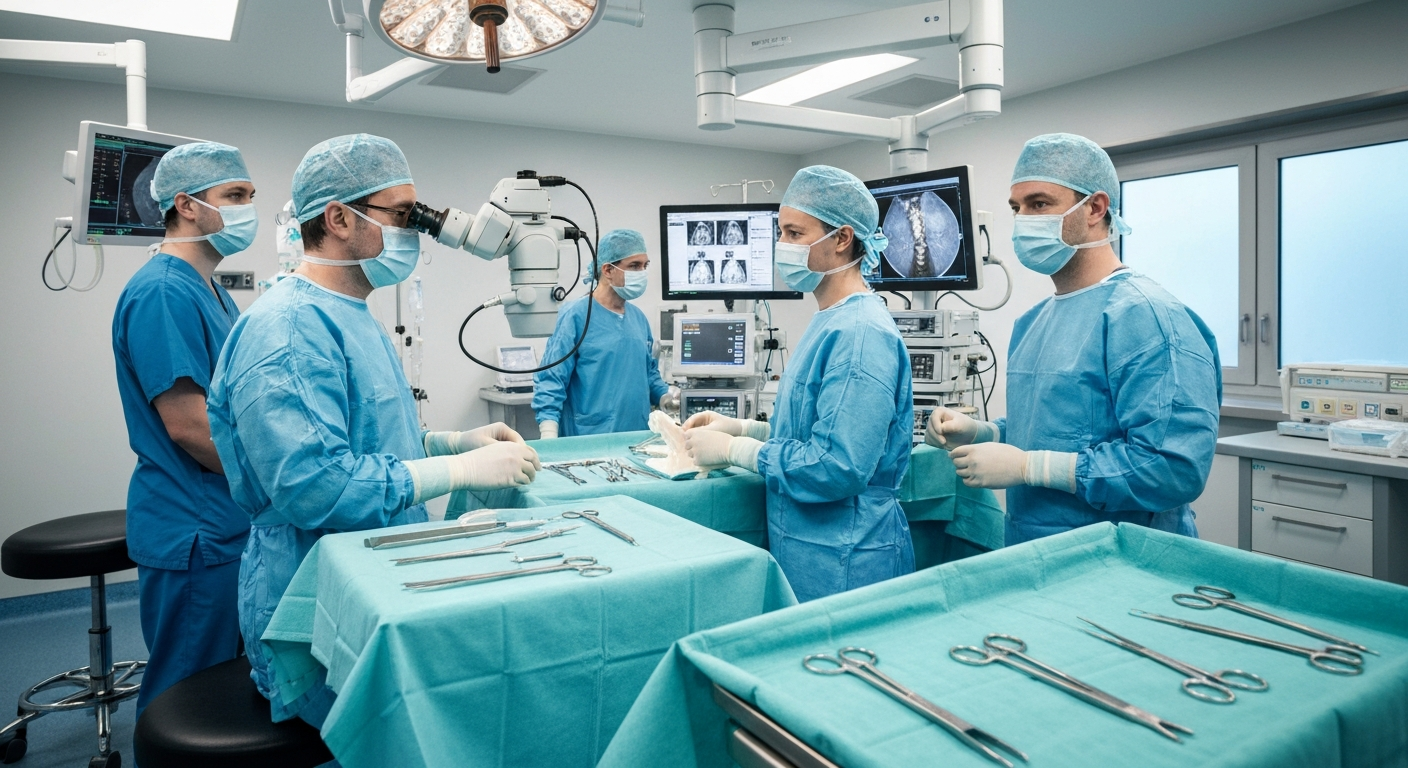
At Legent Spine, our board-certified spine surgeons take time to thoroughly explain each option. We make sure you understand exactly why we’re recommending a particular procedure for your condition. Both laminectomy vs spinal fusion 2 approaches deliver excellent outcomes when matched correctly to your underlying problem. This guide clarifies the key differences between these procedures, what conditions they treat, and how to work with your spine specialist to find the best path forward.
What Is a Laminectomy?
A laminectomy creates more space in your spinal canal by removing bone that’s pressing on nerves. When arthritis thickens this bone or bone spurs develop, the available space for nerves and your spinal cord shrinks. This compression causes significant pain, numbness, weakness, and difficulty walking.
During a laminectomy, your spine surgeon carefully removes the lamina and any other tissue contributing to nerve compression. The goal is creating adequate space so your nerves function normally without being pinched. Many patients experience dramatic relief from leg pain, numbness, and weakness after successful decompression.
One significant advantage of laminectomy is that it. By addressing only the compression without changing motion between vertebrae, you maintain your natural spinal mechanics. This preservation of motion benefits long-term spine health, though it’s not appropriate for every diagnosis. For recovery expectations, review our baytown patients guide laminectomy recovery essential resource.
What Is Spinal Fusion?
often Spinal fusion permanently connects two or more vertebrae together, eliminating motion between those segments. This approach fundamentally changes your spine mechanics by creating a single, stable unit from previously mobile segments.
The fusion process places bone graft material between vertebrae, often with metal plates, rods, and screws holding everything in position during healing. Over several months, the bone graft grows and fuses the vertebrae together permanently. The healing process requires patience as the biological fusion develops.
When vertebrae move abnormally relative to each other, or when discs deteriorate so much they can no longer support your spine properly, fusion provides needed stability. This eliminates pain and prevents further degeneration. The trade-off is that eliminating motion at fused levels places additional stress on adjacent spine segments.
Common Conditions Treated by Each Procedure
This condition often develops gradually as arthritis and degenerative changes thicken the bones and ligaments around your spinal canal. When conservative treatments like physical therapy, medications, and injections fail to provide adequate relief, laminectomy offers an effective solution for many stenosis patients.
This instability creates abnormal motion that causes pain and nerve compression. Fusion also commonly treats severe degenerative disc disease, spinal fractures, scoliosis, and tumors compromising spinal stability. Understanding the laminectomy vs fusion for lumbar stenosis decision matters especially for stenosis, since this condition can occur with or without instability.
Cervical myelopathy, foraminal stenosis, and failed previous spine surgery are conditions that may require either laminectomy or fusion depending on the underlying cause. Your spine specialist carefully evaluates imaging studies and your clinical presentation to determine which approach most effectively addresses the root cause of your symptoms. Sometimes, a combination approach including both decompression and fusion elements may be recommended.
Key Differences: Laminectomy vs. Fusion
The most fundamental difference between these procedures is motion preservation. Laminectomy maintains normal spinal movement by removing only compressing structures, while fusion eliminates motion entirely at treated levels. This distinction significantly impacts recovery, long-term outcomes, and how adjacent spine segments function over time.
Laminectomy is a less invasive procedure that typically requires shorter operative time and hospital stay than spinal fusion. Many laminectomy patients go home the same day or after one overnight stay, whereas fusion patients often require longer hospitalization. The reduced surgical footprint of laminectomy means less tissue trauma, less blood loss, and faster initial healing.
Recovery timelines differ considerably between procedures. Most laminectomy patients return to light activities within weeks and resume full activities within a few months. Fusion patients face longer recovery because. They must protect the fusion site during this critical healing period.
Long-term outcomes depend heavily on choosing the correct procedure for your diagnosis. Patients throughout the Dallas area seeking expert evaluation benefit from comprehensive diagnostic workup determining whether compression alone or instability is the primary problem. When matched appropriately to your condition, both procedures show excellent long-term results.
Advantages and Disadvantages of Each Approach
Patients appreciate the faster return to activities and maintenance of natural spine flexibility. The procedure typically involves less postoperative pain and fewer activity restrictions during recovery. For many patients with pure compression problems, laminectomy provides excellent symptom relief without the commitment to permanent fusion.
However,. If underlying instability exists but isn’t addressed, symptoms may persist or recur. Additionally, removing bone can occasionally weaken the spine’s structural integrity, particularly if extensive decompression is needed. Some patients may eventually require fusion if instability develops or stenosis recurs.
For patients with instability, severe disc degeneration, or spinal deformity, fusion corrects the fundamental structural problem rather than just treating symptoms. The solid fusion provides permanent stability and can prevent progression of deformity. When instability is the primary issue, fusion often provides more durable long-term relief than decompression alone.
The permanent elimination of motion at fused levels places additional stress on neighboring spine segments, which may accelerate degeneration at those levels over time. Hardware complications, though uncommon with experienced surgeons, can occur. The longer recovery period and more extensive surgical approach require greater commitment from patients.
Factors Your Spine Specialist Will Consider
The decision between laminectomy and fusion begins with accurate diagnosis. Advanced imaging reveals not only where compression exists but also how vertebrae move relative to each other. Flexion-extension X-rays can demonstrate abnormal motion indicating instability requiring fusion.
Your age, overall health, bone quality, and activity level all influence the recommendation. Younger, active patients may benefit more from motion-preserving approaches when possible, while patients with poor bone quality may require additional consideration for fusion techniques. Medical conditions like diabetes, smoking, and osteoporosis impact healing and must be factored into your surgical plan.
Symptom severity and duration matter significantly. Patients with progressive neurological deficits like weakness or bowel and bladder changes may require more urgent intervention. Your treatment goals and lifestyle preferences are also important. Some patients prioritize fastest recovery, while others focus on the most durable long-term solution. Our board-certified surgeons at Legent Spine work collaboratively with you to align treatment plans with your individual priorities and circumstances.
Success Rates and Expected Outcomes
The majority of properly selected patients experience meaningful reduction in leg pain, improved walking tolerance, and better quality of life. Success depends heavily on accurate diagnosis and ensuring that compression, not instability, is the primary problem.
Modern fusion techniques, when combined with appropriate patient selection, deliver excellent outcomes. The solid fusion provides lasting stability that prevents recurrence of instability-related symptoms.
This underscores the critical importance of accurate diagnosis and appropriate procedure selection. Neither procedure is superior in all situations. The right choice depends entirely on matching the surgical approach to your specific spine condition. For more detailed comparison, review our comprehensive guide on laminectomy vs fusion for lumbar stenosis 2.
Minimally Invasive Options for Both Procedures
Modern spine surgery has evolved significantly with minimally invasive techniques that reduce tissue trauma and accelerate recovery. These approaches preserve more muscle tissue and reduce postoperative pain while achieving the same decompression goals as traditional surgery.
Various minimally invasive fusion methods are now available, including posterior, lateral, and anterior approaches that minimize disruption to surrounding tissues. These techniques use tubular retractors and specialized instruments to perform fusion through smaller incisions with less collateral damage.
At Legent Spine, our fellowship-trained surgeons have extensive experience with minimally invasive techniques for both laminectomy and fusion procedures. We evaluate each patient individually to determine whether minimally invasive approaches are appropriate based on anatomy, condition severity, and surgical goals. Many patients throughout the Dallas area benefit from faster recovery and less postoperative discomfort with these advanced surgical methods.
Finding the Right Spine Specialist in Dallas
The Dallas and Greater Dallas area offers access to highly skilled spine surgeons, but credentials and experience matter significantly. This additional training provides the expertise needed to handle complex cases and utilize advanced surgical techniques.
When seeking spine care, look for surgeons who perform comprehensive evaluations rather than recommending surgery immediately. The best specialists exhaust conservative treatment options first and only recommend surgery when truly indicated. At Legent Spine, our surgeons provide transparent, honest assessments and explain all available options, including both surgical and non-surgical approaches.
Don’t hesitate to seek a second opinion if you’re uncertain about a surgical recommendation. Spine surgery is a significant decision, and you deserve confidence in both your diagnosis and treatment plan. Our care coordinators assist patients throughout the evaluation process, ensuring you have the information needed to make informed decisions about your spine health.
What to Expect During Your Consultation
Your initial consultation begins with a thorough review of your medical history, symptoms, and previous treatments. Your spine specialist will examine any imaging studies you’ve had, including MRI, CT scans, and X-rays. If additional imaging is needed to clarify the diagnosis, it will be ordered before making surgical recommendations.
A comprehensive physical examination assesses your strength, reflexes, sensation, and range of motion. Your surgeon correlates physical findings with imaging abnormalities to confirm that your symptoms match the structural problems visible on scans. This correlation is essential for predicting surgical success.
Your surgeon will discuss conservative treatment options if you haven’t exhausted them already. Surgery is typically recommended only after non-surgical approaches have failed or when neurological deficits require urgent intervention. When surgery is appropriate, you’ll receive clear explanations of the recommended procedure, alternative options, expected recovery timeline, and realistic outcome expectations. This is your opportunity to ask questions and ensure you completely understand your treatment plan.
Making Your Decision
Both laminectomy and spinal fusion are effective treatment options when matched appropriately to the underlying spine condition. Neither is universally superior. The right choice depends entirely on your specific diagnosis, whether instability is present, and your individual circumstances. Understanding these differences empowers you to participate actively in treatment decisions.
Trust your spine specialist’s expertise, but don’t hesitate to ask questions until you feel confident in your understanding. A good surgeon welcomes questions and takes time to ensure you’re comfortable with the recommended approach. Your spine health significantly impacts your quality of life, and you deserve expert care from board-certified surgeons who prioritize your long-term outcomes.
If you’re experiencing back pain, leg pain, numbness, or weakness that hasn’t responded to conservative treatment, schedule a comprehensive evaluation with Legent Spine. Our dedicated care coordinators will guide you through the process, and our fellowship-trained surgeons will provide the expert assessment you need to determine the best path forward. World-class spine care is available right here in the Dallas area. Take the first step toward relief by contacting our practice today.