
Understanding Traumatic Spondylolisthesis
When high-impact trauma strikes the spine, the results can be devastating. Traumatic spondylolisthesis occurs when. Unlike the more common degenerative form that develops slowly over years, traumatic spondylolisthesis happens suddenly—often in motor vehicle accidents, falls from significant heights, or other high-energy impacts.
The distinction between traumatic and degenerative spondylolisthesis matters significantly for treatment planning. While degenerative cases typically respond well to conservative management, traumatic injuries demand immediate evaluation. They carry a higher risk of neurological complications and spinal instability. The sudden displacement can damage vertebral structures, the spinal cord, nerve roots, and surrounding soft tissues.
Common causes include rear-end collisions on Dallas highways, workplace falls in construction or industrial settings, and sports-related injuries. The force required to displace a vertebra traumatically is substantial, which is why these injuries often occur alongside other fractures or soft tissue damage. helping spine specialists determine the appropriate treatment approach.
Prompt diagnosis requires comprehensive imaging. X-rays provide initial assessment of vertebral alignment, while typically CT scans reveal detailed fracture patterns and bone integrity. usually MRI imaging is essential for evaluating spinal cord compression, nerve root involvement, and soft tissue injuries that may not appear on other studies.
If you’ve experienced spinal trauma in a motor vehicle accident or fall, seeking evaluation from a fellowship-trained spine specialist ensures that potentially dangerous injuries aren’t missed during the critical early period.
If you’ve experienced recent spinal trauma, a comprehensive evaluation can determine your treatment path.
Key Surgical Indications for Traumatic Spondylolisthesis
Not every case of traumatic spondylolisthesis requires surgery. Specific clinical criteria help board-certified spine surgeons determine when operative intervention becomes necessary. The decision involves careful consideration of multiple factors, each reflecting the severity and stability of the injury.
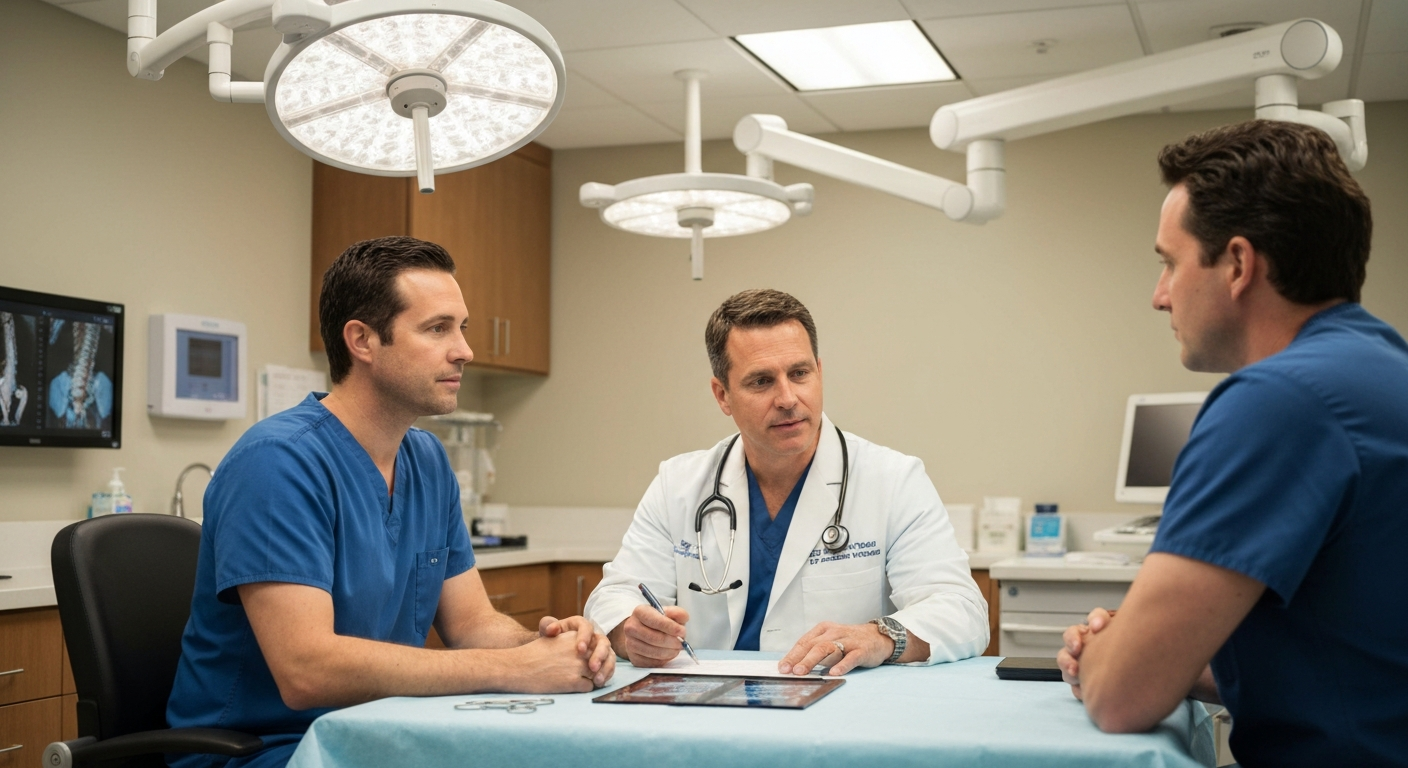
The presence or progression of neurological deficits stands as the most critical surgical indication. When nerve compression causes symptoms like leg weakness, foot drop, or sensory changes, delaying surgery can lead to permanent neurological damage that may not fully recover even after later intervention.
The degree of vertebral displacement plays a crucial role in surgical decision-making. Specialists measure the percentage of slippage relative to the vertebral body width. However, this threshold isn’t absolute—a smaller slip with significant neurological compromise may require surgery, while a larger slip in a neurologically intact patient might initially receive conservative management.
Spinal instability represents another major surgical indication. When the injured spinal segment demonstrates abnormal movement between vertebrae, the risk of future neurological injury or progressive deformity increases substantially. This instability may not be apparent on standard static X-rays, which is why flexion-extension views are so valuable.
For patients who initially attempt conservative management, failure to improve after often signals the need for surgical intervention. Persistent pain that significantly impacts quality of life and prevents return to work or daily activities despite appropriate conservative treatment suggests that structural problems require surgical correction. Understanding the full spectrum of aaos spondylolisthesis treatment nonsurgical surgical options helps patients make informed decisions about their care path.
Neurological Symptoms Requiring Urgent Evaluation
Recognizing warning signs that demand immediate specialist consultation can make the difference between full recovery and permanent disability. Certain neurological symptoms following traumatic spinal injury should never be ignored or dismissed as temporary soreness.
Acute numbness or tingling radiating into the legs or feet indicates potential nerve root compression. While some temporary symptoms may occur from soft tissue swelling, persistent or worsening sensory changes require prompt evaluation. Progressive weakness affecting your ability to walk, climb stairs, or stand from a seated position suggests advancing nerve compression that may become irreversible without intervention.
The most urgent scenario involves loss of bowel or bladder control. This condition occurs when severe compression affects the bundle of nerve roots at the base of the spinal cord. Delay in surgical decompression can result in permanent incontinence and paralysis.
Other concerning symptoms include severe radiating pain unresponsive to medications, gait disturbance or balance problems, and saddle anesthesia—numbness in the groin and inner thigh region. If you experience these symptoms following spinal trauma, seek emergency evaluation rather than waiting for a routine appointment.
When Emergency Care is Essential
Any symptom that worsens over hours or days rather than improving deserves urgent attention, even if the initial injury seemed minor.
Imaging Findings That Influence Surgical Decision-Making
Advanced imaging technology allows spine specialists to visualize exactly what’s happening inside the spinal column, guiding precise treatment recommendations. Each imaging modality provides unique information that contributes to the complete clinical picture.
This detailed bone imaging reveals the exact fracture patterns, helps classify injury severity, and identifies associated vertebral fractures that might affect surgical planning. CT scans are particularly valuable for assessing the bony structures and determining whether fracture fragments are compressing neural elements.
Unlike CT scans that excel at showing bone, MRI reveals soft tissues including the spinal cord, nerve roots, intervertebral discs, and ligaments. Signal changes within the spinal cord itself can indicate injury severity and help predict neurological recovery potential.
These specialized X-rays taken while the patient carefully bends forward and backward show whether abnormal motion exists at the injured level. Excessive movement between vertebrae indicates that the stabilizing ligaments and supporting structures have been damaged, creating instability that typically requires surgical fusion to prevent progressive problems.
The degree of slip measured on imaging, combined with associated injuries such as facet joint fractures or soft tissue damage, helps specialists develop personalized treatment plans. For Greater Dallas patients seeking expert interpretation of complex spinal imaging, board-certified spine surgeons bring specialized training in correlating imaging findings with clinical symptoms and functional outcomes.
Conservative Treatment: When It May Work
Not every traumatic spondylolisthesis requires immediate surgery. When the injury is relatively stable, neurological function is intact, and symptoms are manageable, conservative treatment may successfully heal the injury without operative intervention.
External bracing strategies depend on the injury location. Cervical spine injuries may require a rigid cervical collar, while thoracolumbar injuries typically use a TLSO brace that restricts trunk motion and allows healing.
The typical timeline for non-operative management extends 6-12 weeks, during which patients must comply carefully with activity restrictions and brace wear. Physical therapy plays a supportive role during this phase, focusing initially on maintaining range of motion in unaffected areas and gradually introducing core strengthening exercises as healing progresses.
Follow-up X-rays at regular intervals ensure that the vertebral position isn’t worsening and that healing is occurring as expected. If imaging shows progression of the slip or increasing instability, surgical intervention may become necessary despite the initial conservative approach.
Conservative care fails when symptoms persist or worsen despite appropriate treatment. Patients who cannot tolerate the restrictions of prolonged bracing, those whose occupations require earlier return to full activity, or individuals showing signs of instability may benefit from early surgical stabilization. For those exploring their options, resources on aaos spondylolisthesis treatment nonsurgical surgical 2 provide additional perspective on non-operative approaches.
Surgical Options for Traumatic Spondylolisthesis
When surgery becomes necessary, multiple techniques exist to address both the instability and neurological compression that traumatic spondylolisthesis can cause. The specific approach depends on the injury pattern, degree of displacement, presence of neurological compression, and patient-specific factors.
Decompression procedures remove bone, disc material, or soft tissue compressing neural structures. For traumatic injuries, this might involve removing fracture fragments pressing on nerve roots or the spinal cord. However, decompression alone typically isn’t sufficient for traumatic spondylolisthesis because it doesn’t address the underlying instability.
Fusion surgery restores stability by creating a solid bony connection between the affected vertebrae. This approach involves placing pedicle screws into the vertebrae above and below the injury, connecting them with rods, and adding bone graft material to promote fusion.
Anterior fusion approaches the spine from the front, allowing direct access to the intervertebral disc space. This technique provides excellent restoration of disc height and lordosis.
The choice between minimally invasive and open surgical approaches involves balancing tissue preservation with adequate exposure for safe decompression and instrumentation. Minimally invasive techniques have evolved significantly, now allowing complex reconstructions through smaller incisions with specialized instruments and imaging guidance. Understanding various aaos spondylolisthesis treatment nonsurgical surgical 3 approaches helps patients appreciate the range of available options.
At Legent Spine, board-certified spine surgeons bring fellowship training in complex trauma cases and extensive experience with both minimally invasive and open techniques. This expertise allows personalized surgical planning that matches the approach to each patient’s unique injury pattern and recovery goals.
Minimally Invasive Techniques for Faster Recovery
Technological advances have revolutionized spine surgery, allowing many patients to benefit from minimally invasive approaches that achieve the same structural results as open surgery while reducing tissue trauma and accelerating recovery.
Instead of stripping large amounts of muscle from the spine, minimally invasive techniques use tubular retractors that create a small working channel directly to the surgical site. Muscles are dilated rather than cut, preserving their blood supply and innervation.
Small incision technology benefits patients through reduced postoperative pain, shorter operative times, and lower infection risk. The smaller wounds heal faster and result in less scarring, both cosmetically and functionally. Many patients who undergo minimally invasive fusion surgery find that they require less pain medication and achieve earlier mobilization than they expected.
Patients undergoing minimally invasive fusion typically require shorter hospital stays and earlier return to light activities compared to open fusion approachesWhile the internal healing process takes the same time regardless of surgical approach, the external recovery proceeds more quickly when soft tissue damage is minimized.
Importantly, minimally invasive techniques don’t compromise surgical outcomes. Long-term fusion rates and symptom improvement are comparable to open surgery when minimally invasive procedures are performed by experienced, fellowship-trained surgeons. For Dallas-area patients, access to these advanced techniques through aaos spondylolisthesis treatment nonsurgical surgical 4 specialists provides options for faster return to work and daily activities.
What to Expect: The Surgical Journey
Understanding the surgical process helps reduce anxiety and allows for better preparation. The journey from surgical decision to full recovery follows a predictable path with specific milestones along the way.
Pre-operative evaluation includes medical clearance to ensure you’re healthy enough for surgery and anesthesia. Your spine surgeon will review all imaging studies, discuss the specific surgical plan, and answer questions about risks, benefits, and alternatives. You’ll receive instructions about medication adjustments, fasting requirements, and what to bring to the hospital.
On the day of surgery, you’ll check in at the designated time, meet with the anesthesia team, and speak briefly with your surgeon before heading to the operating room. Surgery duration varies depending on the complexity of the procedure, but most fusion surgeries for traumatic spondylolisthesis take between two and four hours.
Hospital stay duration typically ranges from, though more complex reconstructions may require slightly longer observation. Pain management strategies include a combination of medications tailored to your needs, with the goal of keeping you comfortable while allowing early mobilization. Physical therapy begins on the first postoperative day, helping you safely get out of bed, walk, and learn movements that protect your healing spine.
Rehabilitation progresses through specific milestones. The first six weeks focus on incision healing and early fusion development, with restrictions on lifting, bending, and twisting. Weeks six through twelve gradually increase activity as bone healing continues.
Long-term outcomes are excellent when surgery is performed for the right indications by experienced surgeons. Most patients achieve significant pain improvement, neurological recovery, and return to their desired activities. Resources about aaos spondylolisthesis treatment nonsurgical surgical 6 provide additional context for understanding expected outcomes.
Why Choose a Fellowship-Trained Spine Surgeon
When facing spinal trauma and potential surgery, the expertise of your spine surgeon directly impacts your outcome. Fellowship training, board certification, and specialized experience make a measurable difference in surgical results and patient satisfaction.
During this intensive fellowship, surgeons focus exclusively on spine conditions, performing hundreds of complex procedures under the guidance of master spine surgeons. This advanced training covers minimally invasive techniques, complex deformity correction, trauma management, and revision surgery—skills that aren’t fully developed during standard residency training.
Board certification in spine surgery requires passing rigorous examinations and maintaining continuing medical education in spine careThis certification demonstrates that a surgeon has met stringent educational requirements, passed comprehensive written and oral examinations, and maintains current knowledge through ongoing education. At Legent Spine, our board-certified surgeons stay current with the latest advances in traumatic spine injury management.
Experience with traumatic cases matters because these injuries present unique challenges compared to degenerative conditions. Traumatic spondylolisthesis often involves younger, healthier patients with higher functional demands and expectations for complete recovery. The injury patterns can be complex, sometimes involving multiple spinal levels or combined bone and soft tissue damage.
Beyond surgical skill, the personalized evaluation approach distinguishes expert spine care. At Legent Spine, dedicated care coordinators support patients throughout their journey, from initial consultation through recovery. We believe in transparent, honest communication about your diagnosis, treatment options, and realistic expectations. Serving the Greater Dallas area with world-class spine care means providing access to advanced minimally invasive technology while maintaining the personal attention that makes a difficult experience more manageable.
Next Steps: Getting the Right Evaluation
If you’ve experienced spinal trauma or are living with symptoms that suggest traumatic spondylolisthesis, taking the next step toward evaluation is crucial. Timing matters—early assessment allows for optimal treatment planning and may prevent complications from delayed intervention.
Schedule an appointment promptly if you’re experiencing neurological symptoms such as weakness, numbness, or bowel and bladder changes. These warning signs deserve evaluation within days, not weeks. For symptoms like back pain and stiffness without neurological involvement following trauma, an appointment within one to two weeks is appropriate.
When you come for your evaluation, bring any imaging studies you’ve already had performed, including the actual discs or access codes for digital images. Previous medical records, medication lists, and documentation of treatments you’ve tried help your spine surgeon understand your complete medical picture. A list of questions ensures you don’t forget important concerns during your appointment.
Questions to ask your spine specialist should cover diagnosis specifics, treatment options including both surgical and non-surgical approaches, expected recovery timeline, and risks and benefits of each option. Don’t hesitate to ask about surgical volume, complication rates, and what outcomes you can realistically expect.
Insurance and scheduling information can be handled by our care coordinators, who work diligently to expedite appointments for urgent cases and verify coverage for recommended treatments. Legent Spine’s approach emphasizes transparent communication about costs, expected insurance coverage, and any out-of-pocket responsibilities before treatment begins.
Second opinion availability is always an option if you’ve received a surgical recommendation elsewhere and want additional perspective. We welcome second opinion consultations and respect that major treatment decisions deserve thorough consideration. Bringing imaging and records from your initial evaluation allows our spine specialists to provide informed opinions without unnecessary duplicate testing.
If you’ve experienced spinal trauma or are experiencing symptoms, schedule a comprehensive evaluation with our board-certified spine specialists to determine your personalized treatment plan.