
Introduction: Understanding Traumatic Spondylolisthesis
Imagine being involved in a serious car accident on one of Dallas’s busy highways. Afterward, you experience severe neck pain or numbness in your arms. These symptoms could indicate traumatic spondylolisthesis—a serious spinal condition that requires immediate medical attention.
Traumatic spondylolisthesis is defined as. Unlike gradual wear-and-tear that causes degenerative spine conditions, this injury occurs suddenly following high-impact events. It can pose significant risks to your spinal cord and nerve structures.
The good news? Not all cases require surgery. Board-certified spine specialists use evidence-based criteria to carefully evaluate each patient’s unique situation. They determine whether conservative treatment or surgical intervention offers the best path forward.
Early and accurate diagnosis is essential. Proper evaluation by experienced spine surgeons can prevent long-term neurological complications and help restore function. If you’ve experienced a traumatic injury and are dealing with ongoing neck or back pain, seeking expert evaluation from a fellowship-trained spine specialist should be a priority.
What Is Traumatic Spondylolisthesis?
Traumatic spondylolisthesis occurs when sudden, forceful trauma to the spine causes one vertebra to slip forward relative to the vertebra below it. This displacement happens when the structural integrity of the spine is compromised—either through bone fractures, ligament tears, or both.
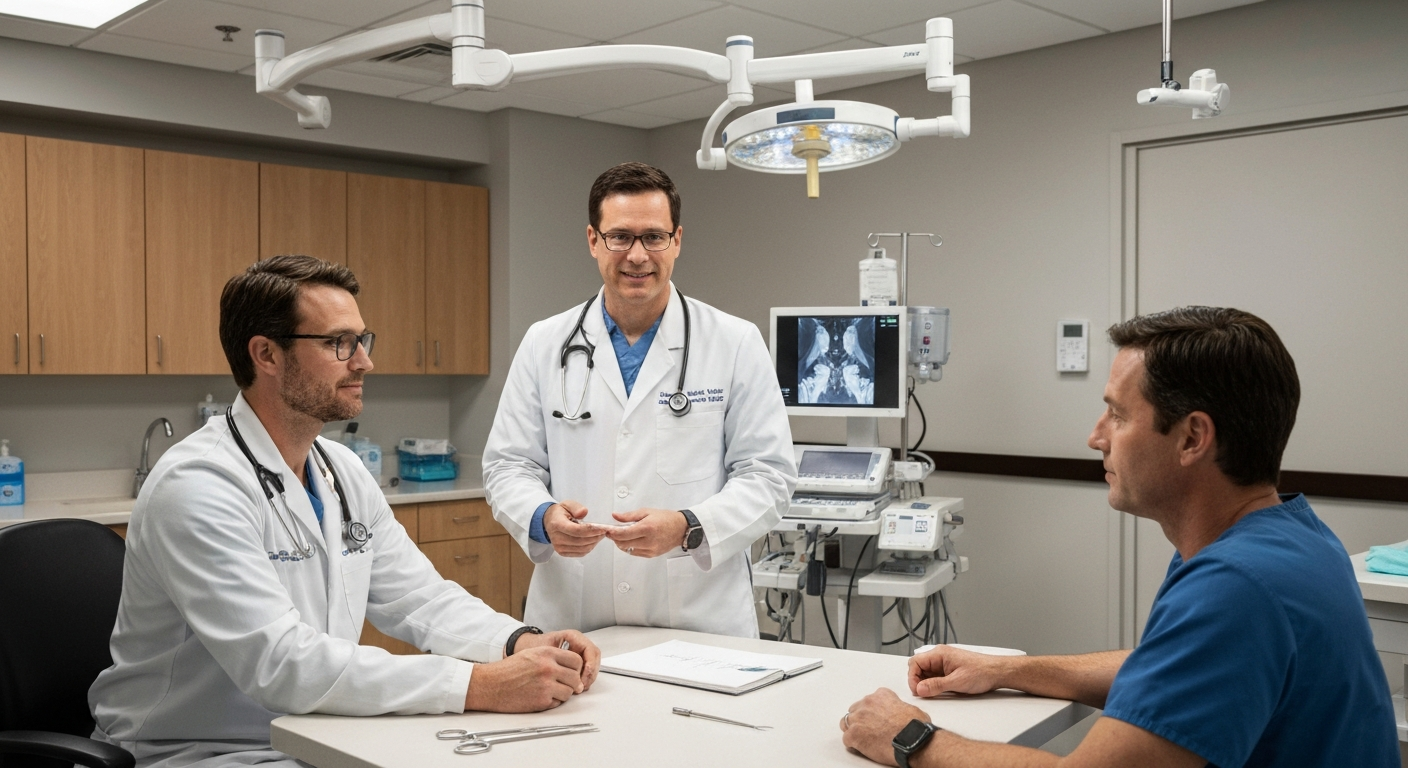
For Dallas-area residents, motor vehicle accidents remain one of the most common causes of this potentially devastating injury.
generally The condition most commonly affects the cervical spine, particularly at the C2 level. This specific fracture pattern got its historical name from the mechanism of injury, though today it’s more commonly seen in motor vehicle accidents where hyperextension forces are applied to the neck.
The severity of traumatic spondylolisthesis varies considerably. Some patients experience minimal vertebral slippage with intact ligamentous structures. Others suffer severe displacement with complete disruption of the stabilizing elements of the spine. The degree of displacement, presence of neurological symptoms, and overall stability of the injury all factor into treatment decisions.
How Surgeons Evaluate Surgical Need
When a patient presents with suspected traumatic spondylolisthesis, spine surgeons conduct a comprehensive evaluation combining advanced imaging with detailed neurological examination. The assessment begins with a thorough clinical evaluation, documenting any numbness, weakness, or changes in coordination that might indicate spinal cord or nerve root compression.
Advanced imaging studies provide essential information about the injury’s severity and characteristics. generally CT scans offer detailed views of bone structures, revealing fracture patterns and the degree of vertebral displacement. typically MRI studies visualize soft tissues including the spinal cord, ligaments, and intervertebral discs, identifying areas of compression or ligamentous disruption that might not be apparent on CT alone.
Spine specialists also assess the stability of the injury using established classification systems. These systems consider factors such as the extent of displacement, involvement of posterior ligamentous structures, and the presence of fracture patterns that predict further slippage. Unstable injuries carry higher risks of neurological deterioration and typically require more aggressive treatment.
For patients with less severe injuries, serial imaging may be performed to monitor for progressive displacement. If the vertebral position remains stable over time and neurological symptoms improve, conservative management may continue. However, any signs of worsening alignment or new neurological deficits prompt immediate reconsideration of surgical options.
Key Surgical Indications for Traumatic Spondylolisthesis
Certain clinical scenarios clearly indicate the need for surgical intervention. Patients with acute traumatic spondylolisthesis presenting with spinal cord injury or complete neurological deficit typically require urgent surgical decompression and stabilization. When nerve structures are compressed and producing significant symptoms such as weakness, severe numbness, or bowel and bladder dysfunction, surgery often represents the only effective way to relieve pressure and prevent permanent damage.
The degree of vertebral displacement also influences surgical decision-making. Unstable fracture patterns pose ongoing risks of further slippage, which could lead to delayed neurological injury even if initial symptoms seem mild.
Additional surgical indications include progressive neurological decline during a trial of conservative treatment, failure to achieve adequate pain control with non-operative measures, and the presence of associated injuries that compromise spinal stability. Some patients also require surgery when the injury involves multiple spinal levels or when there are concurrent fractures that prevent safe conservative management.
Understanding these criteria helps patients appreciate why their spine specialist might recommend surgical treatment. Many find it helpful to explore comprehensive resources on aaos spondylolisthesis treatment nonsurgical surgical approaches to better understand their options. For more information, see our page on aaos spondylolisthesis treatment nonsurgical surgical 4.
Conservative vs. Surgical Treatment
Not every traumatic spondylolisthesis requires surgery, and many patients achieve excellent outcomes with conservative management. When injuries show minimal displacement, no significant neurological deficits, and stable alignment on imaging studies, observation with protective immobilization often proves effective.
Conservative care may include targeted physical therapy once initial healing has occurred, pain management strategies, and gradual return to activities as stability improves. The key is close follow-up with experienced spine specialists who can detect any changes suggesting instability or neurological compromise.
However, when conservative treatment fails to provide adequate symptom relief or when imaging reveals worsening alignment, surgical intervention becomes necessary. The transition from observation to surgery isn’t a failure of conservative care—rather, it reflects the natural course of certain injury patterns that require mechanical stabilization to heal properly.
For more detailed information on the full spectrum of aaos spondylolisthesis treatment nonsurgical surgical 6 management strategies, patients can consult with fellowship-trained specialists who stay current with evolving treatment protocols.
Surgical Options for Traumatic Spondylolisthesis
The specific surgical approach for traumatic spondylolisthesis depends on the location and characteristics of the injury. This minimally invasive technique involves accessing the spine through a small incision in the front of the neck, removing damaged disc material, and placing a bone graft to promote fusion between vertebrae.
Posterior fusion with instrumentation represents another surgical option, particularly for injuries involving posterior structural elements. This approach uses screws and rods to stabilize the spine while fusion occurs. Some patients require combined anterior and posterior procedures when injuries are particularly severe or when achieving adequate stability demands addressing both the front and back elements of the spine.
Modern spine surgery increasingly utilizes minimally invasive techniques when appropriate, reducing tissue disruption and potentially accelerating recovery. However, the primary goal of any surgical approach remains the same: restore proper vertebral alignment, decompress neural structures, and establish stable conditions for healing.
Board-certified spine surgeons select the most appropriate technique based on fracture pattern, patient anatomy, and the specific structures requiring repair. Patients interested in understanding different treatment approaches may find valuable information through resources on aaos spondylolisthesis treatment nonsurgical surgical 2 techniques and their applications.
Expert Care in the Greater Dallas Area
Residents throughout the Dallas metroplex have access to board-certified spine surgeons with specialized training in traumatic spine injuries. This extensive preparation ensures that patients receive care based on the latest evidence and surgical techniques.
Advanced diagnostic imaging and surgical technology available at Dallas-area medical centers support accurate diagnosis and precise surgical treatment when needed. From high-resolution MRI scanners to computer-assisted surgical navigation systems, these tools help spine specialists deliver comprehensive, personalized care.
The collaborative approach to spine care means that patients benefit from multidisciplinary expertise. Physical therapists, pain management specialists, and rehabilitation experts all contribute to comprehensive treatment plans tailored to each individual’s needs and goals. Those exploring their options may benefit from reviewing information on aaos spondylolisthesis treatment nonsurgical surgical 3 protocols used by leading spine centers.
What to Expect: From Evaluation to Recovery
The journey from initial evaluation to recovery follows a structured path designed to optimize outcomes. Your first consultation with a spine specialist typically includes a detailed review of your medical history, discussion of symptoms and how they impact daily activities, and a thorough physical and neurological examination.
If surgery is recommended, you’ll have the opportunity to discuss the specific procedure, expected outcomes, and potential risks. Honest, transparent communication helps ensure you feel confident and informed about your treatment plan.
Recovery timelines vary based on injury severity and the specific surgical approach used. Many patients who undergo minimally invasive procedures experience shorter hospital stays and faster returns to basic activities. However, spinal fusion requires time for bone healing—typically several months before fusion is solid enough to support full activity levels.
Physical therapy plays a crucial role in recovery, helping restore strength, flexibility, and function while protecting healing structures. Your spine surgeon will provide specific guidelines based on your unique situation, and regular follow-up appointments allow for monitoring of healing progress.
Conclusion: Getting the Right Diagnosis
Traumatic spondylolisthesis represents a serious spinal injury that demands expert evaluation and individualized treatment planning. While not all cases require surgery, neurological symptoms, unstable fracture patterns, or significant vertebral displacement often indicate the need for surgical stabilization.
The key is obtaining accurate diagnosis and treatment recommendations from fellowship-trained spine specialists who understand the nuances of traumatic spine injuries.
Advanced imaging, careful clinical assessment, and evidence-based treatment criteria guide appropriate management decisions. Whether your treatment path involves conservative care with close monitoring or surgical intervention to restore stability and protect neurological function, working with board-certified spine surgeons ensures you receive care aligned with current best practices.
If you’ve experienced a traumatic injury and are dealing with neck pain, back pain, numbness, or weakness, prompt evaluation is essential. Board-certified spine specialists serving the Greater Dallas area can answer your questions, review your imaging studies, and help you understand whether surgery offers the best path forward for your specific situation.
To learn more about treatment options and schedule a comprehensive evaluation with an experienced spine surgeon, contact Legent Spine today. Our dedicated care coordinators are here to help you take the first step toward expert spine care and recovery.