
Living with chronic back pain can rob you of simple joys—playing with your grandchildren, working comfortably, or even sleeping through the night. For patients in Plano and throughout North Texas, knowing when back pain requires specialist attention is the first step toward reclaiming your quality of life. While most back pain improves with conservative care, certain warning signs indicate it’s time to consult a best spine surgeon in Plano TX.
At Legent Spine, our board-certified surgeons provide comprehensive spine care across the Greater Dallas area. From conservative treatments to advanced surgical solutions, our fellowship-trained specialists offer honest assessments and help you understand all available options. If you’re experiencing persistent or worsening back pain, we’re here to help. For more information, see our page on expect seeing board certified neurosurgeon spine care 3. For more information, see our page on expect choosing board certified neurosurgeon spine care.
Understanding Back Pain: When Does It Require Surgery?
Here’s the encouraging news: most back pain resolves without surgery. Approximately 90% of acute back pain cases resolve without surgical intervention within 6 to 12 weeks with appropriate conservative care. This means experiencing back pain doesn’t automatically mean you’ll need an operation.
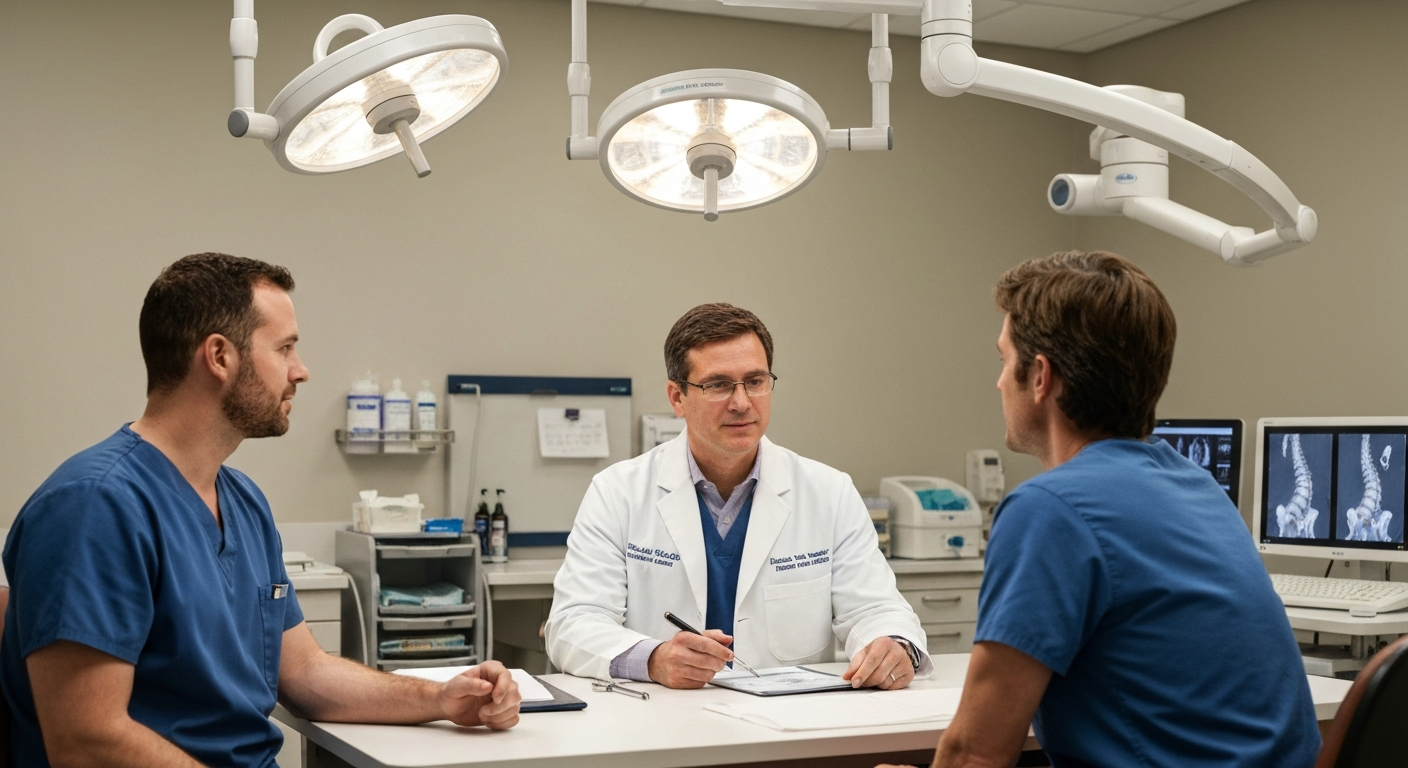
In Plano and throughout Greater Dallas, With numerous corporate headquarters in the region, many residents spend long hours at desks, which can contribute to musculoskeletal strain.
Surgery remains a last resort after non-surgical options have been tried. The decision depends on your symptoms, the underlying cause of your pain, and how the condition affects your daily life. When you see a best spine surgeon in Plano TX 2, they’ll evaluate whether conservative treatments might still help or if surgery offers your best path to relief.
Red Flags: Symptoms That Suggest You Need a Spine Specialist
While most back pain doesn’t require immediate specialist care, certain warning signs deserve prompt attention. Recognizing these symptoms can prevent permanent damage and improve your outcomes.
Progressive neurological symptoms represent the most serious category of red flags. Persistent numbness or weakness in your legs or feet—especially if it’s getting worse—suggests nerve compression that needs evaluation. Pain radiating down your leg (sciatica) may also indicate nerve involvement requiring specialist assessment.
Radiculopathy affecting the sciatic nerve impacts approximately 5 to 10% of people experiencing back pain and may require specialist evaluation if symptoms persist beyond 4 to 6 weeks. While many cases improve with conservative treatment, persistent symptoms warrant a comprehensive evaluation.
Loss of bowel or bladder control is a medical emergency called cauda equina syndrome. Cauda equina syndrome, characterized by loss of bowel and bladder control along with bilateral leg pain, requires emergency surgical intervention within 24 to 48 hours to prevent permanent nerve damage. If you experience these symptoms, seek immediate medical attention.
Other important red flags include severe pain unrelieved by rest or medication after 6-8 weeks, and significant functional limitations that prevent daily activities or work. These symptoms suggest your condition may need more than initial conservative approaches can provide.
Common Conditions Treated by Plano Spine Specialists
Spine specialists like those at Legent Spine treat various spinal conditions, each with distinct characteristics. Understanding these conditions helps you recognize whether your symptoms align with diagnoses that might require specialist care.
Herniated discs occur when This can cause radiating pain, numbness, or weakness depending on which nerves are affected.
Spinal stenosis involves narrowing of the spinal canal, which compresses the spinal cord or nerve roots. This condition develops gradually and often causes leg pain with walking that improves with rest.
Degenerative disc disease describes natural wear and tear of the cushioning discs between vertebrae. This can lead to pain, stiffness, and reduced flexibility. Spondylolisthesis occurs when one vertebra slips forward over the one below it, potentially causing nerve compression. Finally, failed back surgery syndrome affects patients who don’t achieve adequate relief from initial procedures and may need revision surgery or alternative treatments.
Why Choose a Board-Certified Spine Specialist
Not all physicians who treat back pain have the same specialized training. Board-certified spine specialists complete extensive additional education beyond medical school to develop expertise in complex spinal disorders.
This rigorous training ensures they possess the knowledge and technical skills for even the most complex cases.
When you see a fellowship-trained spine specialist like Dr. Duane Pitt or Dr. Scott C. Kutz at Legent Spine, you benefit from advanced diagnostic capabilities. Our specialists conduct comprehensive evaluations before recommending surgery, ensuring all conservative options receive appropriate consideration. We believe in transparent discussion of every treatment option, empowering you to make informed decisions.
Non-Surgical Treatment Options: The First Step
At Legent Spine, we exhaust conservative treatment options before considering surgery. For many patients, non-surgical approaches provide significant relief without an operation.
Physical therapy and targeted exercises form the cornerstone of conservative spine care. A structured program strengthens supporting muscles, improves flexibility, and teaches proper body mechanics to prevent future injuries.
Anti-inflammatory medications and pain management strategies help control symptoms while your body heals. These may include over-the-counter options like ibuprofen or prescription medications when appropriate.
Epidural steroid injections provide targeted relief for nerve inflammation. Epidural steroid injections can provide temporary pain relief lasting 2 to 8 weeks in approximately 50 to 70% of patients with radiculopathy. While not permanent, these injections can create a window of relief that allows fuller participation in physical therapy.
Additional conservative approaches include activity modification and ergonomic improvements to reduce spinal strain during work and daily activities. For select patients with chronic pain, spinal cord stimulation offers a non-surgical pain control option when other treatments haven’t provided adequate relief.
Minimally Invasive Spine Surgery: Faster Recovery When Surgery Is Needed
When conservative treatments don’t provide sufficient relief and surgery becomes necessary, modern minimally invasive techniques offer significant advantages. These advanced methods allow surgeons to address spinal problems through much smaller incisions, reducing tissue trauma and accelerating recovery.
This reduction translates to less blood loss, reduced postoperative pain, and lower infection risk.
Hospital stays are significantly shorter with minimally invasive approaches. This means less time away from home and faster return to normal activities.
For appropriate candidates, minimally invasive techniques produce the same clinical outcomes as traditional surgery while offering faster recovery and reduced scarring. Procedures like microdiscectomy and laminectomy are routinely performed using these advanced methods at surgical centers throughout the Plano area.
Our board-certified surgeons have extensive experience with minimally invasive techniques and will determine whether you’re a candidate during your evaluation. When you expect you see board certified neurosurgeon spine specialist, they’ll explain which surgical approach best suits your specific condition.
Surgical Options Your Spine Surgeon May Recommend
Understanding available surgical procedures helps demystify spine surgery and allows more informed discussions with your surgeon. Each procedure addresses specific spinal problems with proven techniques.
Discectomy involves removing disc material that’s pressing on nerves, relieving pain and neurological symptoms. Lumbar discectomy surgery for herniated discs provides symptom relief in approximately 80 to 90% of patients with radiculopathy at short-term follow-up of 3 to 6 months. This procedure can often be performed using minimally invasive techniques.
Laminectomy opens the spinal canal to relieve pressure on the spinal cord or nerve roots, typically recommended for spinal stenosis. By removing part of the lamina—the bony arch covering the spinal canal—surgeons create more space for neural structures.
Spinal fusion joins two or more vertebrae together to provide stability, often recommended for spondylolisthesis, severe degenerative disc disease, or spinal instability. Anterior lumbar interbody fusion (ALIF) procedures achieve bony fusion rates of 90 to 95% at 12 to 24 months post-operatively. Modern fusion techniques, including minimally invasive approaches, have excellent success rates.
Total disc replacement offers an alternative to fusion for select patients, replacing a damaged disc with an artificial one that preserves spinal motion. Similarly, dynamic stabilization procedures use specialized implants to stabilize the spine while maintaining some movement, offering a middle ground between decompression alone and rigid fusion.
The Diagnostic Process: How Plano Specialists Evaluate Your Condition
A thorough diagnostic evaluation forms the foundation for effective treatment planning. At Legent Spine, our comprehensive assessment process ensures we understand the full scope of your condition before recommending any treatment.
Your evaluation begins with a detailed physical examination and neurological assessment to evaluate strength, sensation, reflexes, and range of motion. This hands-on examination provides crucial information about how your spinal condition affects nervous system function.
Advanced imaging plays a critical role in visualizing spinal anatomy and identifying structural problems. Magnetic resonance imaging (MRI) has a sensitivity of 60 to 90% and specificity of 45 to 85% for detecting lumbar disc herniations depending on imaging sequences and reader expertise. MRI provides detailed images of soft tissues including discs, nerves, and ligaments, while CT scans offer excellent bone detail.
For certain conditions, electrodiagnostic testing including EMG and nerve conduction studies helps pinpoint nerve damage. Electrodiagnostic testing including EMG and nerve conduction studies can identify the location and severity of nerve compression with 70 to 85% accuracy when combined with clinical findings.
Throughout this process, we conduct a detailed review of your patient history and symptom progression. For complex cases or when you want additional perspective, second opinions are always available and encouraged.
What to Expect After Spine Surgery: Recovery and Rehabilitation
Understanding the recovery process helps you prepare mentally and physically for life after spine surgery. While specific timelines vary based on the procedure and your individual healing, certain principles apply broadly.
A structured physical therapy protocol guides your progressive recovery, typically beginning several weeks after surgery. Your physical therapist works closely with your surgeon to ensure exercises are appropriate for your healing stage.
Gradual return to work and normal activities follows a timeline tailored to your specific procedure and job requirements. Most patients resume daily activities within 4 to 8 weeks, though full recovery may take several months for more extensive procedures.
Pain management strategies extend beyond surgery, with multimodal approaches including medications, ice and heat therapy, and gradual activity advancement. Ongoing monitoring through follow-up appointments allows your surgical team to track your progress and address any concerns promptly.
Why Plano Residents Choose Local Spine Care
For patients living in Plano and surrounding North Texas communities, accessing high-quality spine care locally offers numerous advantages over traveling to more distant medical centers.
Convenient access to specialists without traveling to Houston or Dallas proper saves time and reduces stress, particularly important when you’re dealing with pain or mobility limitations. The ability to see your surgeon quickly for follow-up appointments supports better continuity of care throughout your treatment journey.
Local specialists understand lifestyle and work environment factors common to the Plano area. This regional familiarity helps your care team provide more relevant guidance about returning to work and preventing future problems.
Legent Spine has established relationships with referring physicians throughout Plano and surrounding areas, facilitating coordinated care when you need it. Our surgeons also have access to excellent surgical centers in North Texas equipped with the latest technology for both minimally invasive and traditional spine procedures.
The Plano, Texas area experienced 15-20% population growth between 2015 and 2020, creating increased demand for specialized medical services in the North Texas region. This growth has strengthened the medical infrastructure available to residents seeking specialized spine care close to home.
Patient Testimonials and Reviews: Real Stories from Plano
The experiences of our patients provide the most meaningful testament to the quality of care at Legent Spine. We’re proud of the relationships we build with patients and the outcomes we achieve together.
Many of our success stories involve patients who avoided surgery through dedicated conservative treatment. These individuals worked closely with our team through physical therapy, injections, and lifestyle modifications to achieve lasting relief without surgical intervention.
For patients who did require surgery, testimonials frequently highlight the life-changing relief achieved through minimally invasive procedures. Patients describe returning to activities they thought they’d never enjoy again—from playing golf to simply walking without pain through their neighborhood.
What stands out consistently in patient reviews is appreciation for compassionate, thorough specialist care. Our team takes time to answer questions, explain options clearly, and ensure you feel confident about your treatment decisions.
Patients regularly praise our transparent communication and honest recommendations. When surgery isn’t necessary, we tell you so. When conservative treatment has been exhausted and surgery offers the best path forward, we explain why clearly and comprehensively. This honesty builds trust and ensures you receive exactly the care you need.
Taking the Next Step: How to Schedule Your Spine Evaluation
If you’re experiencing persistent back pain or concerning neurological symptoms, taking the first step toward evaluation doesn’t need to be complicated. At Legent Spine, we’ve designed our consultation process to be straightforward and accessible.
Our simple scheduling process ensures you can see a specialist without lengthy waiting periods. When you contact our office, you’ll speak with knowledgeable staff who can answer initial questions and find an appointment time that works with your schedule.
Your initial consultation includes a comprehensive physical and diagnostic evaluation, giving your surgeon a complete picture of your condition. Come prepared with any previous imaging studies and a list of treatments you’ve already tried—this information helps us understand your full history and avoid unnecessary repeat testing.
Dedicated care coordinators guide you through each step of your journey with Legent Spine. Your coordinator serves as your primary point of contact, helping with scheduling, insurance questions, and any concerns that arise during treatment.
We verify insurance coverage and discuss payment options during your initial contact, ensuring you understand the financial aspects of care before your appointment. For patients who prefer an initial conversation before visiting in person, telehealth consultations are available for preliminary discussions about your symptoms and whether specialist evaluation is recommended.
Don’t let back pain control your life. Contact Legent Spine today to schedule your comprehensive spine evaluation with one of our board-certified, fellowship-trained specialists. Whether you’re in Plano, Dallas, or anywhere throughout the Greater Dallas area, expert spine care is closer than you think. Let us help you understand your condition, explore all treatment options, and develop a personalized plan to get you back to the activities you love.