
Understanding Cauda Equina Syndrome
Cauda equina syndrome represents one of the most critical emergencies in spine care. Without immediate recognition and treatment, it can cause permanent neurological damage. that resembles a horse’s tail—which is what “cauda equina” means in Latin. These nerve roots control sensation and function in your lower extremities, bladder, bowel, and sexual organs.
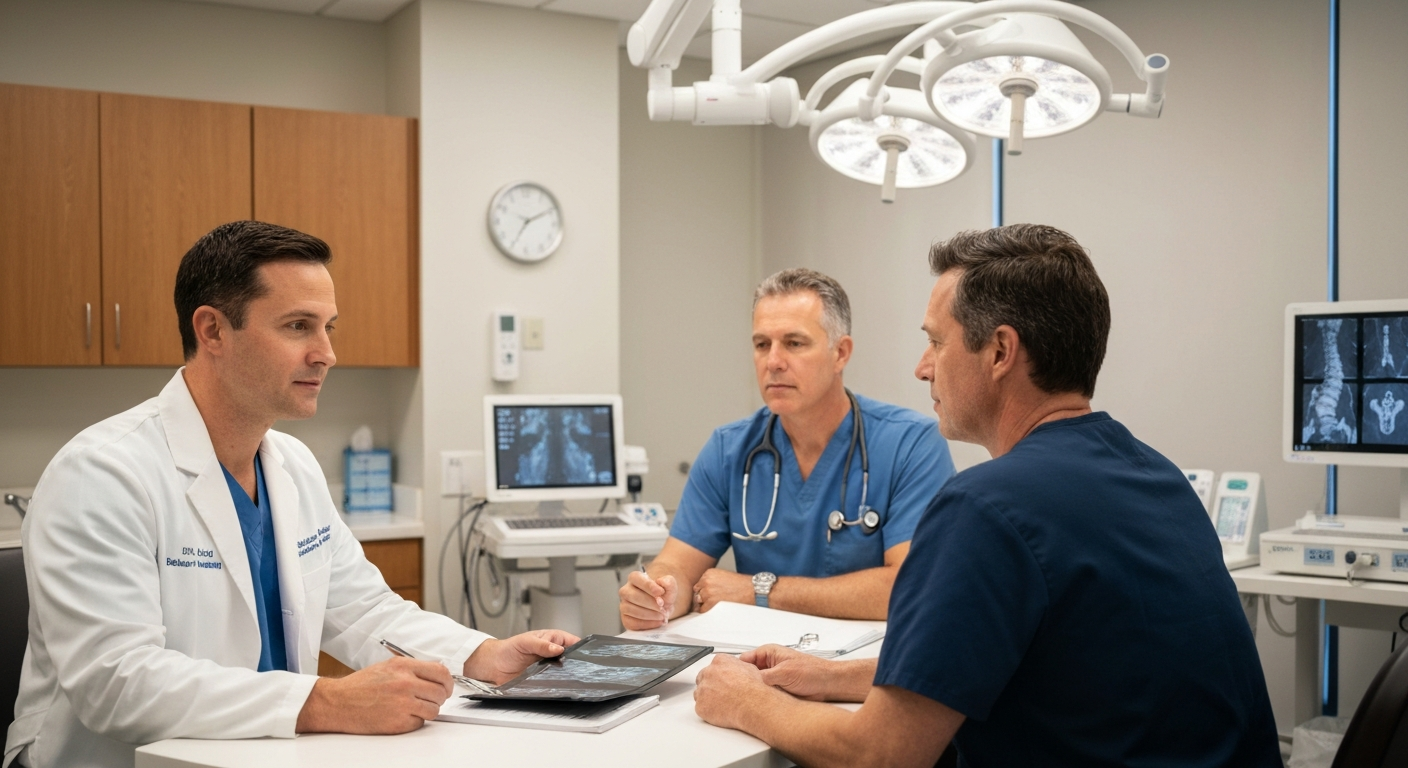
When something compresses these vital nerve roots—whether from a herniated disc, tumor, infection, or trauma—the results can be devastating without prompt intervention. Understanding the cauda equina syndrome red flag symptoms can mean the difference between full recovery and permanent disability.
The time-sensitive nature of this condition cannot be overstated. Every hour counts when these nerve roots are under compression, making immediate recognition essential for preserving your quality of life and neurological function.
The Five Critical Red Flags of CES
Recognizing the warning signs of cauda equina syndrome can save your neurological function and quality of life. These five red flags require immediate emergency evaluation.
Bilateral Leg Weakness or Paralysis: Unlike typical sciatica that affects one leg, This symmetric weakness distinguishes CES from single nerve root compression and indicates involvement of multiple nerve roots. You may notice difficulty walking, standing from a seated position, or climbing stairs as both legs become progressively weaker.
Urinary Retention or Inability to Empty Bladder: Urinary retention—the inability to urinate or completely empty the bladder—occurs in approximately 80-90% of acute cauda equina syndrome cases. This often presents as a sudden inability to urinate despite a strong urge, or the sensation that your bladder never fully empties. Some patients require emergency catheterization to drain the bladder.
Fecal Incontinence or Severe Constipation: You may lose the ability to control bowel movements or sense when you need to defecate. This represents compression of the lowest sacral nerve roots and requires immediate surgical evaluation.
Saddle Anesthesia: This distinctive pattern of numbness serves as one of the most specific indicators of cauda equina compression. Test sensation in these areas when other symptoms develop.
Severe Lower Back Pain with Radiating Symptoms: While back pain alone doesn’t indicate CES, severe pain accompanied by any of the above symptoms requires immediate attention. The pain often radiates into both legs and may worsen rapidly over hours or days.
At Legent Spine, our board-certified spine surgeons emphasize that experiencing even one or two of these cauda equina syndrome red flags warrants emergency evaluation. Don’t wait for all five symptoms to develop before seeking care.
Urinary Retention: A Key Warning Sign
Among the various symptoms of cauda equina syndrome, urinary retention often serves as the most noticeable early indicator. These sacral nerve roots coordinate the complex process of bladder filling, the urge to urinate, and complete bladder emptying.
Patients typically describe a sudden inability to urinate despite an overwhelming urge and sensation of bladder fullness. Some experience overflow incontinence, where small amounts of urine leak out because the bladder has become overfilled. This represents the bladder’s compensatory mechanism when normal emptying becomes impossible.
Patients with acute urinary retention may require catheter placement as an emergency intervention while awaiting definitive surgical treatment. If you experience sudden difficulty urinating along with back pain or leg weakness, head directly to the nearest emergency department. This symptom alone, especially when combined with other neurological changes, justifies emergency imaging and specialist evaluation.
Saddle Anesthesia and Sensory Changes
This includes numbness or reduced sensation in your buttocks, inner thighs, back of the legs, and genital area. You may also lose sensation around the anus—a finding that physicians assess during physical examination.
The specific pattern of saddle anesthesia helps physicians distinguish cauda equina syndrome from other spine conditions that might cause leg numbness or back pain. Unlike numbness from a herniated disc affecting one nerve root, saddle anesthesia represents compression of multiple sacral nerves simultaneously.
Associated symptoms often include loss of sexual sensation and diminished awareness of bladder or bowel fullness. These sensory changes typically develop rapidly, over hours to days rather than weeks or months. The acute onset combined with the characteristic distribution pattern makes saddle anesthesia one of the most specific indicators of this spine emergency.
Bilateral Leg Weakness and Paralysis
Motor deficits affecting both legs simultaneously represent another hallmark feature of cauda equina syndrome. You may first notice difficulty with activities requiring leg strength—rising from a chair, walking up stairs, or maintaining balance while standing.
The weakness can progress from mild difficulty to complete paralysis if nerve compression continues without treatment. This is why early recognition and treatment prove so critical for preserving function.
Unlike the weakness from spinal stenosis and leg weakness that typically worsens with walking and improves with rest, CES-related weakness remains constant or progressively worsens. The bilateral nature—affecting both legs rather than one—should immediately raise concern for cauda equina involvement rather than a single herniated disc or other localized compression.
Diagnosis and Emergency Imaging
When cauda equina syndrome is suspected, time becomes the enemy. This imaging study provides detailed visualization of the nerve roots, spinal cord, and any compressive masses or disc herniations.
Emergency departments in the Greater Dallas area maintain protocols for expedited MRI access when spine surgeons identify potential CES cases. Delays in imaging can delay definitive treatment, potentially affecting long-term outcomes.
Board-certified spine surgeons perform comprehensive neurological examinations to document the extent of nerve root compression. This baseline assessment proves valuable for tracking recovery after surgical decompression and helps guide treatment decisions.
In rare cases where MRI is contraindicated or unavailable, CT myelography can provide alternative imaging. However, MRI remains the gold standard due to its non-invasive nature and superior ability to visualize soft tissue structures including nerve roots and intervertebral discs.
Why Immediate Treatment Matters
This surgical procedure removes whatever is compressing the nerve roots—whether bone, disc material, tumor, or other mass—to restore normal nerve function. The surgery typically involves removing a portion of the vertebral bone to access and decompress the affected nerve roots.
The critical treatment window cannot be emphasized enough. This 48-hour window represents the timeframe during which nerve roots maintain the best potential for recovery once compression is relieved.
These permanent deficits can profoundly impact quality of life, requiring ongoing catheterization, bowel management programs, and assistive devices for mobility. The devastating nature of these potential complications underscores why cauda equina syndrome ranks among the most urgent conditions in spine surgery.
Our fellowship-trained spine surgeons at Legent Spine maintain availability for emergency consultations and surgical intervention when Greater Dallas patients present with suspected CES. We work closely with emergency departments throughout the region to ensure patients receive timely evaluation and treatment.
What Greater Dallas Patients Should Do
If you experience any combination of the red flag symptoms described in this article, take immediate action. Go directly to the nearest emergency department—do not wait for an appointment with your primary care physician or try to manage symptoms at home. When Dallas area patients recognize these warning signs, rapid response can preserve neurological function.
Upon arrival at the emergency department, clearly communicate your symptoms, emphasizing any combination of bilateral leg weakness, urinary retention, saddle numbness, or bowel dysfunction. Request evaluation by a spine surgeon or specialist familiar with cauda equina syndrome. Emergency physicians recognize the urgency of these symptoms, but patient advocacy ensures nothing is overlooked.
The Greater Dallas area benefits from excellent neurosurgical and spine surgery resources, with specialists available at major medical centers throughout the metroplex. Legent Spine maintains relationships with emergency departments across the region to facilitate rapid consultation and treatment when patients present with potential CES.
For patients already under care for known spine conditions, we encourage discussing cauda equina syndrome warning signs during your appointments. Understanding what to watch for—before an emergency occurs—empowers you to recognize symptoms early and seek appropriate care immediately.
Recovery and Long-Term Outcomes
Following emergency surgical decompression for cauda equina syndrome, the recovery journey varies considerably among patients. During this period, nerve roots gradually recover function as compression-related damage heals and normal nerve signaling resumes.
Patients who receive treatment within hours of symptom onset typically experience better recovery than those treated after several days. The severity of dysfunction before surgery also influences final outcomes—mild weakness generally recovers better than complete paralysis.
Comprehensive rehabilitation plays an essential role in maximizing recovery. Physical therapy helps rebuild strength and mobility in the lower extremities. Occupational therapy addresses activities of daily living, while specialized programs can help manage bladder and bowel function during the recovery period. Our care coordinators at Legent Spine work with patients to arrange appropriate rehabilitation services and follow-up care.
Realistic expectations prove important during recovery. While many patients regain significant function, some degree of residual weakness, sensory changes, or bladder and bowel dysfunction may persist despite optimal surgical timing and technique. Regular follow-up appointments allow your spine surgeon to monitor recovery progress and address any ongoing concerns.
When to Seek Specialist Evaluation
Not every episode of back pain or leg numbness indicates cauda equina syndrome, but certain patterns should prompt specialist evaluation. This specific constellation of symptoms almost always indicates nerve root compression requiring emergency intervention.
Board-certified spine surgeons bring specialized training and experience to diagnosing and treating complex spine conditions. At Legent Spine, our fellowship-trained surgeons have completed additional years of specialized education beyond their neurosurgery or orthopedic surgery residencies, focusing specifically on spine disorders and surgical techniques.
When surgical intervention becomes necessary, minimally invasive approaches can often accomplish decompression with smaller incisions, less tissue disruption, and faster recovery compared to traditional open procedures. Our surgeons evaluate each patient individually to determine the most appropriate surgical technique based on the specific cause and location of nerve root compression.
The importance of experienced surgical teams cannot be overstated when treating cauda equina syndrome. Understanding the critical aspects of this condition and having performed numerous emergency decompressions allows surgeons to work efficiently while maximizing nerve root preservation. Time matters, but so does surgical precision and experience.
If you’re experiencing concerning spine symptoms—even if they don’t represent an emergency—consider scheduling a comprehensive evaluation with a spine specialist. Early intervention for conditions like degenerative disc disease or spinal stenosis may prevent progression to cauda equina syndrome. Our dedicated care coordinators at Legent Spine can help arrange consultations with our board-certified spine surgeons, providing the expert care you deserve.
For patients throughout the Greater Dallas area, Legent Spine offers world-class spine care with a personalized approach. We understand that spine conditions affect every aspect of your life, and we’re committed to providing transparent, honest guidance for every patient we serve. Whether you need emergency intervention or conservative management for chronic spine issues, our team stands ready to deliver the specialized expertise your condition requires.