
When Leg Numbness, Tingling, or Weakness Won’t Go Away
A tingling foot that never fully “wakes up.” A burning sensation down the back of your thigh. A leg that feels weak or heavy when you climb stairs. These symptoms are easy to dismiss at first, but when they linger, they deserve attention. generally Nerve compression in the leg can cause numbness, tingling, pain, and weakness nerve compression in the leg can cause numbness, tingling, pain, and weakness. For more information, see our page on c5 c6 nerve root compression symptoms.
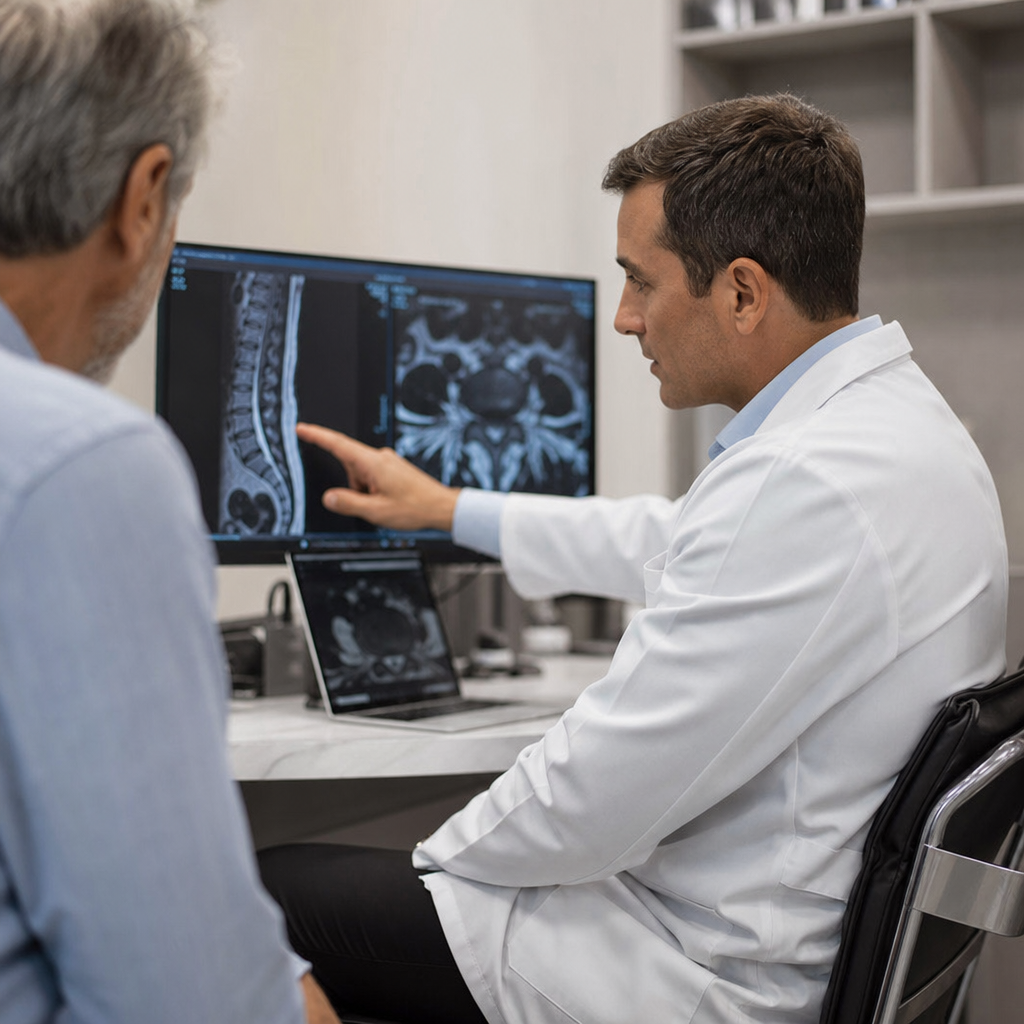
Many leg nerve problems actually begin in the lower spine, not the leg. Dallas residents may notice them during long commutes on I-45, a day on a job site, or a weekend at Lake Ray Hubbard.
If you have wondered is nerve compression dangerous, the answer depends on the cause and how long it has been present. A comprehensive evaluation with a board-certified spine specialist can help identify the source.
What Is Nerve Compression in the Leg?
Nerve compression happens when surrounding tissue, such as bone, disc, muscle, or ligament, puts pressure on a nerve. The nerve may be pinched, squeezed, or irritated. That pressure disrupts the signals the nerve carries between your brain and your leg.
The pressure can occur at the spine or farther down the leg. usually Nerves in the legs originate from nerve roots in the lumbar and sacral spine. People often use “pinched nerve” and “nerve compression” to mean the same thing.
Here is a quick overview:
- At the spine: a nerve root is compressed as it exits the spinal canal.
- Along the leg: a nerve is compressed at a tight point such as the knee, hip, or ankle.
- Result: symptoms that follow the path of the affected nerve.
Common Causes and Types of Leg Nerve Compression
Causes fall into two broad groups: those that start in the spine and those that arise outside it. The location of the compression often explains where you feel symptoms.
A problem in the lower back may send pain through the buttock and calf. typically A problem at the ankle may affect only the foot.
Spine-Related Causes: Herniated Discs, Spinal Stenosis, and Sciatica
Spine-related conditions are the most common causes we evaluate:
- Herniated disc: disc material can compress nearby nerve roots and cause radiating leg pain.
- Lumbar spinal stenosis: a narrowing of the spinal canal that can compress nerves and cause leg symptoms.
- Sciatica: pain that travels along the sciatic nerve from the lower back through the buttock and down the leg. It describes a pattern of symptoms, not a diagnosis.
- Bone spurs and spondylolisthesis: bone overgrowth or a slipped vertebra can also crowd the nerves.
Causes Outside the Spine: Peroneal Nerve, Meralgia Paresthetica, and Tarsal Tunnel
Not every leg nerve problem comes from the back. Examples include:
- Peroneal nerve compression: pressure on the common peroneal nerve near the outer knee can cause foot drop.
- Meralgia paresthetica: compression of the lateral femoral cutaneous nerve causes numbness or burning in the outer thigh.
- Tarsal tunnel syndrome: compression of the tibial nerve at the ankle.
These conditions can look similar to spine-related problems. A thorough evaluation helps tell them apart, so you do not treat the wrong source.
Symptoms of Nerve Compression in the Leg
Symptoms vary with the nerve involved, but they commonly include:
- Numbness
- Tingling or “pins and needles”
- Burning
- Sharp or shooting pain
- Muscle weakness
- Foot drop, where the front of the foot catches when you walk
- A sense of heaviness in the leg
Symptoms may worsen with sitting, standing, or walking, depending on the cause. For a broader look, see our overview of patients nerve compression symptoms.
Red Flags That Need Prompt Medical Attention
Seek emergency care right away if you notice sudden leg weakness, loss of bladder or bowel control, or numbness in the groin or saddle area. generally Loss of bladder or bowel control with leg weakness or saddle numbness can signal cauda equina syndrome, which requires emergency medical care.
You can learn more about dallas patients cauda equina compression in our patient resource.
If symptoms last more than a few weeks or keep getting worse, see a spine specialist. typically Many cases of sciatica improve within several weeks with conservative care many cases of sciatica improve within several weeks. Symptoms that do not follow that pattern are worth checking.
Risk Factors and Possible Complications
Several factors can raise your risk:
- Age-related spine changes
- Prior back or leg injury
- Repetitive heavy lifting
- Prolonged sitting
- Obesity
- Diabetes
Work matters too. Long-haul driving, construction, and industrial jobs, all common in the Dallas area, can place steady strain on the lower back.
may Diabetes can increase the risk of nerve damage and may make leg nerve symptoms harder to evaluate.
Severe or prolonged compression can lead to lasting weakness or numbness. Other possible complications include chronic pain and reduced mobility, which is why early evaluation helps.
How Spine Specialists Diagnose Leg Nerve Compression
A diagnosis starts with a conversation. We ask when symptoms began, what makes them better or worse, and how they affect your daily life. A physical exam then checks your strength, reflexes, sensation, and gait.
Depending on what we find, testing may include:
- X-rays to look at bone alignment and spine structure.
- MRI, which doctors commonly use to see discs, nerve roots, and spinal canal narrowing.
- EMG and nerve conduction studies, which can help determine which nerve is affected and how severely.
At Legent Spine, our surgeons lead a comprehensive evaluation. Dedicated care coordinators help organize imaging, testing, and next steps, so you do not have to navigate the process alone.
Treatment Options for Nerve Compression in the Leg
Treatment depends on the cause, the severity, and how long symptoms have lasted. Most patients start with nonsurgical care. We consider surgery when symptoms persist, worsen, or involve significant weakness.
We aim for a transparent, honest discussion of the benefits and risks of each option. We never promise specific outcomes.
Nonsurgical Care
Many people improve without surgery. Common conservative options include:
- Activity modification: temporarily avoiding movements that aggravate symptoms, while staying gently active.
- Physical therapy: targeted stretching and strengthening to relieve pressure and support the spine.
- Medication: anti-inflammatory or nerve-targeted medicines, when appropriate.
- Injections: usually epidural steroid injections may calm inflammation around an irritated nerve root.
- Ergonomic changes: adjusting your driving, desk, or job-site habits.
When Surgery Is Considered
If conservative care does not provide enough relief, or if weakness is progressing, your surgeon may discuss surgery. Where appropriate, we use minimally invasive techniques that can support faster recovery.
Your surgeon will explain whether a procedure is right for you, along with its risks and alternatives.
Take the Next Step Toward Answers
Leg numbness, tingling, or weakness that lingers is your body’s signal to look deeper. Understanding the source is the first step toward relief. Our guide to patients nerve compression causes symptoms treatment offers more background.
If you are in Dallas or elsewhere in Texas and want clarity, a comprehensive evaluation with a Legent Spine specialist can help you understand your options and build a personalized treatment plan.