
Introduction: Understanding the Scoliosis-Hip Dysplasia Connection
When you experience both spinal curvature and hip joint instability, understanding how these conditions connect becomes essential for effective treatment. Scoliosis—a sideways curvature of the spine that affects approximately 3-5% of the population—and hip dysplasia often share more than just coincidental timing. Hip dysplasia occurs when the hip socket doesn’t adequately cover the ball of the hip joint, affecting stability and potentially creating a cascade of problems throughout your body.
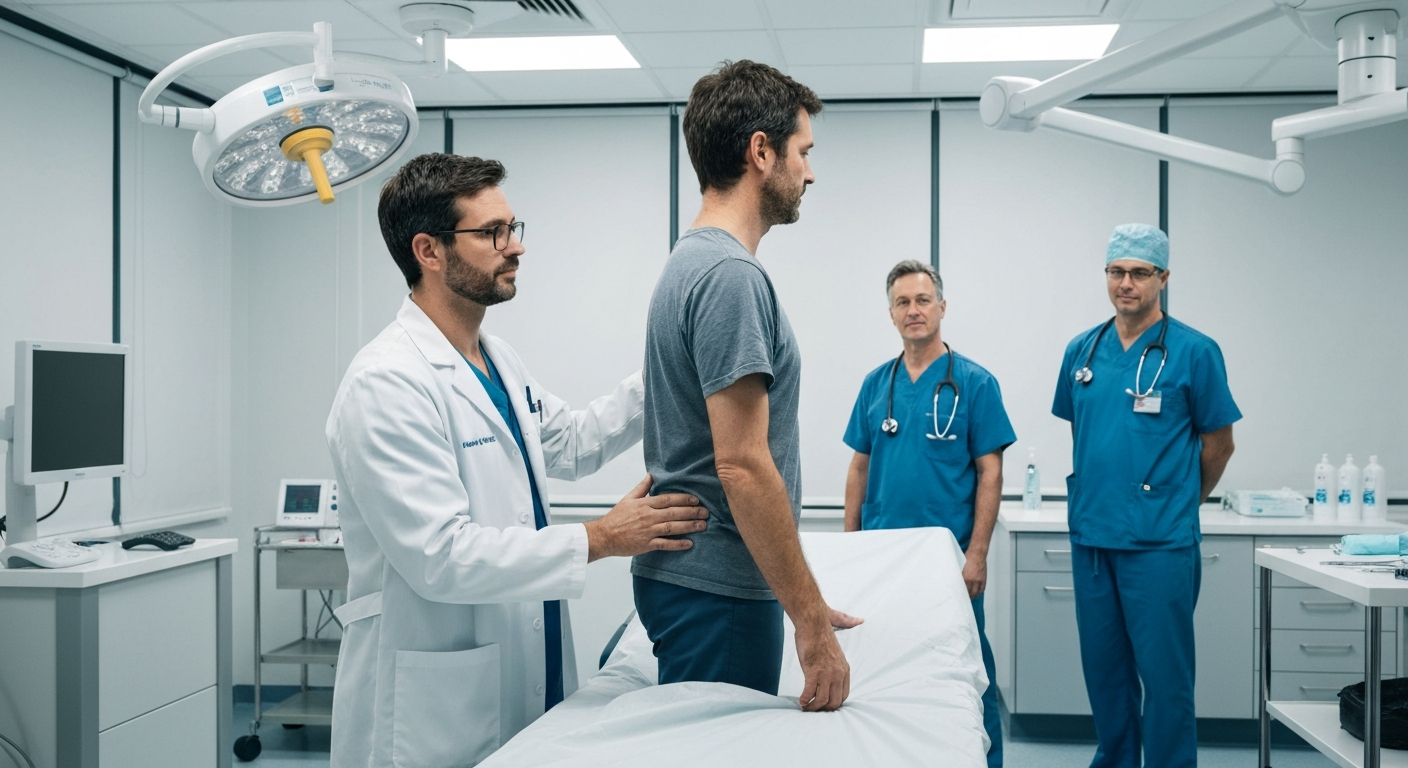
The relationship between these two conditions goes beyond simple anatomical proximity. Both affect your body’s fundamental structural alignment, creating mechanical imbalances that can impact your mobility, comfort, and long-term health. Research shows that often patients with neuromuscular scoliosis have a higher incidence of associated hip dysplasia, making comprehensive evaluation by a spine specialist critically important.
For patients seeking answers about persistent back and hip discomfort, recognizing the potential overlap between these conditions represents an important first step. Early diagnosis leads to better outcomes, and expert spine care can address both concerns comprehensively. Understanding how your spine and hips work together—and how problems in one area affect the other—empowers you to make informed decisions about your treatment.
If you’re experiencing symptoms that might indicate either condition, a thorough evaluation by a board-certified spine surgeon can provide clarity and a personalized treatment plan tailored to your unique needs.
What Is Scoliosis?
Scoliosis describes an abnormal sideways curvature of the spine, typically forming an “S” or “C” shape when viewed from behind. Rather than the spine’s natural front-to-back curves, scoliosis creates lateral deviation that can range from barely noticeable to severely debilitating.
The condition presents in several distinct forms, each with different underlying causes. Idiopathic scoliosis—where the specific cause remains unknown—accounts for approximately 80% of all scoliosis cases and typically appears during adolescence when rapid growth spurts occur. Congenital scoliosis occurs when vertebrae fail to form properly during fetal development, creating structural abnormalities present from birth. Neuromuscular scoliosis develops secondary to conditions like cerebral palsy or muscular dystrophy, where muscle weakness or neurological impairment affects spinal support.
Severity varies considerably from patient to patient. Medical professionals measure spinal curvature using the Cobb angle method on X-ray imaging. Curves measuring typically warrant active monitoring or treatment, though curves of any magnitude deserve attention to prevent progression.
While many people associate scoliosis exclusively with childhood and adolescence, adults can also develop the condition through degenerative changes in the spine. Age-related disc degeneration, arthritis, and vertebral compression fractures can all contribute to adult-onset scoliosis. Regardless of when it develops, scoliosis can create compensatory changes throughout the musculoskeletal system, including significant impacts on hip alignment and function.
Symptoms range from visible postural asymmetry—such as uneven shoulders or a prominent shoulder blade—to chronic pain, breathing difficulties in severe cases, and mobility limitations. Some patients experience no symptoms at all, particularly with mild curves, while others face daily challenges that significantly impact quality of life.
What Is Hip Dysplasia?
Hip dysplasia fundamentally involves an underdeveloped or abnormally shallow hip socket that fails to provide adequate coverage and stability for the ball-shaped top of the thighbone. This structural deficiency compromises the hip joint’s stability and can lead to abnormal wear patterns, pain, and progressive joint damage over time.
Developmental hip dysplasia is diagnosed in in the United States, though mild cases may go undetected until adulthood when symptoms begin to manifest. The condition is more common in females and in individuals with a family history of hip dysplasia, suggesting both genetic and environmental factors contribute to its development.
Hip dysplasia exists on a spectrum from mild undercoverage to complete hip dislocation. In milder cases, the hip socket provides partial coverage but remains unstable under certain movements or loads. More severe presentations involve significant joint instability or frank dislocation where the ball sits partially or completely outside the socket.
The impact on daily function varies with severity. Mild dysplasia might cause only intermittent discomfort during certain activities, while moderate to severe cases can significantly affect your gait, create persistent pain, and limit participation in physical activities. Over time, the abnormal joint mechanics associated with hip dysplasia accelerate cartilage breakdown and increase the risk of early-onset osteoarthritis.
usually Early detection of hip dysplasia in infants through ultrasound screening can prevent long-term complications, making newborn screening programs particularly valuable. For older children and adults, physical examination findings combined with imaging studies help establish the diagnosis and guide treatment planning.
How Scoliosis and Hip Dysplasia Are Connected
The relationship between scoliosis and hip dysplasia extends beyond coincidence, rooted in fundamental biomechanical and developmental factors. Understanding this connection helps explain why patients with one condition should be evaluated for the other, particularly when symptoms affect both the spine and hips.
Spinal misalignment directly affects pelvic stability and positioning. When the spine curves abnormally, it alters the base upon which the pelvis sits, creating compensatory tilting and rotation. This altered pelvic alignment changes the orientation of the hip sockets, potentially contributing to hip joint stress and dysplasia progression. The mechanical imbalance creates abnormal loading patterns that can accelerate joint degeneration in both the spine and hips.
In patients with neuromuscular scoliosis—conditions such as cerebral palsy or muscular dystrophy—the incidence of concurrent hip dysplasia ranges from 25-75% depending on the underlying condition. These neurological and muscular disorders affect both spinal support and hip joint development simultaneously, explaining the high co-occurrence rate. Muscle weakness and imbalanced tone prevent normal joint development and maintenance, creating vulnerability in multiple anatomical regions.
Both conditions involve skeletal structural issues that often share common underlying factors. Connective tissue disorders, genetic predispositions, and developmental abnormalities can manifest in multiple body systems, making concurrent spine and hip problems more likely in certain patient populations.
Additionally, one condition may mask or complicate the diagnosis of the other. Pain radiating from the hip can be misattributed to scoliosis, while spinal discomfort might overshadow developing hip pathology. Patients with both conditions may experience increased spinal and hip pain due to compounded mechanical imbalance, making comprehensive evaluation by an experienced spine specialist essential for accurate diagnosis and effective treatment planning.
The Biomechanical Cascade
When scoliosis develops, your body attempts to maintain upright posture and balance through compensatory mechanisms. The pelvis tilts, leg lengths may appear unequal, and muscle groups work asymmetrically to keep the body centered. These adaptations, while helpful in the short term, create abnormal forces throughout the lower extremities, including the hip joints. Over time, this altered mechanical environment can contribute to hip dysplasia progression or unmask previously subclinical cases.
Diagnosis: What to Expect
Accurate diagnosis of scoliosis and hip dysplasia requires comprehensive evaluation by a spine specialist familiar with the potential connections between these conditions. The diagnostic process typically begins with a detailed patient and family history, as both conditions can have genetic components and may be associated with other medical problems.
During the physical examination, your physician will assess spinal alignment, pelvic positioning, hip range of motion, and gait patterns. For scoliosis evaluation, the Adams forward bend test helps identify rotational deformities and asymmetries. Hip dysplasia assessment includes specific maneuvers to evaluate joint stability, pain patterns, and functional limitations.
X-ray imaging serves as the standard diagnostic tool for measuring scoliosis severity using the Cobb angle method, which quantifies the degree of spinal curvature on standing radiographs. These images also reveal vertebral rotation, pelvic alignment, and leg length discrepancies that might contribute to symptoms.
Hip dysplasia diagnosis typically begins with ultrasound in infants under and transitions to X-ray imaging in older children and adults. Specific X-ray measurements assess socket coverage, joint congruity, and signs of secondary osteoarthritis. Weight-bearing films provide additional information about how forces distribute through the hip joint during functional activities.
Advanced imaging such as MRI may be recommended to assess soft tissue involvement and plan surgical interventions. MRI excels at visualizing cartilage damage, labral tears, muscle changes, and spinal cord abnormalities that plain X-rays cannot detect. For complex cases or surgical planning, CT scans with three-dimensional reconstruction provide detailed anatomical information that guides treatment decisions.
Specialized testing for mobility and pain helps quantify functional limitations and track treatment progress. Standardized questionnaires measure how symptoms impact daily activities, while objective measurements document range of motion, strength, and endurance.
Treatment Options for Scoliosis and Hip Dysplasia
Treatment strategies for patients with scoliosis and hip dysplasia depend on multiple factors including severity, age, symptoms, and functional impact. A comprehensive approach addresses both conditions simultaneously, recognizing how improvements in one area benefit the other.
Conservative management often serves as the first-line approach for mild to moderate cases. Physical therapy and specialized exercises can improve hip stability and reduce pain while strengthening core muscles that support the spine. Therapists trained in scoliosis-specific exercises teach patients techniques to reduce curve progression and manage discomfort through targeted strengthening and stretching protocols.
Bracing may slow progression of adolescent idiopathic scoliosis and is recommended when curves measure in growing children. Modern bracing technology has improved comfort and aesthetics while maintaining effectiveness. For hip dysplasia in infants, specialized harnesses position the hip joint to encourage normal socket development during critical growth periods.
Activity modification and ergonomic adjustments help minimize symptoms while preserving function. Patients learn body mechanics that reduce abnormal loading on both the spine and hips, protecting these structures from accelerated degeneration.
When conservative measures prove insufficient, surgical options become considerations. Spinal fusion surgery is typically considered for scoliosis curves exceeding or causing cardiopulmonary compromise. Minimally invasive techniques have advanced significantly, offering faster recovery and less postoperative discomfort compared to traditional open approaches.
Hip dysplasia surgery ranges from arthroscopic procedures to preserve the joint in younger patients to total hip replacement in cases with advanced arthritis. Periacetabular osteotomy—a procedure that reorients the hip socket—can dramatically improve coverage and stability in appropriate candidates, potentially delaying or preventing the need for joint replacement.
For patients with both conditions requiring surgical intervention, careful coordination between spine and orthopedic surgeons ensures optimal outcomes. Staging procedures appropriately and addressing the most symptomatic condition first while planning for comprehensive correction creates the best long-term results.
Living with Scoliosis and Hip Dysplasia: Management Tips
Daily management strategies significantly impact quality of life for patients with scoliosis and hip dysplasia. While medical treatment addresses underlying structural problems, lifestyle modifications help minimize symptoms and preserve function between appointments.
Regular physical activity and core-strengthening exercises have been shown to reduce pain symptoms in adults with scoliosis by an average of 20-30%. Low-impact activities like swimming, cycling, and yoga promote fitness without excessive joint stress. Strengthening muscles that support the spine and hips improves stability and reduces compensatory strain on surrounding structures.
Proper ergonomic positioning during daily activities can decrease abnormal spinal loading and hip joint stress. Simple adjustments like maintaining neutral spine alignment while sitting, using supportive chairs, and avoiding prolonged static positions reduce fatigue and discomfort. When lifting objects, proper technique that engages the legs rather than the back protects both the spine and hips from injury.
Posture awareness represents a powerful self-management tool. Consciously maintaining balanced alignment throughout daily activities trains your neuromuscular system to support your skeleton more efficiently. Regular awareness of how you sit, stand, and move can prevent symptom flares and slow progression.
Weight management reduces mechanical stress on weight-bearing joints including the spine and hips. Even modest weight loss can significantly decrease pain and improve function in patients with structural abnormalities.
Annual follow-up appointments with a spine specialist are recommended for patients with scoliosis to monitor for progression. Regular monitoring allows early detection of changes that might warrant treatment modification, preventing small problems from becoming major complications.
Pain management strategies should emphasize non-pharmacological approaches when possible. Heat, ice, gentle stretching, and stress reduction techniques provide symptom relief without medication side effects. When medications are necessary, working closely with your physician ensures appropriate use and minimizes risks.
Staying informed about your conditions empowers you to participate actively in treatment decisions and recognize when changes warrant professional evaluation. Understanding warning signs that indicate progression or complications helps you seek care promptly when needed.
Why Dallas Patients Choose Legent Spine for Comprehensive Care
Patients throughout the Greater Dallas area seeking expert evaluation and treatment for complex spine conditions trust Legent Spine for world-class care delivered with compassion and transparency. Our board-certified spine surgeons bring fellowship training and extensive experience managing the full spectrum of spinal disorders, including complex cases involving concurrent hip pathology.
Our commitment to minimally invasive surgical expertise means faster recovery times and less postoperative discomfort when surgery becomes necessary. Advanced techniques allow us to achieve excellent outcomes while minimizing tissue disruption, helping patients return to their daily activities sooner.
Comprehensive evaluation addressing multiple spine and hip issues ensures nothing gets overlooked. We understand how spinal problems affect the entire musculoskeletal system and coordinate with orthopedic specialists when conditions like hip dysplasia require collaborative management. This multidisciplinary approach provides seamless care that addresses your needs holistically.
Every patient at Legent Spine benefits from dedicated care coordination throughout treatment. From your initial consultation through recovery and beyond, our team supports you at every step, answering questions, scheduling appointments, and ensuring continuity of care.
Our Dallas location provides convenient access to cutting-edge spine care without the need to travel to distant medical centers. We bring world-class expertise to your community, delivering the same caliber of care available at major academic institutions with the personalized attention of a focused spine practice.
Conclusion: Taking the Next Steps
Scoliosis and hip dysplasia represent complex conditions that require professional evaluation by experienced spine specialists familiar with their interconnected nature. Understanding the biomechanical relationship between spinal curvature and hip joint stability empowers patients to seek appropriate care and recognize when symptoms warrant comprehensive assessment.
Early diagnosis improves treatment outcomes across the spectrum from conservative management to surgical intervention. Whether you’re experiencing subtle postural changes or persistent pain affecting both your back and hips, timely evaluation provides clarity and access to effective treatments that can significantly improve quality of life.
Multiple treatment options are available, tailored to your specific presentation, age, symptoms, and goals. From physical therapy and bracing to advanced minimally invasive surgery, modern spine care offers solutions that address both conditions comprehensively.
Expert care from board-certified spine surgeons who understand the complex relationship between spinal and hip pathology makes a meaningful difference in outcomes. If you’re experiencing symptoms that might indicate scoliosis, hip dysplasia, or both conditions, we encourage you to schedule a comprehensive evaluation with the spine specialists at Legent Spine.
Your journey toward improved comfort, function, and quality of life begins with accurate diagnosis and expert guidance. Contact Legent Spine today to learn how our comprehensive approach to spine care can address your unique needs and help you achieve your health goals.