
Introduction: Understanding the Scoliosis-Hip Dysplasia Connection
When patients experience persistent back pain or notice postural changes, they often don’t realize the root cause may involve more than just the spine. The connection between scoliosis—a curved spine—and hip dysplasia—underdevelopment of the hip socket—is more common than many people think. Understanding this relationship is essential for comprehensive treatment planning.
This structural issue can create a cascade of compensatory changes throughout the body. Similarly, scoliosis affects approximately 2-3% of the population, with some cases associated with underlying hip problems. When these two conditions coexist, they can compound spinal alignment issues and affect how you walk, creating a complex clinical picture that requires expert evaluation.
The good news? Early diagnosis and intervention can prevent long-term complications affecting mobility and quality of life. At Legent Spine, our board-certified spine specialists serving the Dallas area understand the intricate relationship between spinal and hip conditions. We provide comprehensive evaluations that look beyond isolated symptoms to identify underlying biomechanical problems that may be contributing to your pain and functional limitations.
What Is Scoliosis?
Scoliosis is an abnormal sideways curvature of the spine, typically defined as a curve measuring more than 10 degrees on X-ray imaging. Rather than maintaining the spine’s normal straight alignment when viewed from behind, a scoliotic spine curves sideways, often creating an S-shaped or C-shaped pattern. This condition can affect people at any age, though it most commonly develops during adolescence when rapid growth occurs.
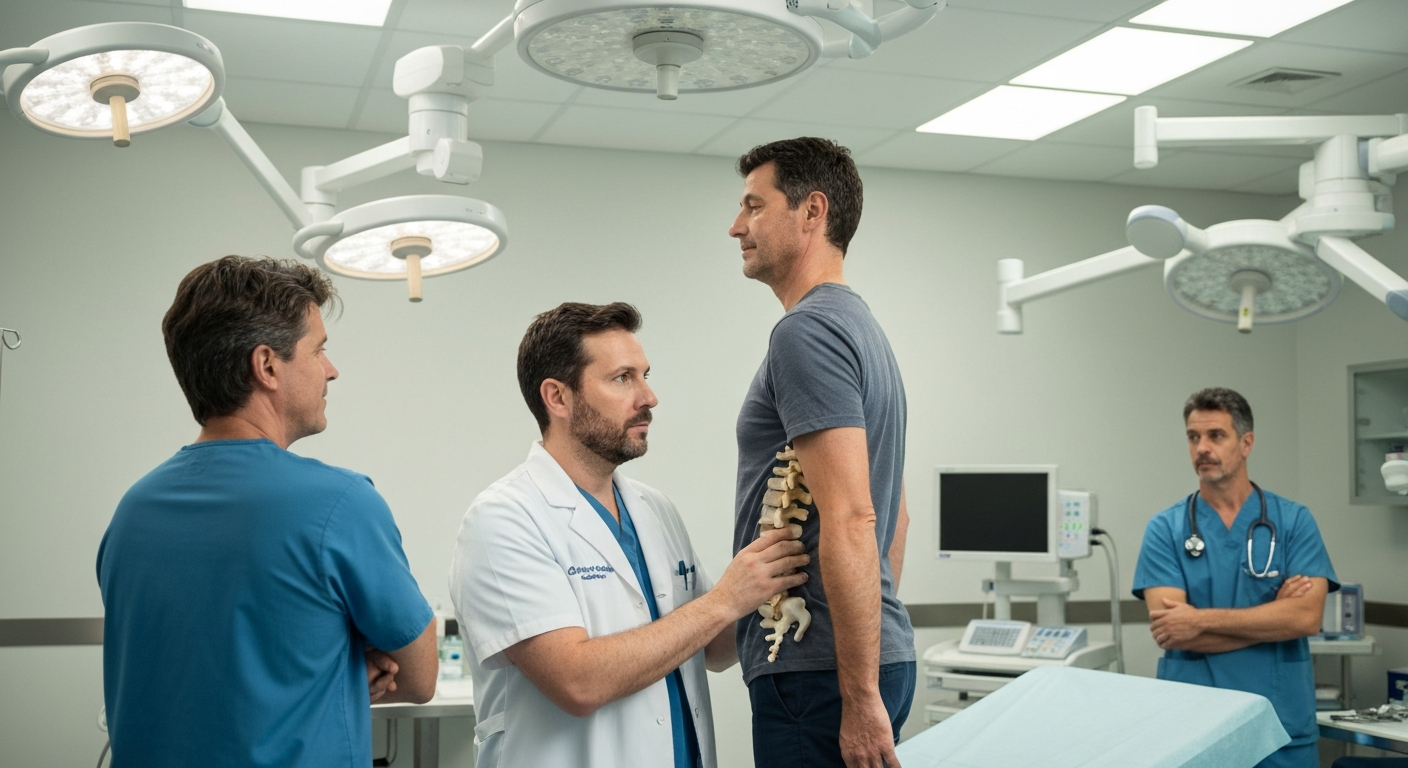
Understanding the different types of scoliosis helps explain why hip problems may occur alongside spinal curvature. Idiopathic scoliosis represents approximately 80% of all scoliosis cases with no clearly identified cause. This is the most common form, particularly in adolescents. Congenital scoliosis results from vertebral abnormalities present at birth. Neuromuscular scoliosis develops secondary to conditions affecting muscle function or neurological control, such as cerebral palsy or muscular dystrophy.
The severity of scoliosis varies considerably. Some patients have mild curves that cause no symptoms and require only monitoring. Others experience back pain, visible postural changes, uneven shoulders or hips, and in severe cases, breathing difficulties. typically Large curves may restrict lung capacity and affect cardiovascular function, making timely evaluation and treatment essential.
Many patients don’t realize their spinal curvature may be related to problems elsewhere in their musculoskeletal system. When hip dysplasia exists, the body often develops compensatory spinal curves to maintain balance and function. For patients experiencing both conditions, understanding this connection is the first step toward comprehensive treatment. If you’re concerned about scoliosis and hip pain, a thorough evaluation can identify whether these conditions are related in your case.
Understanding Hip Dysplasia
Hip dysplasia occurs when the hip socket (acetabulum) doesn’t fully develop or properly cover the ball-shaped head of the femur. This structural problem means the hip joint doesn’t fit together as it should, creating instability and abnormal pressure distribution across the joint surfaces. While some cases are identified in infancy through screening programs, many people don’t develop symptoms until adolescence or adulthood when the cumulative stress on the malformed joint begins causing pain and dysfunction.
The condition can be present from birth (congenital) or develop during childhood as the hip grows. Several risk factors increase the likelihood of hip dysplasia, including family history, female gender, and certain genetic conditions. Babies born in the breech position or those with firstborn status also face higher risks.
Many individuals with mild hip dysplasia remain symptom-free for years. As they age and activity levels increase, symptoms typically emerge. These may include groin pain, buttock discomfort, or lower back pain that worsens with hip flexion activities like climbing stairs or prolonged sitting. Some patients notice clicking or popping sensations in the hip, reduced range of motion, or limping after extended activity.
The abnormal joint mechanics cause uneven cartilage wear, leading to premature joint degeneration. Additionally, highlighting the connection between neuromuscular conditions and both hip and spinal problems. This overlap is why patients with certain underlying conditions require monitoring for both hip dysplasia and scoliosis.
How Scoliosis and Hip Dysplasia Are Connected
The relationship between scoliosis and hip dysplasia reflects the intricate biomechanical connections throughout the musculoskeletal system. These conditions don’t simply coexist by chance—they often influence each other through complex compensatory mechanisms that affect spinal and pelvic alignment.
When one hip sits in an unstable or poorly aligned position due to a shallow or malformed socket, the pelvis tilts to accommodate this abnormality. The spine, which sits atop the pelvis, must then curve to maintain the body’s center of gravity over the base of support. Over time, these compensatory curves can become structural, creating true scoliosis rather than just temporary postural adaptations.
The connection is particularly strong in neuromuscular conditions. When muscle weakness or spasticity affects the trunk and hips, both regions develop structural problems simultaneously. The weak or imbalanced muscles cannot maintain proper alignment of either the spine or the hip joint, leading to progressive deformity in both areas.
Research indicates that having both conditions creates greater challenges than either problem alone. The combination affects gait patterns, creates pain in multiple locations, and complicates treatment planning. Patients dealing with scoliosis and hip pain often need coordinated care that addresses both problems to achieve optimal outcomes.
Compensatory Mechanisms
Understanding how the body compensates when hip dysplasia and scoliosis occur together helps explain why symptoms can be complex and multifaceted. The human body constantly seeks balance and stability, even when structural problems make this challenging.
For example, if the left hip sits higher due to a shallow socket, the spine may curve to the right in the lumbar region to level the shoulders and maintain visual horizontal alignment. This keeps the head balanced over the pelvis, but creates abnormal stresses throughout the spine.
These compensatory patterns aren’t static—they evolve over time. What begins as a flexible postural adaptation can become a fixed structural deformity. The abnormal forces on vertebrae, discs, facet joints, and hip cartilage cause premature wear. Patients may notice that pain and stiffness gradually worsen, and activities that were once easy become increasingly difficult.
Symptoms and Warning Signs
Recognizing the symptoms of coexisting scoliosis and hip dysplasia is essential for timely diagnosis and treatment. Many patients attribute their discomfort to general back pain or aging, not realizing that underlying structural problems require specialist evaluation.
Back pain is often the primary complaint, particularly pain that’s asymmetrical—worse on one side than the other. This reflects the uneven mechanical stresses created by both spinal curvature and pelvic tilt from hip dysplasia. Activities like climbing stairs, getting in and out of cars, or sitting for extended periods may become increasingly uncomfortable.
Visual changes are sometimes the first clue that something isn’t right. Parents often notice these changes when their adolescent child is viewed from behind while wearing a swimsuit or tank top. Adults may notice that clothing fits differently on one side, or that one pant leg seems longer than the other—a possible sign of leg length discrepancy related to pelvic tilt.
Other warning signs include limping or an altered gait pattern, reduced hip mobility, and fatigue from altered biomechanics. The body works harder to maintain function when alignment is compromised, leaving patients feeling tired even after routine activities. If you’re experiencing these symptoms, especially if you have concerns about scoliosis and hip pain, seeking evaluation from a spine specialist is an important next step.
Diagnosis: What to Expect
Comprehensive diagnosis of scoliosis and hip dysplasia requires a thorough physical examination combined with appropriate imaging studies. At Legent Spine, our board-certified specialists conduct detailed evaluations to understand not just whether these conditions exist, but how they interact and affect your overall function.
The physical examination assesses posture, spinal alignment, shoulder and hip height symmetry, and gait patterns. Your specialist will check your range of motion in both the spine and hips, looking for limitations or asymmetries. They’ll also perform neurological testing to ensure that nerve function hasn’t been compromised by spinal curvature or pelvic tilt.
Imaging studies provide crucial objective information. X-rays are the foundation of diagnosis for both conditions. This measurement determines the degree of curvature and helps guide treatment decisions. For hip dysplasia, These measurements quantify how much of the femoral head is covered by the acetabulum.
Advanced imaging with CT scans or MRI may be recommended in certain cases, particularly when surgical planning is necessary or when soft tissue structures need evaluation. Our team coordinates with orthopedic specialists when needed to ensure all aspects of your condition are thoroughly assessed and that treatment addresses both spinal and hip problems comprehensively.
Treatment Options for Scoliosis and Hip Dysplasia
Treatment approaches for patients with both scoliosis and hip dysplasia must be individualized based on age, symptom severity, functional limitations, and the progression of each condition. The goal is always to maximize function, reduce pain, and prevent long-term complications while using the least invasive approach that will achieve these objectives.
Regular monitoring with periodic X-rays ensures that curves aren’t worsening, while avoiding unnecessary intervention for stable, mild curvatures. Similarly, mild hip dysplasia that isn’t causing symptoms may be managed conservatively with activity modification and strengthening exercises.
For moderate symptoms or progressive conditions, more active treatment becomes necessary. This surgical procedure repositions the acetabulum to provide better coverage of the femoral head, improving joint mechanics and potentially preventing or delaying arthritis development.
When both conditions require intervention, coordinated care is essential. Our board-certified spine specialists work closely with orthopedic partners to develop treatment plans that address both problems appropriately. In some cases, addressing the hip problem first may reduce compensatory spinal stress. In others, spinal correction takes priority. This individualized approach ensures optimal outcomes for each patient’s unique situation.
Conservative Treatment
Non-surgical management forms the foundation of treatment for many patients, particularly those with mild to moderate symptoms or curves that aren’t rapidly progressing. Conservative care focuses on maintaining function, strengthening supporting muscles, and preventing deterioration.
A skilled physical therapist designs exercises that address the specific curve pattern, working to improve flexibility where needed while building strength in weakened areas. Core stabilization exercises help support the spine during daily activities, reducing pain and improving function.
For adolescents with moderate progressive curves, bracing may be recommended to prevent curve progression during growth. While bracing doesn’t reverse existing curves, it can prevent worsening in appropriate candidates. Activity modification—avoiding high-impact activities that exacerbate symptoms while maintaining overall fitness through low-impact exercise—helps many patients manage symptoms effectively.
Regular monitoring with follow-up examinations and imaging ensures that conservative approaches are working. If symptoms worsen or imaging shows progression despite conservative care, more aggressive treatment may become necessary.
Surgical Options
When conservative measures prove insufficient or when curves are severe enough that progression is likely, surgical intervention may offer the best path to improved function and quality of life. Modern surgical techniques have evolved significantly, offering minimally invasive options for appropriate candidates.
During this procedure, vertebrae are realigned and fused together, creating a solid bone mass that maintains correction. These advanced methods use smaller incisions and specialized instruments to achieve excellent results with less tissue disruption, typically leading to less postoperative pain and faster recovery.
For hip dysplasia, These surgeries reposition the acetabulum or femur to create better alignment and pressure distribution across the joint. In cases where arthritis has already developed, hip replacement may be necessary.
When both conditions require surgical treatment, careful planning determines whether to address both simultaneously or in staged procedures. Our board-certified surgeons consider your overall health, severity of each condition, and functional goals when developing surgical plans. This coordinated approach ensures that correcting one problem doesn’t create new issues elsewhere in the musculoskeletal system.
Dallas-Area Care: Finding Your Specialist Team
Patients throughout the Greater Dallas area have access to world-class spine care without traveling to distant medical centers. At Legent Spine, our board-certified spine specialists bring fellowship-trained expertise to the local community, offering comprehensive evaluation and treatment for complex conditions like coexisting scoliosis and hip dysplasia.
Our team utilizes the latest minimally invasive surgical techniques when surgery is appropriate, helping patients achieve better outcomes with faster recovery times. We understand that coordinated care is essential when multiple musculoskeletal problems exist, so we work closely with orthopedic partners throughout the Dallas area to ensure comprehensive treatment planning.
Dedicated care coordinators guide you through every step of your treatment journey, from initial evaluation through recovery and beyond. We believe that excellent spine care combines technical expertise with personalized attention, transparent communication, and honest recommendations about what you truly need. Many Dallas-area patients have found that local specialist networks provide convenient access to the expert care they deserve.
Recovery and Long-Term Outlook
Recovery timelines and long-term outcomes vary based on treatment type, severity of initial conditions, and individual patient factors. Understanding realistic expectations helps patients prepare mentally and physically for the journey ahead.
Many patients return home within a day or two and begin walking almost immediately after surgery. Full recovery takes longer, but most people notice significant improvements in pain and function within weeks to months.
Physical therapy remains essential for optimal outcomes, whether you’ve had surgery or pursued conservative care. Dedicated participation in rehabilitation exercises builds strength, restores flexibility, and teaches proper movement patterns that protect your spine and hips long-term.
Regular follow-up monitoring prevents complications and ensures that treatment remains effective over time. Most patients with appropriately managed scoliosis and hip dysplasia return to normal activities and enjoy excellent quality of life. The key is comprehensive evaluation, individualized treatment, and commitment to the recovery process.
When to See a Spine Specialist
Certain symptoms and situations warrant prompt evaluation by a spine specialist rather than waiting to see if problems resolve on their own. Persistent back pain or hip pain that affects your daily activities—interfering with work, sleep, exercise, or hobbies—deserves professional assessment.
Visible spinal curvature or postural changes, particularly if they’re worsening or first appearing in adulthood, should be evaluated. Family history of scoliosis or hip dysplasia increases your own risk, making proactive screening reasonable even before symptoms develop. If you have a diagnosed case of either condition but haven’t had recent monitoring, scheduling an evaluation ensures nothing has progressed.
Perhaps most importantly, symptoms that worsen despite conservative care at home signal the need for specialist expertise. If rest, over-the-counter pain relievers, and activity modification aren’t providing relief, it’s time to explore more comprehensive treatment options with a board-certified spine specialist who can identify the root causes of your symptoms.
Conclusion: Taking the Next Step
The connection between scoliosis and hip dysplasia illustrates how interconnected the musculoskeletal system truly is. These conditions frequently occur together, creating complex biomechanical challenges that require expert evaluation and coordinated care. Understanding this relationship helps explain why treating one problem in isolation may not fully resolve symptoms—comprehensive assessment looks at the whole picture.
Early diagnosis and intervention offer the best opportunity for excellent outcomes. Whether through conservative management or minimally invasive surgical techniques, multiple treatment options exist to address your individual needs and restore function. The key is working with board-certified specialists who understand the nuances of these connected conditions and can develop truly personalized treatment plans.
If you’re experiencing symptoms of scoliosis and hip pain, don’t wait for problems to worsen. Our team at Legent Spine serves the Dallas community with expert spine care, combining advanced techniques with the personalized attention you deserve. Schedule a comprehensive evaluation with our spine specialists to discuss your symptoms and explore treatment options that can help you return to the active, pain-free life you want. Taking that first step toward diagnosis and treatment is an investment in your long-term health and quality of life.