
When you experience both spinal curvature and hip joint abnormalities, understanding how these conditions interact becomes essential for effective treatment. The relationship between scoliosis and hip pain affects not only your immediate comfort but also your long-term spinal health and mobility. At Legent Spine, our board-certified spine specialists serving the Greater Dallas area frequently evaluate patients dealing with the complex interplay between these two conditions.
Many people don’t realize that hip dysplasia and scoliosis often influence each other’s development and progression. Whether you’re experiencing symptoms for the first time or seeking a second opinion about existing conditions, understanding this connection helps you make informed decisions about your spine health. This comprehensive guide explains what you need to know about managing both conditions effectively.
Understanding the Connection Between Scoliosis and Hip Dysplasia
The relationship between hip dysplasia and scoliosis goes deeper than many patients realize. which can alter pelvic tilt and directly affect spinal alignment. When your hip joint doesn’t develop properly or sits abnormally within the socket, your pelvis compensates by tilting or rotating to maintain balance.
This pelvic compensation creates a ripple effect up your spine. Your body naturally tries to keep your head centered over your pelvis, so when hip dysplasia changes pelvic positioning, your spine must curve to compensate.
Untreated hip dysplasia may accelerate scoliosis progression because the compensatory curves become more pronounced over time. The impact differs significantly between children and adults. In growing children, the developing spine is more adaptable but also more vulnerable to progressive deformity. Adults with untreated hip dysplasia often experience accelerated degenerative changes in both the hip and spine, creating a more complex clinical picture. Understanding scoliosis and hip pain requires recognizing this fundamental biomechanical relationship.
How Hip Dysplasia Affects Spinal Alignment
Think of your pelvis as the foundation of a building—if the foundation tilts, everything above it must adjust to remain upright and functional.
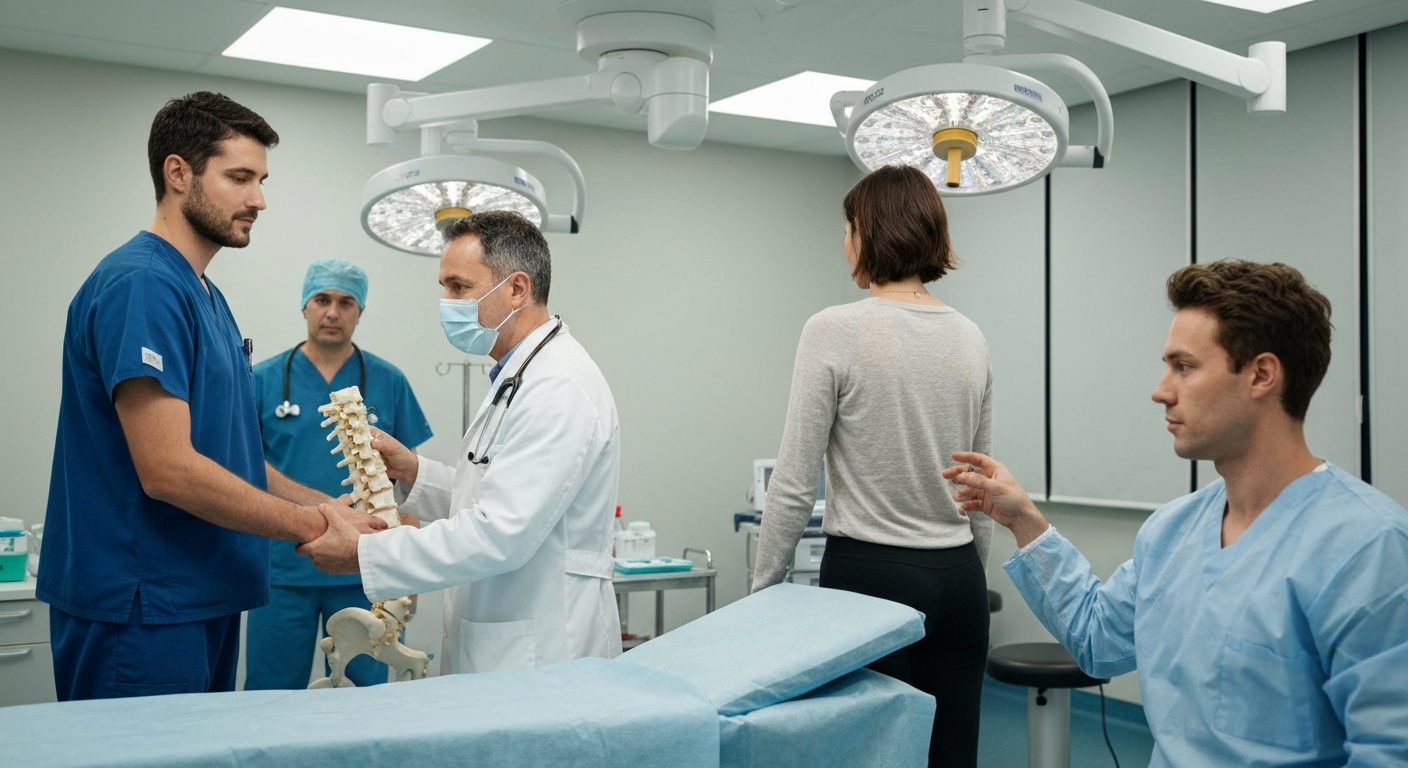
Pelvic tilt changes compensate for hip joint instability in predictable patterns. When one hip sits differently than the other due to dysplasia, your pelvis rotates or tilts to accommodate the abnormal positioning. This asymmetrical hip positioning creates uneven weight distribution across your spine, forcing certain vertebrae to bear more load than others.
Over time, vertebral alignment adjusts to accommodate these hip-related postural changes. Your spine develops curves that initially help maintain balance but eventually become structural rather than positional. These long-term compensation patterns can worsen existing scoliosis or even trigger scoliosis development in patients who didn’t previously have spinal curvature.
The impact varies based on the severity of hip dysplasia and which hip is affected. Unilateral hip dysplasia typically creates more pronounced spinal compensation than bilateral involvement. Patients dealing with scoliosis and hip pain often experience this progressive pattern.
Common Symptoms of Both Conditions
Recognizing the warning signs of combined scoliosis and hip dysplasia helps you seek timely professional evaluation. The symptoms reflect the complex interaction between hip mechanics and spinal alignment.
Common symptoms include:
- Back or spinal pain that worsens with activity, particularly standing or walking for extended periods
- Hip pain, groin pain, or limited hip mobility that may radiate down the thigh or into the lower back
- Visible spinal curvature or uneven shoulders, with one shoulder blade appearing more prominent than the other
- Limping or gait abnormalities that develop gradually as your body compensates for both conditions
- Leg length discrepancies or pelvic asymmetry that becomes noticeable when standing or wearing pants
- Fatigue from compensatory muscle work as your body constantly adjusts to maintain balance
These symptoms may develop gradually over months or years, making them easy to dismiss as normal aging or minor aches. However, gait abnormalities caused by hip dysplasia can increase stress on spinal discs and vertebrae by up to 40% according to biomechanical studies, accelerating degenerative changes in your spine. Understanding scoliosis and hip pain patterns helps you recognize when symptoms warrant professional attention rather than continued self-management.
Diagnosis: What to Expect During Evaluation
A comprehensive evaluation for both scoliosis and hip dysplasia begins with a thorough physical examination. Your spine specialist will assess your posture, range of motion, and gait patterns, looking for asymmetries and compensatory movement patterns. This hands-on assessment provides valuable information about how your hip and spine conditions interact.
Imaging studies form the cornerstone of accurate diagnosis. X-rays allow your physician to measure spinal curves and evaluate hip joint positioning simultaneously. For hip dysplasia,.
Advanced imaging such as MRI or CT scans provides detailed structural assessment when needed. These studies reveal soft tissue involvement, disc health, and detailed bone anatomy that standard X-rays cannot capture. Hip-specific tests evaluate joint stability and range of motion, identifying mechanical limitations that contribute to spinal compensation.
Board-certified spine specialists collaborate with orthopedic experts when treating combined conditions. This multidisciplinary approach ensures that treatment addresses both your hip and spine comprehensively rather than treating each condition in isolation.
Treatment Options for Scoliosis With Hip Dysplasia
Treatment for combined scoliosis and hip dysplasia begins with conservative management whenever possible. Physical therapy, bracing, and careful monitoring of progression form the foundation of early treatment.
Targeted exercises focus on strengthening core and hip stabilizer muscles. These exercises help your body compensate more effectively and reduce the stress on both your spine and hip joints.
Anti-inflammatory medications provide pain management when needed, though they address symptoms rather than underlying structural problems. For patients managing scoliosis and hip pain, medication forms one component of a comprehensive treatment strategy.
Surgical options become appropriate when conservative care proves insufficient. Minimally invasive spine procedures reduce recovery time compared to traditional open surgery. Minimally invasive spine surgery techniques result in smaller incisions, reduced muscle damage, and typically 30-50% faster recovery compared to traditional open surgery. Hip procedures may be coordinated with spine treatment when both require surgical intervention.
Individualized treatment plans consider your age, curve severity, symptom intensity, and functional goals. What works for one patient may not suit another, which is why personalized assessment by experienced specialists proves essential for optimal outcomes.
Physical Therapy and Conservative Care
Early intervention prevents progression in many cases, making conservative care the preferred first-line treatment for mild to moderate combined conditions. Research indicates that structured physical therapy can slow scoliosis progression by 50-70% in patients with mild to moderate curves when started early. This significant impact makes physical therapy particularly valuable for growing children and adolescents.
Customized exercise programs address both spinal and hip mechanics simultaneously. Your physical therapist designs exercises that strengthen muscles supporting proper pelvic alignment while also addressing spinal stability. This dual focus proves more effective than treating either condition independently.
Regular monitoring ensures treatment effectiveness. Your healthcare team tracks curve measurements, hip function, and symptom changes over time, adjusting your treatment plan as needed. Conservative care works best for mild to moderate curves that haven’t progressed beyond the point where non-surgical interventions can make meaningful differences.
When Surgery Becomes Necessary
Surgical intervention becomes appropriate when conservative treatments cannot adequately manage your condition. Curves exceeding 40-50 degrees typically require surgical evaluation, though the specific threshold depends on multiple factors including age, curve location, and rate of progression.
Rapid progression despite conservative treatment signals the need for surgical consultation. When imaging shows worsening curves over months despite physical therapy and bracing, surgical stabilization may prevent future complications. Neurological symptoms such as numbness, weakness, or bowel and bladder changes require urgent evaluation, as they may indicate spinal cord or nerve root compression.
Significant pain affecting quality of life justifies surgical consideration even when curves haven’t reached severe measurements. Board-certified spine surgeons evaluate each patient individually, weighing the risks and benefits of surgery against continued conservative management. Spine fusion surgery for scoliosis has success rates of 85-90% in achieving curve correction and preventing progression, making it a reliable option when appropriately indicated.
If you’re experiencing symptoms that interfere with daily activities or notice progressive worsening despite treatment, consulting with an experienced spine specialist helps clarify whether surgery might benefit your specific situation.
Specialized Care for Dallas Patients
Legent Spine’s board-certified spine specialists bring extensive expertise to patients throughout the Greater Dallas region. Our comprehensive evaluation process considers both scoliosis and hip dysplasia together, recognizing the biomechanical connections between these conditions. This integrated approach leads to more effective treatment strategies tailored to your specific anatomy and symptoms.
Minimally invasive techniques offer faster recovery for busy Dallas-area patients who need to return to work, family responsibilities, and active lifestyles. These advanced surgical approaches reduce tissue trauma, minimize scarring, and typically allow earlier return to normal activities compared to traditional open procedures.
Dedicated care coordinators guide patients through the entire treatment journey, from initial consultation through recovery and follow-up. This personalized support ensures you understand each step of your care and have someone to answer questions as they arise.
Transparent communication about treatment options and expectations helps you make informed decisions about your spine health. We believe patients deserve honest, clear information about what different treatments can and cannot achieve, allowing you to choose the approach that best fits your goals and circumstances.
Long-Term Management and Prevention
Successful treatment extends beyond initial intervention into long-term management. Patients with treated scoliosis and hip dysplasia require periodic imaging (typically annually or biannually) to ensure curves remain stable and identify early complications. Regular follow-up imaging provides objective data about whether your spine and hip remain stable or show signs of progression requiring treatment adjustments.
Ongoing physical therapy maintains strength and mobility even after initial treatment succeeds. Many patients benefit from periodic sessions with their physical therapist to address muscle imbalances before they cause symptoms. Posture awareness in daily activities helps protect your spine—small adjustments in how you sit, stand, and lift can significantly reduce stress on vulnerable areas.
Activity modifications protect both your spine and hip joints. This doesn’t mean avoiding exercise, but rather choosing activities that strengthen without excessive impact. Swimming, cycling, and targeted strength training often work well, while high-impact activities may require modification based on your specific condition.
Weight management reduces spinal stress, as excess body weight increases the load on both your hip joints and spine. Even modest weight loss can meaningfully reduce pain and slow progression in some patients. Ergonomic adjustments at work and home—such as proper chair height, monitor positioning, and lifting techniques—further reduce daily stress on your spine.
When to See a Spine Specialist
Certain symptoms warrant prompt evaluation by a spine specialist. Visible spinal curvature or asymmetrical features such as uneven shoulders or prominent shoulder blades suggest scoliosis that requires assessment. Persistent back or hip pain lasting more than a few weeks, especially when it limits your activities or interferes with sleep, deserves professional attention.
Pain worsening despite over-the-counter treatment indicates the need for more comprehensive evaluation and potentially different treatment approaches. Neurological symptoms including numbness, tingling, or weakness require urgent assessment, as they may signal nerve compression needing prompt intervention.
Family history of scoliosis or hip dysplasia increases your risk for developing these conditions, making screening valuable even without symptoms. If you have a previous diagnosis but feel uncertain about your current treatment plan or want to explore alternative approaches, seeking a second opinion provides peace of mind and potentially identifies better treatment options.
Early diagnosis and intervention for scoliosis can prevent progression and reduce likelihood of future surgical intervention by up to 60% in growing children. This underscores the value of prompt evaluation when warning signs appear, particularly for younger patients whose spines are still developing.
If you’re experiencing concerning symptoms or simply want expert evaluation of your spine health, our team at Legent Spine welcomes the opportunity to provide comprehensive assessment and honest recommendations about your treatment options.
Moving Forward With Your Spine Health
Understanding that scoliosis and hip dysplasia often influence each other’s progression empowers you to seek appropriate comprehensive care. Early detection enables effective conservative management in many cases, potentially avoiding the need for surgical intervention. When evaluation addresses both conditions simultaneously rather than in isolation, treatment strategies prove more effective at addressing underlying biomechanical problems.
Treatment plans should be personalized to your specific situation—your age, curve severity, hip function, activity goals, and overall health all influence which approaches will work best for you. Regular follow-up ensures optimal outcomes by allowing your healthcare team to track progress and adjust treatment as needed.
Quality of life improvements are achievable with proper care. Many patients with scoliosis and hip dysplasia successfully manage their conditions and maintain active, fulfilling lives through appropriate treatment and ongoing self-care. Whether conservative management or surgical intervention proves most appropriate for your situation, working with experienced specialists who understand the complexities of combined conditions gives you the best opportunity for lasting improvement.
Your spine health affects virtually every aspect of daily life, from the activities you enjoy to your comfort during routine tasks. Taking the step to seek expert evaluation and personalized treatment represents an investment in your long-term well-being and quality of life. At Legent Spine, we’re committed to providing world-class spine care that helps you move forward with confidence.