
Understanding When Back Surgery Becomes Necessary
If you’re experiencing persistent back pain that’s affecting your daily life, you’re not alone. Many patients throughout the Greater Houston area struggle with chronic spine conditions and wonder whether surgery might be necessary. The good news is that back surgery is typically not the first course of action. Most back pain episodes resolve with conservative treatment within through rest, physical therapy, and anti-inflammatory medications.
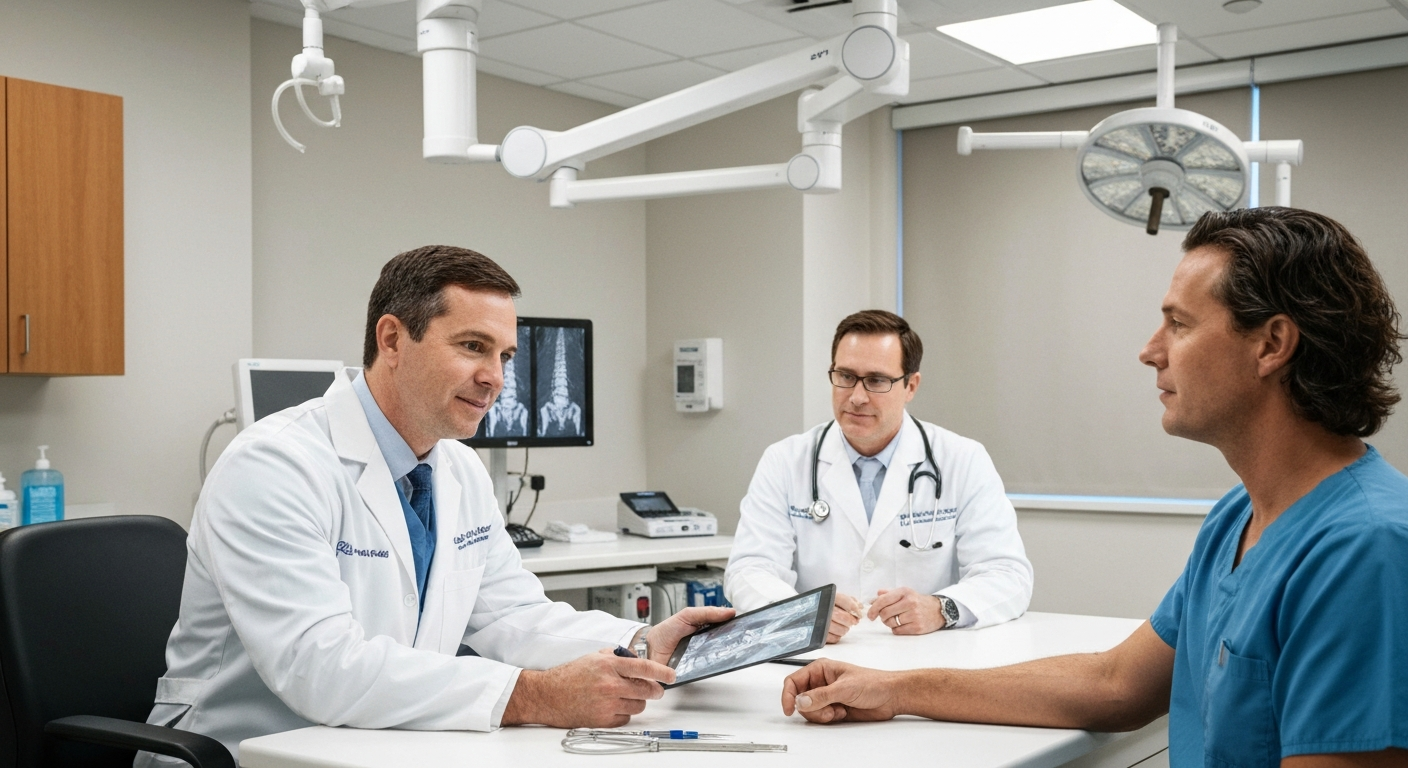
At Legent Spine, we believe in honest, patient-focused care. Our board-certified spine specialists understand that surgery should be reserved for specific structural problems causing nerve compression or significant instability. We always begin with conservative approaches, giving your body the opportunity to heal naturally.
However, when or when neurological deficits are progressing, surgical intervention may become necessary to restore your quality of life. Understanding your condition empowers you to make better decisions about your care.
This comprehensive guide will help you recognize the signs that might indicate spine surgery is warranted. You’ll also learn what you can expect from the evaluation and treatment process with Dr. Josh Lee, MD and our team of fellowship-trained specialists.
Common Conditions That May Require Spine Surgery
Not all spine conditions require surgical intervention. Several specific diagnoses may eventually need surgery when conservative treatments prove insufficient. Recognizing these conditions helps you understand whether your symptoms warrant a consultation with a spine specialist.
Herniated discs with persistent nerve compression occur when. This compression can cause severe radiating pain that doesn’t respond to medications or physical therapy.
Spinal stenosis represents a. This condition typically develops gradually as the spine ages. It can significantly limit your ability to walk or stand for extended periods.
Degenerative disc disease is a natural aging process where discs lose water content and elasticity, occurring in nearly 90% of adults by age 60. While common, it only requires surgery when it causes severe pain or creates instability in your spine that affects your daily function.
Spondylolisthesis, or vertebral slippage, happens when one vertebra shifts forward over another. This can compress nerves and cause pain that radiates into your legs. This condition may require stabilization surgery when conservative treatments fail to provide relief.
Traumatic spine injuries with neurological involvement demand immediate evaluation by a spine specialist. When trauma compromises the spinal cord or nerve roots, surgical intervention may be necessary to prevent permanent damage and restore function.
Herniated Discs and Nerve Compression
Herniated discs represent one of the most common reasons patients seek consultation with our spine surgery specialistsThe hallmark symptom is sciatica— when a herniated disc compresses the sciatic nerve.
Advanced imaging, particularly MRI, confirms the disc herniation location and severity. This allows your surgeon to develop a targeted treatment plan. Conservative treatment typically includes physical therapy focused on reducing inflammation and strengthening supporting muscles.
Anti-inflammatory medications help reduce swelling around the nerve. Epidural steroid injections can deliver medication directly to the affected area. Surgery is considered when symptoms persist beyond the conservative treatment period or when you experience progressive weakness or loss of bowel or bladder control—symptoms that require urgent attention.
The good news is that minimally invasive techniques now allow for faster recovery and excellent outcomes for appropriately selected patients.
Spinal Stenosis and Leg Claudication
For Houston area residents over 50, spinal stenosis represents an increasingly common condition as our population ages. The progressive narrowing of the spinal canal creates pressure on nerves that causes a distinctive pattern. You may experience.
This condition, called neurogenic claudication, differs from vascular claudication caused by circulation problems. MRI imaging confirms the diagnosis by showing where the spinal canal has narrowed and which nerves are being compressed.
When conservative treatments no longer provide adequate relief, minimally invasive decompression surgery can open up the canal. This restores your ability to walk comfortably and maintain an active lifestyle.
Diagnostic Testing: What to Expect at Your First Evaluation
When you schedule your first appointment at Legent Spine, you can expect a thorough and transparent evaluation process. Understanding what to expect removes uncertainty and helps you feel confident in your decision to seek expert care.
Your evaluation begins with a comprehensive physical examination and detailed neurological assessment. Your surgeon will test your strength, reflexes, sensation, and range of motion to understand how your spine condition is affecting your nervous system. This hands-on evaluation provides critical information that imaging alone cannot reveal.
Imaging studies are ordered based on your specific symptoms and examination findings. X-rays show bone alignment and structural problems. CT scans may be ordered when detailed bone anatomy needs to be assessed.
In some cases,. This testing helps differentiate between different causes of arm or leg symptoms and guides treatment planning.
Most importantly, your surgeon will explain your condition in clear, understandable terms. You’ll discuss your diagnostic findings, available treatment options, and realistic expectations for outcomes. This transparency is central to the care philosophy at Legent Spine—you deserve to understand your condition and participate actively in treatment decisions.
Non-Surgical Treatment Options: Starting Conservative
At Legent Spine, we believe that exhausting conservative options first demonstrates our commitment to your long-term wellbeing. Surgery, while sometimes necessary, should never be the first solution when less invasive treatments might provide relief.
Physical therapy represents the cornerstone of conservative spine care. Physical therapy for spine-related conditions has shown effectiveness in reducing pain and improving function in 60-80% of patients with non-surgical spinal disorders. A skilled therapist can teach you exercises that strengthen core muscles, improve flexibility, and reduce strain on your spine.
Anti-inflammatory medications help reduce swelling around irritated nerves and can provide significant relief during acute pain episodes. When taken as directed, these medications give your body the opportunity to heal while keeping inflammation in check.
For more targeted relief,. These injections can be diagnostic as well as therapeutic, helping your surgeon understand which specific nerve is causing your symptoms.
Activity modification and ergonomic improvements in your work and home environment can significantly reduce spine stress. Our care coordinators work with you to identify movements or positions that aggravate your condition and develop strategies to avoid them while maintaining an active lifestyle.
When Conservative Treatment Reaches Its Limit
Despite our best efforts with conservative care, some spine conditions require surgical intervention to achieve lasting relief. When you’ve completed an appropriate trial of non-surgical treatments without adequate improvement, or when neurological symptoms are worsening, surgery becomes the right next step. Our fellowship-trained specialists will help you understand whether you’ve reached this point and what surgical options might benefit you.
Minimally Invasive Surgical Options: Faster Recovery, Less Tissue Damage
When surgery becomes necessary, the techniques available today bear little resemblance to traditional open spine surgery. Minimally invasive approaches allow our surgeons to address your spine condition through smaller incisions. This results in less muscle damage, reduced postoperative pain, and faster return to your normal activities.
This approach preserves healthy disc material while removing only the portion causing nerve compression.
For spinal stenosis,. This technique opens up space for compressed nerves while maintaining the structural integrity of your spine.
When spinal instability is present, fusion surgery with modern stabilization techniques can restore proper alignment and eliminate painful motion at damaged disc levels. Advanced imaging and navigation technology allow for precise hardware placement through minimal access approaches.
Select patients may benefit from total disc replacement, which preserves motion at the affected level rather than fusing it. Your surgeon will discuss whether you’re a candidate for this motion-preserving technology based on your specific anatomy and condition.
Research shows that patients undergoing minimally invasive spine surgery typically experience 50-70% less postoperative pain and return to normal activities 2-4 weeks faster than those having open procedures. For Houston area residents eager to return to work and active lifestyles, this difference is significant.
Microdiscectomy: Precise Disc Fragment Removal
Microdiscectomy represents the gold standard surgical treatment for herniated discs causing persistent sciatica. Using an operating microscope for magnified visualization, your surgeon can precisely identify and remove only the herniated portion of disc that’s compressing the nerve. Healthy disc material remains intact, preserving the cushioning function between vertebrae.
Many patients are candidates for outpatient or same-day discharge, returning home the same day as their procedure. Return to light activities typically occurs within 1-2 weeks, with progressive resumption of normal activities as healing continues. This procedure’s success rate for leg pain relief is excellent when performed for appropriate indications.
Decompression Surgery for Stenosis Relief
When spinal stenosis severely limits your ability to walk or stand, decompression surgery can be life-changing. The procedure opens up the spinal canal by removing bone spurs, thickened ligaments, and any other structures compressing the nerves. This creates space for nerves to function normally again.
Decompression surgery for lumbar spinal stenosis provides sustained relief of leg pain and walking distance improvement in approximately 70-80% of appropriately selected patients. The minimally invasive approach allows most patients to walk the same day as surgery and progressively increase their distance as healing occurs. For patients who’ve struggled to walk from the car to the grocery store entrance, this restoration of function represents a dramatic improvement in quality of life.
What to Expect During Your Recovery
Understanding the recovery process helps you prepare mentally and physically for spine surgery. While individual experiences vary based on the specific procedure and your overall health, certain milestones apply to most minimally invasive spine surgery patients.
Pain management during the initial recovery weeks typically involves a combination of medications and techniques. Your surgeon will provide a comprehensive pain management plan that minimizes opioid use while keeping you comfortable.
Physical therapy plays a critical role in your recovery. and focuses on gradually restoring strength, flexibility, and function. Your therapist will guide you through exercises designed to support your spine without stressing the surgical site.
Return to work timing depends on your job’s physical demands. Desk workers may return within 2-3 weeks, while those with physically demanding jobs may need 6-8 weeks or longer. Your surgeon will provide specific guidance based on your procedure and occupation.
Activity restrictions are gradually lifted as healing progresses. Initially, you’ll avoid bending, lifting, and twisting. As your spine heals and muscles strengthen, these activities are progressively reintroduced under your physical therapist’s supervision.
Follow-up appointments with your surgeon occur at regular intervals to monitor your healing and address any concerns. At Legent Spine, dedicated care coordinators support you throughout recovery, answering questions and ensuring you have the resources needed for optimal healing.
Why Choose a Board-Certified Spine Specialist
When spine surgery becomes necessary, the expertise of your surgeon directly impacts your outcome. Board-certified spine specialists like Dr. Jonathan N. Sellin, M.D. bring years of specialized training focused exclusively on spine conditions.
This focused training provides exposure to complex cases and advanced techniques that general orthopedic surgeons or neurosurgeons may rarely encounter.
Board-certified spine surgeons have demonstrated expertise through rigorous examinations and maintain continuing education requirements to keep current with advances in spine care. This commitment to ongoing learning ensures you benefit from the latest evidence-based techniques and technologies.
Access to advanced minimally invasive techniques represents another advantage of choosing a specialized spine practice. These approaches require specific training and equipment that may not be available in general surgical practices. At Legent Spine, our surgeons have extensive experience with the full range of modern spine surgery techniques, from simple decompressions to complex reconstructions.
Perhaps most importantly, specialized spine surgeons provide transparent, honest assessments of your condition. We understand what surgery can and cannot achieve, and we’re committed to setting realistic expectations. This honesty builds the trust necessary for you to feel confident in your treatment decisions.
Legent Spine: Serving Houston and Greater Houston Area
While Legent Spine maintains a strong presence serving patients throughout the Greater Houston area, we also welcome patients from surrounding regions who seek expert spine care. Our conveniently located practice provides comprehensive spine care with a personalized approach that addresses your individual needs and goals.
What sets us apart is our commitment to transparent communication. We’ll explain exactly what surgery can achieve for your specific condition while being honest about potential limitations. Every patient receives a personalized treatment plan developed through careful consideration of your symptoms, imaging findings, overall health, and personal goals.
Our dedicated care coordinators guide you through every step of the process, from your initial consultation through recovery and beyond. This continuity of care ensures you always have someone available to answer questions and address concerns as they arise.
Your Next Steps: Scheduling Your Comprehensive Evaluation
If you’re experiencing persistent back or neck pain that’s affecting your quality of life, scheduling a consultation with a spine specialist represents an important step toward understanding your condition and exploring your options. When you visit Legent Spine, you’ll receive a thorough evaluation and honest recommendations based on your specific condition.
Bring any imaging studies and medical records from previous treatments if available—this information helps your surgeon understand what’s already been tried and avoid unnecessary duplication of tests. During your consultation, expect a comprehensive physical and neurological examination along with a detailed discussion of your symptoms and how they impact your daily life.
Don’t hesitate to ask questions about your condition, treatment options, and what you can expect from surgery if it’s recommended. Most people don’t need surgery, and our goal is to help you avoid it through effective conservative care whenever possible.
However, when surgery becomes necessary, you deserve an expert with the training, experience, and commitment to transparency that defines care at Legent Spine. Contact us today to schedule your comprehensive evaluation and take the first step toward reclaiming your active, pain-free lifestyle.